
Kenworth T800 Front Bumper: What Fits and Why
October 21, 2026 · Francisco Hornelas

You've got a bent bumper, a truck that needs to work, and a replacement listing that says T800. Before you order that Kenworth T800 front bumper, check what's behind the chrome. The model name alone doesn't tell the seller where your mounting brackets sit, which hood you have, or what equipment needs to clear the bumper.
A bumper that looks right in a product photo can still be wrong at the frame. Get the configuration straight first, then choose the material, finish, and style that suit your work.
Table of Contents
- Why the Right T800 Front Bumper Matters
- T800 Front Bumper Configurations Explained
- What to Measure Before You Order
- Chrome Steel vs Stainless Steel Bumpers
- Installation and What to Inspect After a Front Impact
- How to Choose the Right Bumper for Your Truck
- Why Durability and Fast Shipping Matter
- Frequently Asked Questions About T800 Bumpers
Why the Right T800 Front Bumper Matters
You order a replacement by model name, schedule shop time, and unpack it beside the truck. Then the mounting holes don't line up, or the tow openings sit in the wrong place. That's a fitment problem, not something to fix by pulling harder on the bolts.
This is a buying scenario worth preventing, not a reason to avoid aftermarket bumpers. The right replacement starts with identifying the truck beneath the part.
Kenworth introduced the T800 in 1986 for demanding vocational and over-the-road work, with its set-back front axle and heavy-duty chassis central to its design, as described in Kenworth's model history. Its front end wasn't built around appearance alone.
More than a chrome face
The official T800 brochure identifies a 48.5-inch set-back front axle, along with configurations intended for demanding loads and operating conditions. That layout makes the relationship between the bumper, hood, axle, and frame important.
Before treating a bumper as a cosmetic upgrade, consider what must remain usable:
- Hood movement: The hood needs clearance throughout its opening path.
- Steering space: The replacement must not interfere with steering components or nearby lines.
- Tow access: Openings must match the truck's recovery provisions.
- Lighting: Required lights must remain properly positioned and unobstructed.
A highway owner-operator may focus on a straight chrome face and clean light openings. A vocational fleet may put more weight on clearance around front-mounted equipment. Neither buyer benefits from a bumper that needs unplanned work before the truck can leave the shop.
Practical rule: Buy the bumper for the truck's actual front-end configuration, not just the badge on the hood.
The useful question isn't whether the bumper looks like a T800 part. It's whether the seller can match its mounting arrangement and openings to your chassis. Ask that before freight is booked, while changing the order is still easier than handling a return.
T800 Front Bumper Configurations Explained
T800 is a model family, not a single bumper specification. Available Kenworth specification material lists the following bumper settings:
| T800 configuration | Listed bumper settings |
|---|---|
| Standard T800 | 48.5-inch standard setting |
| T800W | Optional 51-, 66-, or 73-inch settings |
| Short-hood T800 | 48.5-inch standard setting, with optional 66- or 73-inch settings |
These are configuration references, not a shopping shortcut. Don't treat a bumper setting as the bumper's overall width, face height, or bumper-to-back-of-cab dimension. Have the seller confirm which measurement and mounting arrangement its listing requires.
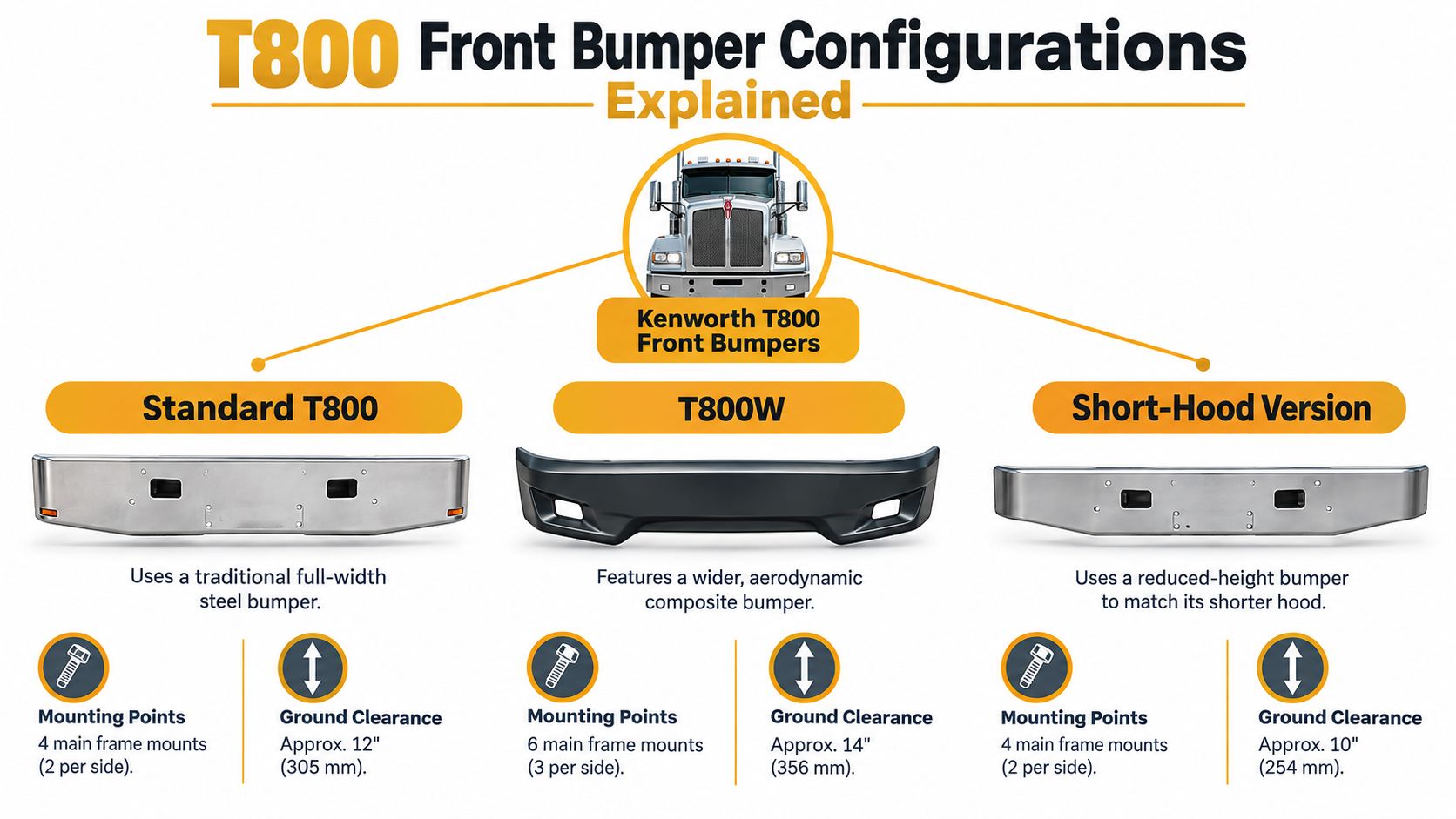
Why the setting changes the purchase
Bumper position affects the relationship between the hood, grille, brackets, and front tow access. A similar-looking face doesn't establish that those points will line up. Treat the illustration as an overview, and confirm the actual dimensions and construction with the truck records and seller.
The size of the installed fleet also explains why broad listings need care. Kenworth marked delivery of the 250,000th T800 in 2012 at its Renton assembly plant, according to its production milestone announcement. A large fleet built across decades gives buyers plenty of replacement demand, but it doesn't make every front end interchangeable.
Read the application before the finish
The Chrome bumper for Kenworth T800 (-2003) is a specific catalog application designed and manufactured by Estañadora, owner of Galhor, Inc. Its listing specifies 10-gauge chrome-plated steel, an 11-gauge 430 stainless steel option, and an included gauge-7 mounting bracket, with direct bolt-on installation for the stated application.
That listing also provides tow, fog, and light openings based on the selected configuration. The important buying detail is the complete selection, not merely the word T800 in the title.
A year range helps narrow the search. It doesn't replace checking the hood package, bumper setting, brackets, and front-mounted equipment. Get those details confirmed together before approving a chrome bumper or drop-bumper order.
What to Measure Before You Order
Build a small fitment file before contacting the seller. Use a tape measure, straightedge, flashlight, and phone camera. Photograph the tape in place so the seller can see both the dimension and its reference points.
Kenworth's heavy-duty body builder manual distinguishes short-hood, wide-hood, split-fender, and FEPTO configurations. Start with the truck's identification and build information, then compare those records with what's physically installed.
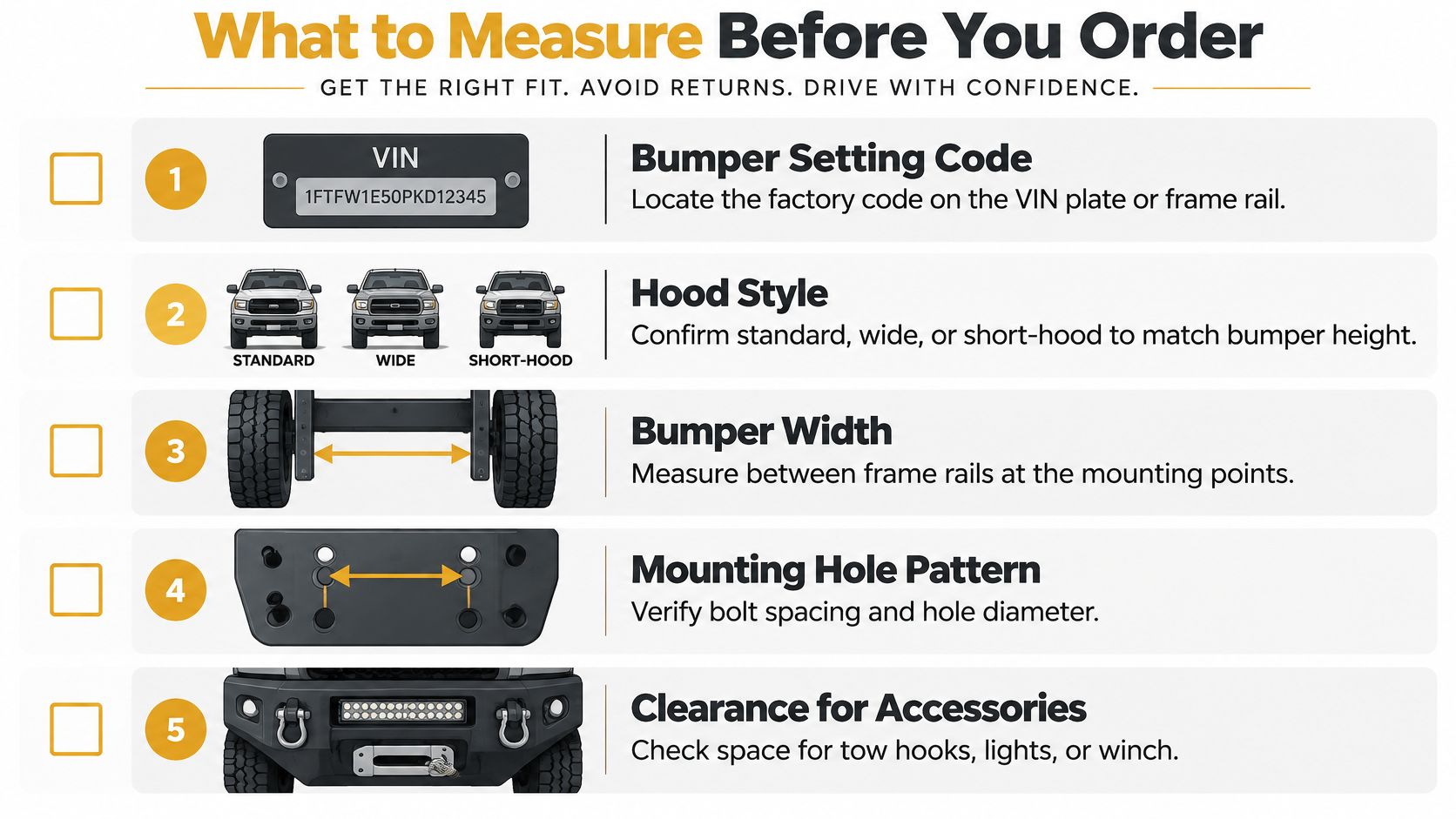
Build a photo-based fitment checklist
- Truck identification: Photograph the OEM door-jamb identification plate and record the VIN and model year. Ask a dealer to confirm build details you can't identify.
- Bumper setting: Confirm the setting through chassis records or a dealer lookup. Don't assume the identification plate spells out every bumper option.
- Hood and axle layout: Take a full side photo showing the hood, fender, axle, and bumper position.
- Frame and brackets: Record frame width at the mounting area, bracket spacing, and the installed bracket arrangement.
- Mounting holes: Measure center-to-center spacing and hole diameter. Photograph both sides separately.
- Openings and equipment: Mark tow-hook, fog-light, and accessory locations. Identify any front engine power take-off equipment, commonly called FEPTO.
Frame width and bumper width are different measurements. Record each separately, with a clear note showing where you measured. Don't send an unlabeled number and expect the parts counter to guess.
Measure the mounting structure, not the damage
A bent bumper isn't a reliable template for a straight replacement. If the face has shifted, measure undamaged mounting references and have a technician check the brackets before finalizing the order.
Use the bumper support bracket guide to help organize the mounting questions you need answered. Ask whether the supplied bracket replaces the existing one and whether the quoted hardware matches your frame arrangement.
A direct bolt-on claim applies to a defined application. It isn't a promise that every truck wearing the same model badge uses the same holes.
Send the photos and measurements with the order inquiry. Request written fitment confirmation, including the selected cutouts and bracket. That record is more useful than a verbal assurance when you're trying to avoid an LTL return or an unplanned field modification.
Chrome Steel vs Stainless Steel Bumpers
Chrome describes the finish. Stainless describes the base material. They aren't competing terms, because a stainless bumper can also be chrome plated.
The material choices covered here are chrome-plated carbon steel, chrome-plated stainless steel 430, and chrome-plated stainless steel 304. Compare the base metal, thickness, finish, and mounting design separately. A shiny face doesn't answer all those questions.
T800 Front Bumper Material Comparison
| Material | Gauge | Corrosion Resistance | Best For |
|---|---|---|---|
| Chrome-plated carbon steel | Application-specific, with the catalog steel gauge noted above | Evaluate plating coverage and condition, especially around damaged areas | Buyers comparing upfront cost and a traditional chrome finish |
| Chrome-plated stainless steel 430 | The catalog option above specifies its gauge | A stainless-base option for buyers concerned about corrosion exposure | Working trucks needing chrome appearance and a stainless substrate |
| Chrome-plated stainless steel 304 | Confirm for the selected T800 application | Request the material and finish specifications for the actual bumper | Buyers evaluating a different stainless grade for long-term ownership |
Use the chrome-plated steel versus chrome-plated stainless steel comparison when reviewing quotes. Don't assume every material choice is available in every bumper style or application.
What thickness and plating tell you
Ask for actual material thickness, not just a description such as heavy-duty. Don't compare gauge labels across different metals without asking the manufacturer to confirm the corresponding thickness.
Thickness matters, but it isn't the entire durability story. The mounting bracket, attachment points, formed shape, and condition of the truck's frame connection also deserve attention. A heavier face doesn't correct a poor mounting match.
The catalog example above uses a triple-layer chrome process with a nickel underlayer and a mirror-polished finish. When comparing another quote, ask whether it specifies the complete finish system or just calls the bumper chrome.
Match the purchase to the work
For long hauls through harsh weather, ask about corrosion care and warranty exclusions before deciding on material. For a truck washed frequently or exposed to winter road conditions, include the back of the bumper, mounting areas, and damaged edges in your maintenance plan.
For a custom build, compare the finish against the truck's other brightwork. Polished stainless and chrome-plated stainless aren't the same finish, so confirm what you're ordering.
There's no useful value comparison without actual quotes. Compare delivered cost, material specification, included brackets, and warranty coverage rather than assuming the least expensive face is the least expensive installed bumper.
Installation and What to Inspect After a Front Impact
Inspect the mounting structure before hanging the replacement. A fresh bumper can hide a bent bracket without correcting it. If the old bumper moved during an impact, determine what moved with it.
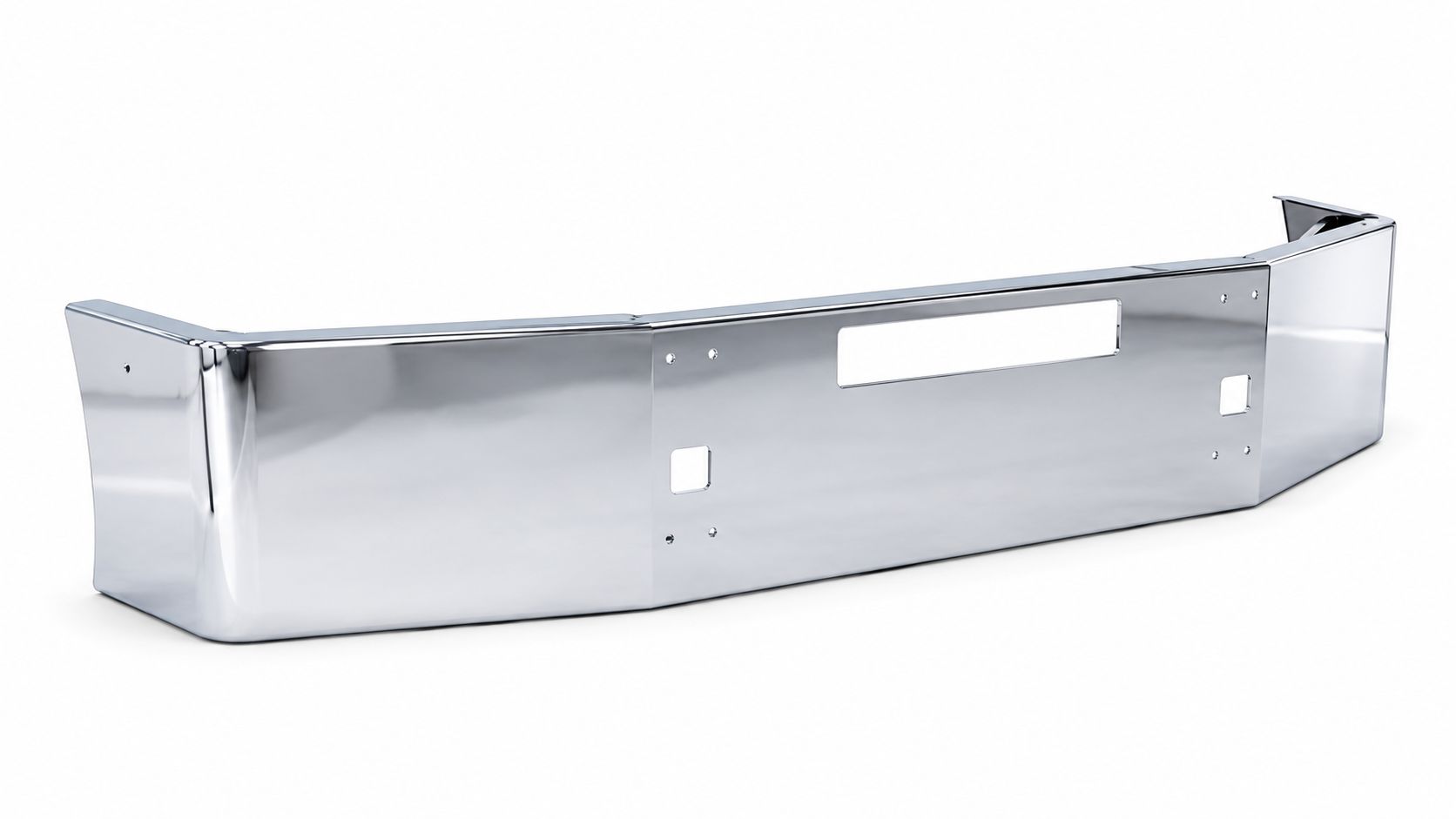
Separate cosmetic damage from mounting damage
Document the truck before disassembly. Take straight-on, side, and underside photos, including the relationship between the bumper and hood.
- Bumper face: Note dents, tears, creases, and corrosion penetration.
- Brackets and frame horns: Look for bending, cracks, shifted joints, or mounting holes that no longer look round.
- Tow equipment: Check hooks and attachment points for movement or deformation.
- Lights and wiring: Inspect displaced housings, pinched wires, damaged connectors, and exposed conductors.
- Steering and axle area: Have a qualified technician assess damage near steering parts, axle attachments, and air lines.
A surface dent and a bent mounting structure require different repair decisions. Don't use the replacement bumper to pull damaged brackets back into place, and don't cover structural corrosion with cosmetic work.
Install without forcing the fit
Follow the manufacturer's procedure and use suitable support equipment. Keep the bumper supported while positioning it, start the mounting hardware without forcing alignment, and check the assembly before final tightening.
Use the specified hardware and torque requirements for the application. The bumper installation guide can help prepare the job, but truck-specific instructions take priority.
If the ordered bolt-on bumper needs cutting or drilling to line up, stop and recheck the application. After installation, verify hood movement, tow access, lighting operation, and clearance around nearby equipment.
Don't overlook steering concerns
NHTSA recall documentation identifies certain 2018–2021 Kenworth T800 chassis with Dana D-Series front axles whose steer-arm fasteners could fail during low-speed maneuvering, potentially causing loss of steering control.
That recall does not establish that the bumper causes the defect. It does reinforce the need to check recall status and investigate steering concerns separately.
A new bumper isn't proof that the front end is safe. Repair the damage behind it and resolve any steering concern before returning the truck to service.
How to Choose the Right Bumper for Your Truck
Buy in this order: fitment, operating clearance, material, then appearance. Starting with the shape you want and trying to make it fit afterward puts the purchase backward.
A working T800 needs a bumper that suits its route and jobsite access. A custom truck still needs the same basic checks, even when the owner's main goal is a cleaner front-end appearance.
Set the non-negotiables first
Start with confirmed chassis details and the photo file. Then give the seller a short purchase specification:
- Application: The exact truck configuration and approved mounting arrangement.
- Construction: Base material, confirmed thickness, and included bracket.
- Openings: The agreed tow, fog-light, and accessory layout.
- Finish: Chrome-plated or polished, with the finish process identified.
- Order terms: Written warranty, return conditions, freight charges, and expected dispatch timing.
For a drop bumper, evaluate clearance on the routes you drive. A lower face may suit the look you want, but check yard entrances, uneven approaches, and front-mounted equipment before choosing it.
Owners used to buying a Peterbilt, Freightliner, or International bumper should follow the same discipline here. Familiarity with another truck doesn't establish T800 compatibility.
Compare the complete repair cost
A low bumper price can become a poor deal if the shop must replace unquoted brackets, correct the order, or handle return freight. Include those possibilities in the comparison rather than looking only at the face price.
For a collision replacement, keep the repair scope separate from the upgrade wish list. First establish what the truck needs to return to sound condition. Then decide whether a different finish or profile makes sense.
A useful quote should let you explain exactly what you're buying without relying on a product photo. If you can't identify the material, bracket, openings, and application from the paperwork, ask for clarification before paying.
Long-term value means fewer avoidable purchasing and installation problems. No supplier can promise a specific service life without considering use, damage, and maintenance, so don't buy on an unsupported lifespan claim.
Why Durability and Fast Shipping Matter
When the truck is down, shipping speed matters. But a bumper delivered quickly doesn't help if the shop discovers it's the wrong configuration. Treat fitment confirmation and dispatch timing as parts of the same buying decision.
The strongest purchase is one the shop can receive, inspect, and install without chasing missing details. That takes more than a polished product photo.
Ask what fast shipping actually means
For delivery across the United States, get the shipping terms before scheduling the repair:
- Order status: Is the exact configuration ready to ship, or does it require production?
- Dispatch estimate: When does the seller expect to release it to the carrier?
- Freight arrangements: What receiving equipment or delivery services are needed?
- Damage procedure: How should the receiver document packaging or concealed damage?
- Return terms: Who handles freight if the buyer orders the wrong configuration?
Don't confuse dispatch with delivery. Ask for a realistic freight estimate to your location, and allow the shop to plan around the confirmed order rather than an assumption.
Judge durability beyond the shine
A mirror-polished finish helps a working truck look cared for. It doesn't replace sound material, proper mounting, or regular inspection.
Likewise, warranty coverage needs to be read, not assumed. Check how the seller handles manufacturing defects and what documentation is required. Don't treat defect coverage as protection against collision damage or every form of wear.
Buying check: The useful warranty is the one you understand before the bumper reaches the dock.
Long-haul weather, rough access roads, washing, and everyday handling all belong in the purchase discussion. Tell the seller how the truck works, then compare the documented options.
The return on a well-chosen bumper isn't a made-up savings percentage. It's a straightforward goal: avoid unnecessary returns, avoid paying twice for installation, and keep the truck looking professional without compromising its working clearance.
Frequently Asked Questions About T800 Bumpers
What measurements should I send the seller?
Send the truck identification, bumper setting, hood and axle photos, frame and bracket measurements, hole pattern, and accessory locations. Include tape-in-place photos from the measurement checklist so the seller can verify your reference points.
Does direct replacement guarantee a perfect fit?
Not by itself. The claim must apply to your truck's configuration and selected bracket and cutout package. Ask for written confirmation before ordering, especially if the truck has been modified.
What needs checking after a front impact?
Have the brackets, frame horns, tow attachments, lighting, and nearby steering equipment inspected as appropriate. If the truck steers differently, don't treat bumper replacement as the diagnosis or repair.
Do federal rear-guard dimensions apply to the front bumper?
No. FMCSA's rear-impact-guard guidance addresses rear protection and identifies tractors among the exceptions under that rule. Those provisions don't establish a universal T800 front-bumper size.
Choose the front bumper around the truck's configuration while preserving required lighting, steering clearance, and applicable equipment compliance. Ask a qualified installer about any uncertainty before approving modifications.
Galhor Inc. offers configurable chrome truck bumpers with material, finish, and cutout choices for specific applications. Visit Galhor Inc. with your T800's identification, mounting photos, and measurements to confirm the right bumper and request current shipping options across the United States before you order.