
How to Prevent Rust on Chrome Bumper: Salt Damage Fixes
November 18, 2026 · Francisco Hornelas

Your truck sat through two brine events and a freeze-thaw cycle before anyone touched it. The face of the bumper still looks good from ten feet away. Get down on a knee behind the front tire and the story changes. Orange is tracking out of a bolt hole. A blister the size of a dime has lifted the chrome at the edge of a cutout. White mineral crust is packed into the seam where the bracket meets the steel.
That's how chrome fails on a working truck. Not in the middle of the shiny face, but at the edges, the fasteners and the backside where nobody looks. Knowing how to prevent rust on a chrome bumper starts with admitting where the rust lives. Kill the chloride, dry the traps, inspect the places polish never reaches, and replace the part once the plating is already gone. That order matters more than any product on the shelf.
Table of Contents
- Why Chrome Bumpers Rust From Underneath
- Step-by-Step Salt Removal and Washing Routine
- How Often to Wash by Season and Route
- Protective Products to Use and Chemicals to Avoid
- Inspection, Repair and Replacement Decisions
- Rust Prevention FAQs
Why Chrome Bumpers Rust From Underneath
The steel under the chrome is what rusts. Plating is a stack of thin layers, copper and nickel under a chromium skin, bonded to a steel core. That stack protects the steel only while it stays continuous. A stone chip on the leading edge, a dock scratch, a pinhole, a folded edge, a weld seam, a bolt hole, or a laser cutout is a place where the barrier stops and the steel starts.
Road salt finds those breaks. Dissolved chloride holds water against the metal as a conductive film, and corrosion speeds up at the points where plating is already interrupted. Research summarized by the Lake George Association, in a Transportation Research Board review of road salt corrosion, found corrosion where roads received 4.4 tons of salt per kilometer per year was twice that measured where application was only 0.1 tons, and metal exposed to salted highways corroded twice as much as metal exposed to sanded rural roads.
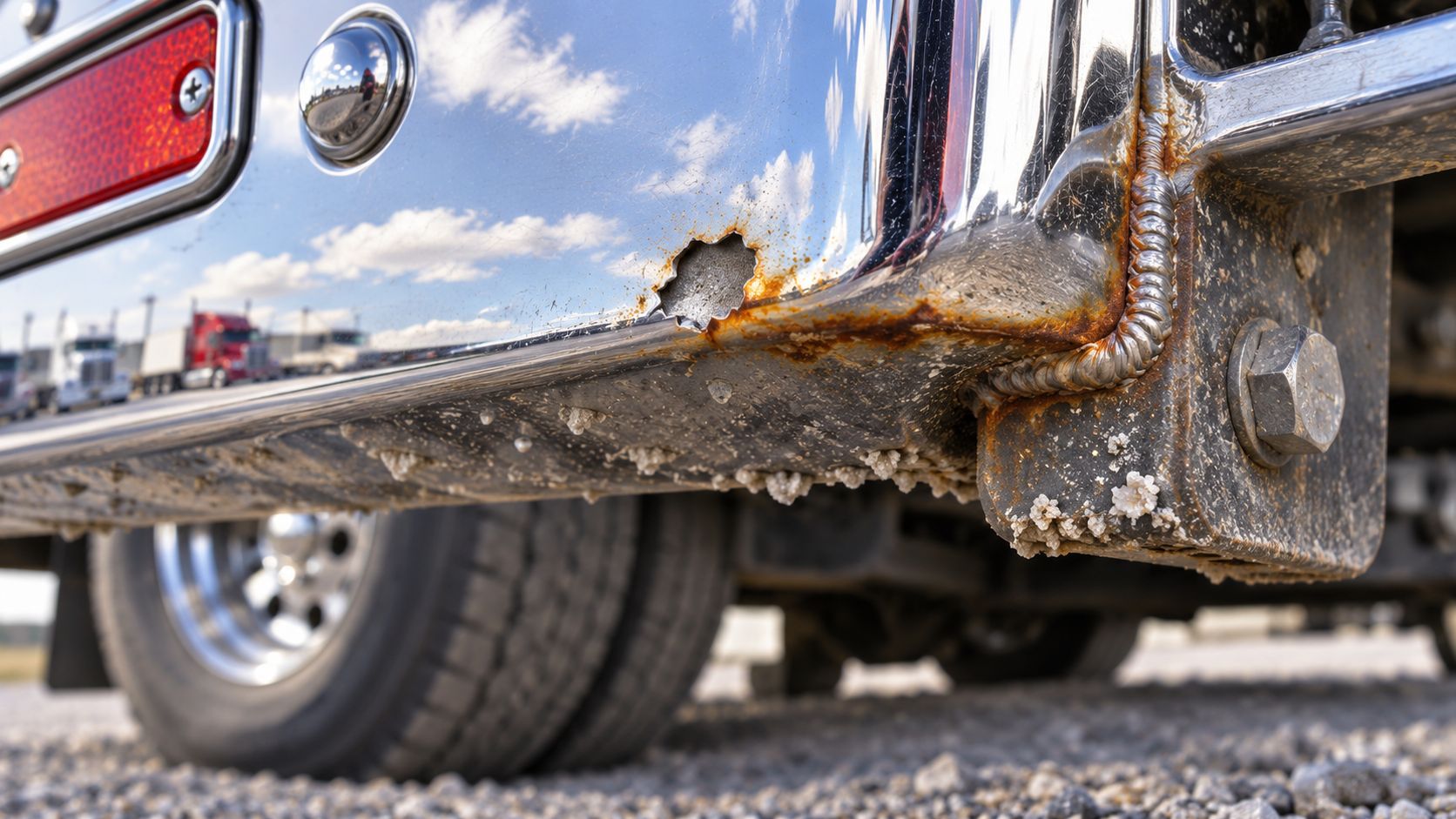
Chlorides also raise water's electrical conductivity. Moisture trapped behind a drop bumper, inside a cutout, or under a mounting flange keeps that wet film in place long after the road dries, which is the mechanism the American Galvanizers Association describes for chloride-rich water held against steel. Add a second metal and you add a battery. The same organization's guidance on dissimilar metals in contact explains the bimetallic couple: two metals with different electrochemical potential, joined and wet, drive galvanic attack on the less noble one. On a truck that is a steel bracket, a stainless bolt, and an aluminum step sharing one wet seam.
The Short Answer on How to Prevent Rust on Chrome Bumper
A Peterbilt 389 on Ohio winter lanes can leave the yard with a bright face and still rot from a bolt hole on the backside. Brine sits in a pocket with no drain path and no airflow. Orange at the visible edge means corrosion has been working under the plating for months.
Polish changes the look. Wash and dry the backside, bolt holes, and drain paths if you want the bumper to last.
The routine has to hit breaks, edges, and hidden traps first. For the coating side of the story, how chrome plating resists corrosion explains what those layers do and where they stop protecting the steel.
Step-by-Step Salt Removal and Washing Routine
Polishing a salted bumper is the wrong order of operations. On a Class 8 truck, the ASTM chloride-resistance method for chromium plating models a mud film holding hygroscopic chloride against the plating, which is close to what a winter bumper carries. Dirt on chrome isn't cosmetic. It keeps a wet electrolyte pressed against pinholes and defects in the nickel and chromium layers.
The wash sequence looks like this in the bay.
Why Brine Is Worse Than Rock Salt
Calcium chloride in de-icing brine is hygroscopic, meaning it pulls moisture out of the air and holds it. ASTM reports that these chlorides are more aggressive to electroplated chromium than sodium chloride. The salt mix your bumper sees is a blend, not a single compound: the Federal Highway Administration's SAE J2334 automotive corrosion cycle applies a solution of 0.5% sodium chloride, 0.1% calcium chloride and 0.075% sodium bicarbonate at 77°F for 15 minutes, repeated through wet and dry stages, as documented in the American Galvanizers Association comparison of galvanized and weathering steel.
Run this in the yard, in order.
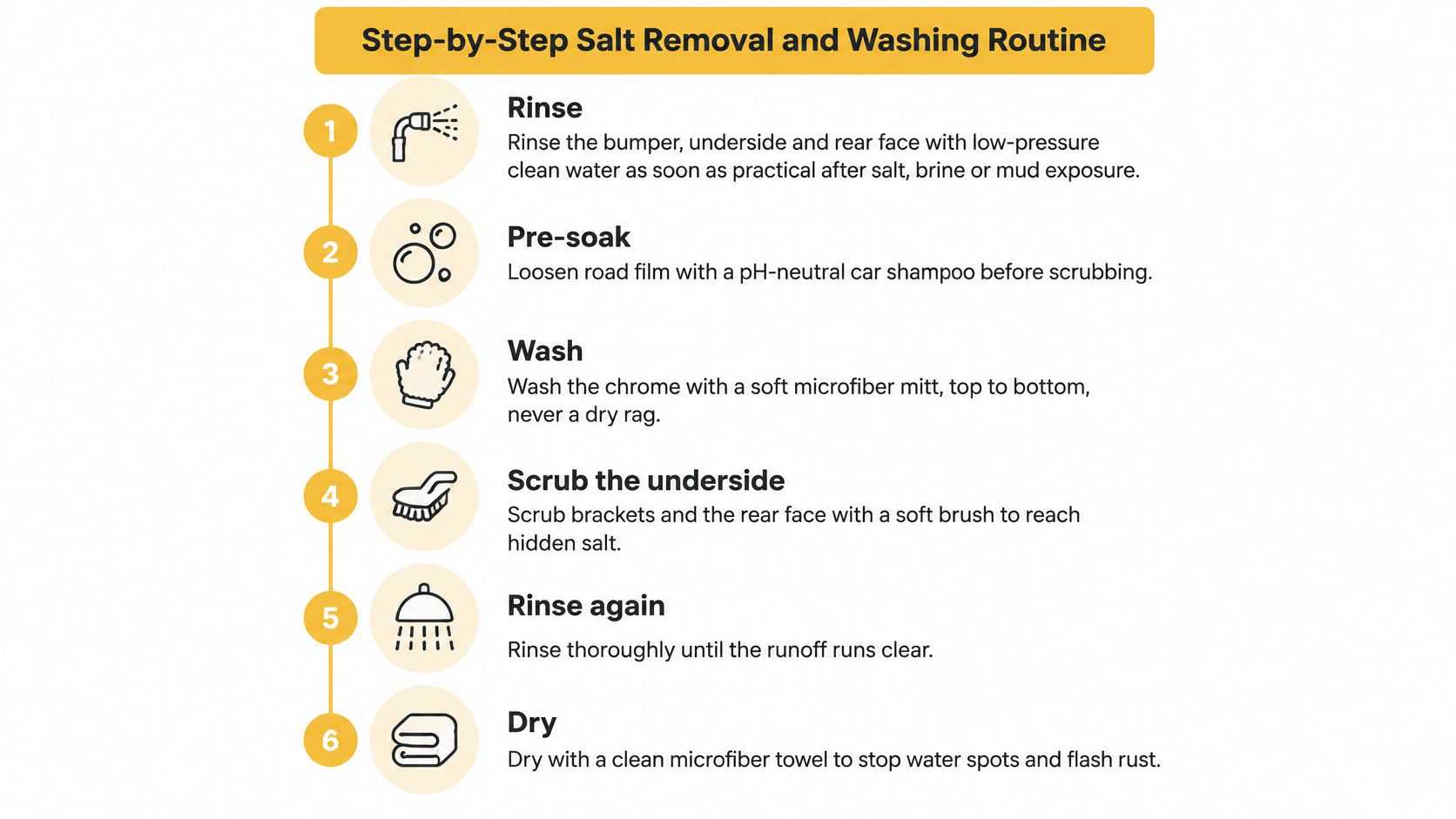
- Rinse before anything dries. Low-pressure clean water over the face, underside and rear face as soon as practical after salt, brine or mud exposure. Once residue bakes on, you're scrubbing, and scrubbing is what scratches.
- Wash with pH-neutral automotive detergent and a clean microfiber mitt. Never rub dry. Grit in a dry rag gets dragged across the plating and stays there.
- Flush the traps. Seams, bolt pockets, cutouts, drain paths and the lower rear face hold salt longest because airflow never reaches them.
- Dry completely. A clean absorbent towel or forced air, worked into the pockets. Water left standing in a flange is the start of the next rust bloom.
- Inspect while you're already down there. Edges and fastener interfaces, every wash. Note chips, bubbles and any orange bleeding.
- Seal the dry surface. A chrome-compatible wax or non-abrasive sealant goes on clean, dry plating only, never over road film.
Mistakes That Undo the Wash
- Parking wet. Pulling into a cold barn with water in the seams gives chloride a nice long soak overnight. Dry first, park second.
- Waxing over dirt. You've just sealed the contaminants against the plating and made the next wash harder.
- Blasting seams at full pressure. A tight fan tip and low pressure clean better without driving water past the plating edge.
- Skipping the backside. The rear face and bracket pockets take the most salt and get the least attention.
A practical fleet benchmark is to wash after every significant brine event and at least weekly during winter operations, with an edge check each time. If orange staining comes back fast after a clean, treat it as a coating breach or corrosion migrating from an edge or a fastener, not a polishing problem. Keep a wash log with the date and what you found. Our guide to truck rust prevention covers the wider maintenance picture for the rest of the unit.
How Often to Wash by Season and Route
A Cascadia that ran a Midwest brine lane on Tuesday and dry interstate on Thursday does not share a wash clock with a site truck that never leaves the mud. Tie the wash schedule to exposure events. One brine storm loads more chloride into seams, bolt holes, drain paths and bracket pockets than a month of dry highway miles. Sodium, calcium and magnesium deicers stay corrosive once they dry in those traps. Commercial truck maintenance reporting on winter deicing chemistry makes the same point: intervals should follow exposure events and regional deicing practice, and bumper fit, drainage and access for washing deserve as much attention as the finish.
| Operating condition | Wash trigger | Full inspection |
|---|---|---|
| Winter route with brine or road salt | After each brine or salt exposure (weekly floor is in the wash routine above) | Edges, bolt holes and backside every wash; full check monthly |
| Coastal or salt-air route | Every 1 to 2 weeks | Monthly |
| Construction or mud job | After each shift in mud | Weekly |
| Dry highway, low salt | Every 2 to 4 weeks | Quarterly |
| Parked storage near salted roads | Weekly rinse | Monthly |
If the plows laid a liquid brine line ahead of the storm, that storm is a wash trigger on the winter row, whatever the odometer reads. The steps themselves stay in the wash routine above. This table only picks the row.
Reading the Table by Route
A Freightliner Cascadia on Midwest winter lanes stays on the brine row all season. A Kenworth W900 chrome bumper on Gulf Coast runs stays on the coastal row. Salt air and humidity work the plating all year, not only after a named storm. An 18 inch drop bumper on a site truck coming out of muddy ground gets washed at the end of the shift. Mud packs chloride into the flange and the drain path, and waiting until Friday lets it sit.
A full inspection is the backside, brackets and bolt heads. The mirror face from the driver's door can still look clean while orange starts at a fastener.
Log date, route, salt or brine exposure, and any new staining location. After a month the spots that keep coming back are a drain or a mud trap. Fix that pocket. Polish on the face will not move rust that is feeding from behind the plating.
Protective Products to Use and Chemicals to Avoid
The instinct when orange appears is to scrub harder. That's backwards. Manufacturer guidance in a Ram 2500/3500 owner's manual on vehicle care calls for neutral-pH soap and water and warns that harsh chemicals, acidic or strongly alkaline cleaners, abrasive pads, steel wool and stiff brushes can damage protective surfaces and accelerate staining or corrosion. Commercial truck wash guidance flags acid-based detergents on bright metal for the same reason.
| Product or tool | Best use | Verdict |
|---|---|---|
| pH-neutral automotive soap | Routine salt and dirt removal | Use every wash |
| Soft microfiber mitt | Gentle wash on bumper face and rear | Use every wash |
| Chrome-compatible wax | Barrier on clean, dry plating | Use monthly or after heavy salt |
| Non-abrasive sealant | Longer barrier on intact plating | Use after drying, per label |
| Acid-based truck-wash or wheel cleaner | Brake dust and mineral spots | Avoid on chrome |
| Steel wool or stiff brush | Removing orange spots | Avoid, scratches plating |
| Grit metal polish or rubbing compound | Dull chrome | Avoid for routine care |
Why the Chemistry Matters More Than the Brush
Acid wheel cleaners are built to dissolve brake dust and mineral deposits, and they'll attack a thin chromium surface while they're at it. Steel wool leaves fine iron behind in the scratches it cuts, and that iron rusts. Grit compounds cut the top layer and leave a finer scratch pattern that holds water and road film. Use a soft brush only around awkward hardware and crevices, then dry it out.
Practical rule: the fix for an orange spot is more water and less pressure on the surface, never a harsher pad.
Prevention Versus Repair
Wax and sealant reduce how much salt and dirt sit against the plating. Neither one restores missing chrome, so both belong on clean, dry, intact metal after the wash routine above, not in place of it. Once blistering, peeling or substrate corrosion shows, the correct response is inspection and repair or replacement.
Keep one mitt and one soft brush for chrome only. Wheel grit that lives in a shared bucket never belongs against a bumper.
Inspection, Repair and Replacement Decisions
You roll a Columbia under the shop lights and the face still looks bright. Orange is already bleeding from one lower bolt, and a blister means corrosion is running under the nickel. Polish never reaches it. Keep a continuous nickel and chromium system intact instead of covering corrosion with a cosmetic pass.
ASTM B456 covers electrodeposited copper-nickel-chromium and nickel-chromium systems on steel and evaluates thickness, adhesion, corrosion performance and discontinuities. Technical plating guidance is blunt about the underlayer: the nickel should be pore-free and continuous, and more nickel thickness generally means better corrosion resistance.
| Symptom | Likely cause | Action |
|---|---|---|
| Bubbles or blisters under the chrome | Corrosion beneath the plating | Replace or professionally replate; do not polish over it |
| Peeling or lifting chrome | Plating failure at an edge or damage point | Replace or replate |
| Orange bleeding from a seam or bolt | Corrosion moving from backside or fastener | Dry, clean, seal; check bracket and washers |
| Pinholes or dark dots on the face | Early coating breach | Mark, photograph, monitor each wash, seal |
| Chip down to bare steel | Stone damage exposing substrate | Seal the chip now; plan replating |
| Dull haze after washing | Surface film or mild etching | Clean with neutral soap, dry, then seal |
How to Inspect in the Right Order
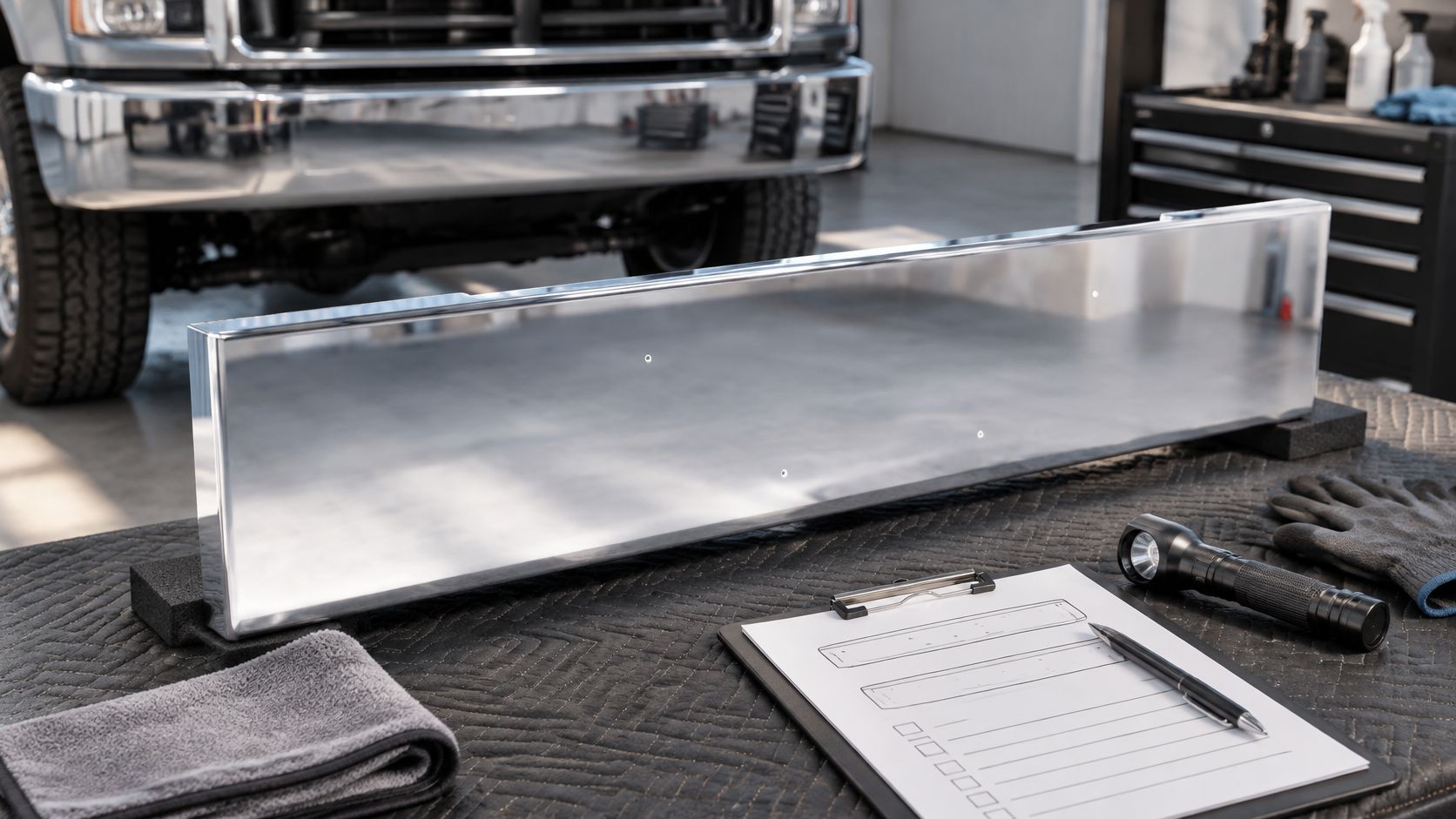
Use strong light on the backside skin, bolt holes, drain paths and seams before you spend time on the shiny face. A clean face with a wet bolt hole or a packed drain is already a repair decision. Photograph and mark pinholes, blisters, lifting chrome and rust bleeding from a fastener. Why salt stays in those traps is covered under why chrome bumpers rust from underneath. This pass is only about what you do once you see it.
Remove loose contamination with neutral detergent and a soft non-abrasive cloth, dry fully, then seal intact plating. ASTM's account of SAE research on exterior chrome-plated vehicle components identifies galvanic and crevice corrosion as the dominant mechanisms at interfaces, with assembly gaps, moisture retention, contaminants and electrochemical potential differences all feeding it. On the mount you keep or the bumper you fit, sealing strips, drainage gaps, rounded transitions and dielectric barriers cut electrolyte retention and isolate dissimilar metals.
When to Replace Instead of Polish
Haze and light spotting get cleaned, dried, sealed and watched at each wash. Pinholes or small chips that stop spreading after two cleaning cycles stay on the seal-and-monitor list. Bubbling, peeling, bare steel at a seam or a cracked bracket means replacement. If you're weighing a repair against a new part, bumper repair versus replacement lays out how to make that call.
Pinholes get watched. Bubbles get replaced. Bare steel at a seam doesn't get a third coat of wax.
I judge a replacement on real wet-and-dry operating cycles, not salt-spray hours alone. ASTM B117 runs a continuous fog of 5% sodium chloride, and the American Galvanizers Association's note on wet-storage staining points out that constant spray can accelerate the wrong corrosion mechanism compared with normal wet-and-dry exposure.
For the part, check three things: a triple-layer chrome finish over a thick nickel underlayer, the warranty length, and whether it ships as a single unit that fits the model and brackets. Our Steel chrome bumper is 10-gauge chrome-plated steel with a direct bolt-on fit, finished in a triple-layer hexavalent chrome process with 35 microns of nickel and sold individually. No drilling applies to the 430 stainless option, not this carbon bumper. The Economy bumper in chrome-plated carbon steel carries a 2-year warranty. The Premium bumper in chrome stainless steel 304 carries a 5-year warranty, which matters on a Salt Belt route if you plan to keep the truck.
Call the blister early and the truck stays on the route. A bumper that fails at a customer dock means a roadside stop, a tow, and a unit that is not earning.
Rust Prevention FAQs
How should a fleet log repeat rust?
Write the truck number, the date, and the exact point: backside, bolt hole, drain path, cutout, or seam. A second mark at the same point means salt is sitting there between washes, so the next wash has to flush and dry that pocket.
What do I do when a bumper bolt will not come out?
Soak the head and the nut from the backside, then turn the fastener in short moves so you do not tear the plating around the hole. If the head starts to round off, stop. Grinding or welding that bolt leaves bare steel and a new pocket for brine.
How do I handle a mixed-metal bracket?
A stainless bumper on a carbon bracket corrodes at the contact face, under the washers, while the polished face still looks clean. Keep the washer stack in place, dry the joint after a brine run, and change a bracket that is already scaling before it stains the chrome around the bolts.
A drain path is packed with road dirt. Do I pull the bumper?
Flush the path from the backside and dry the pocket the same day. If that hole stays blocked, salt sits on the steel between weekly winter washes, and the shiny face will not show it yet.
Galhor Inc. builds direct bolt-on chrome bumpers for Freightliner, Peterbilt, Kenworth, and Volvo Class 8 trucks in chrome-plated carbon steel, 430 stainless, or 304 stainless. In-stock 430 and 304 flat bumpers ship within 48 hours. Made-to-order carbon steel units typically ship in 4 to 6 weeks. Set brand, model, year, style, and cutouts at Galhor Inc..