
Parts for Peterbilt 379: The Complete Fitment Guide
October 3, 2026 · Francisco Hornelas

You can't afford to guess on parts for Peterbilt 379 when the truck is still making money. One bad bumper order or a grille that misses the mounting points turns into wasted freight, lost shop time, and a truck sitting where it shouldn't be. The smart move is to treat every 379 part like a fitment job, not a model-name shortcut.
Table of Contents
- Why the Peterbilt 379 Parts Market Stays Strong
- How to Verify 379 Fitment Before You Order
- Front-End Parts for the Peterbilt 379
- Lighting Mirrors and Exterior Trim
- Suspension Driveline and Mechanical Parts
- OEM vs Aftermarket vs Reproduction Parts
- Steel vs Stainless 430 vs Stainless 304
- Sourcing Lead Times and Shipping Logistics
- Quick-Reference Fitment Checklist
- Peterbilt 379 Parts FAQs
Why the Peterbilt 379 Parts Market Stays Strong
A 379 bumper order can look routine until the truck arrives with a different hood length. The Peterbilt 379 had a long production run from 1987 to 2007 (Peterbilt 379 production run). That span left the market with many configurations and build details, so “fits 379” is only a starting point.
The front-end configuration matters first. Trucks used different hood lengths, including the 119-inch BBC and 127-inch extended hood versions. A bumper, grille, hood panel, or fender can match the model name and still miss the truck's mounts or panel lines. Side-specific fitment adds another trap. Driver-side and passenger-side pieces are not interchangeable where the component is shaped or drilled for one side.
The 379 remains in service because owners continue to put revenue miles on trucks they know and maintain. It has been described as one of the most popular owner-operated trucks of all time (379 popularity and market demand). That working life supports demand for replacement, restoration, and collision parts, including components made from different steel and stainless grades. The right choice depends on corrosion exposure, appearance, budget, and how quickly the truck must return to work.
Why the model name is never enough
A reliable lookup starts with hood length, then checks side, mounting style, and the OE cross-reference. Those details reduce the risk of ordering a visually similar part that requires rework. They also make material and supplier lead-time comparisons useful, rather than treating every listing as interchangeable.
Practical rule: A 379 listing should identify hood length, side, mounting style, material, and OE cross-reference before you place the order.
This guide keeps that workflow at the center. It treats parts for Peterbilt 379 as fitment decisions tied to uptime, freight, and shop labor, not generic catalog purchases.
How to Verify 379 Fitment Before You Order
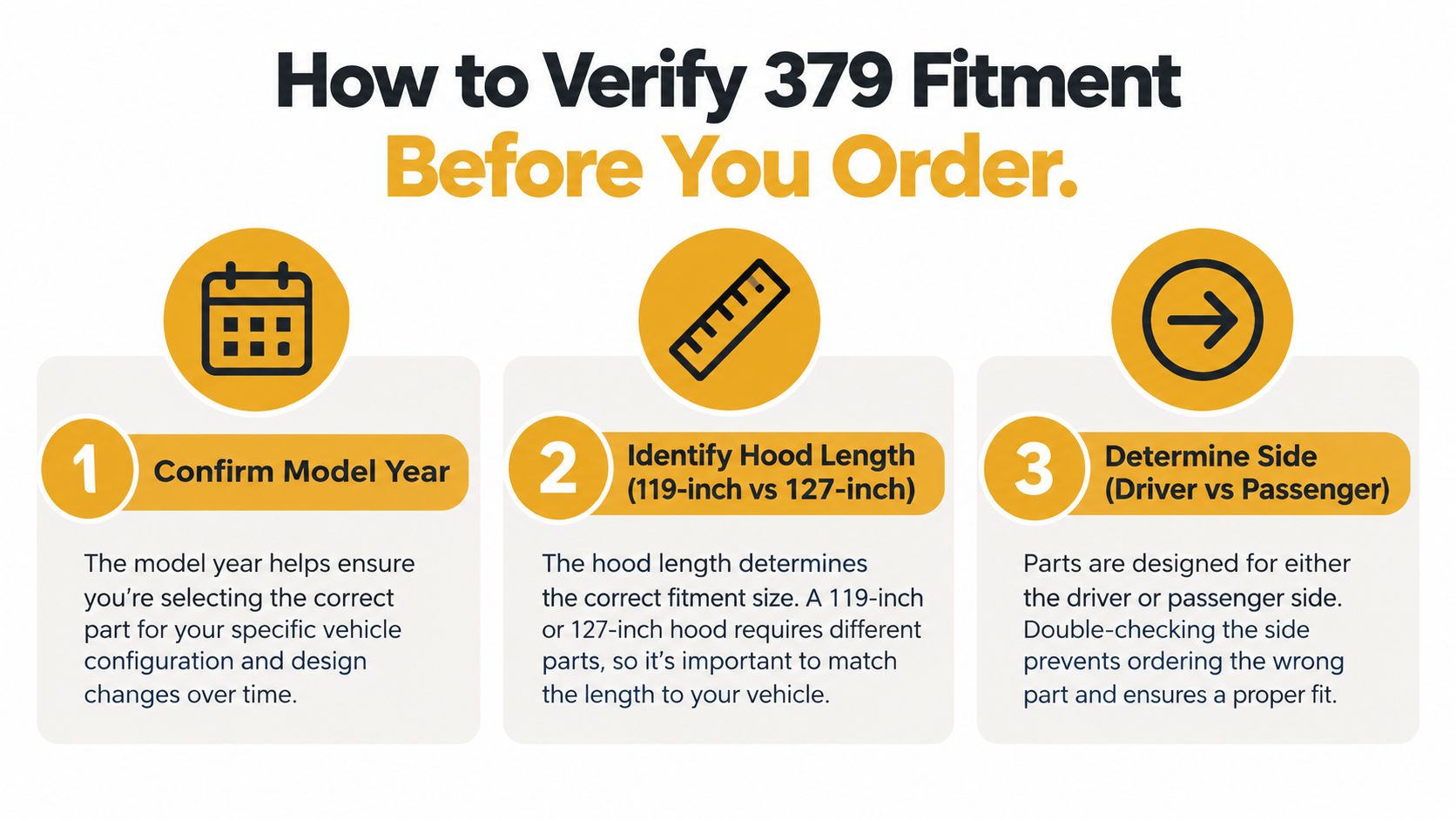
A listing can show “Peterbilt 379” and still leave you with the wrong bumper, grille, or hood panel. Verify the truck first, then the part, then the OE reference. That sequence catches fitment problems before freight and shop time are committed.
The workflow that prevents wrong orders
- Confirm the model year. The 379 was built from 1987 to 2007 (production years). That range narrows the search, but it does not identify every front-end configuration.
- Measure or confirm the hood length. A 119-inch hood and a 127-inch hood can use different front-end parts. The collision catalog separates those configurations, so check the hood length before comparing listings (379 collision catalog).
- Record the side. Driver-side and passenger-side parts are not interchangeable when the component has side-specific shaping or drilling. Hood panels, fender sections, and mirror assemblies need the correct side stated on the order.
- Match the OE cross-reference. For the 379 grille, the catalog lists part number RPG001, with cross-references 13-03507 for the 119-inch hood and 13-03508 for the 127-inch hood. Compare those numbers with the listing and the truck's existing part before ordering.
Use the same checks on a bumper. The Chrome bumper for Peterbilt 378 / 379 is listed at $689.99, with in_stock availability and 100 variants. Those variants still need review for mount style, material, and cutout configuration. Galhor, Inc. offers the bumper in 10-gauge chrome-plated steel and 3 mm chrome-plated Stainless Steel 304/430, so fitment and material should be selected together.
If a listing only says “379,” stop there. Confirm the bolt pattern, hood length, side, mounting style, cutouts, and OE cross-reference. Older trucks may also carry repaired or modified mounting points, making photos and measurements worthwhile before freight is booked.
Front-End Parts for the Peterbilt 379
A 379 can sit in the bay with the hood open while the wrong front-end part is already on the way. The usual cause is a listing that says only “Peterbilt 379.” Hood length, side, mounting details, and the truck's existing hardware decide whether that part fits. Treat those details as the lookup process, not as a final VIN check after you have chosen a listing.
Bumpers need more than width
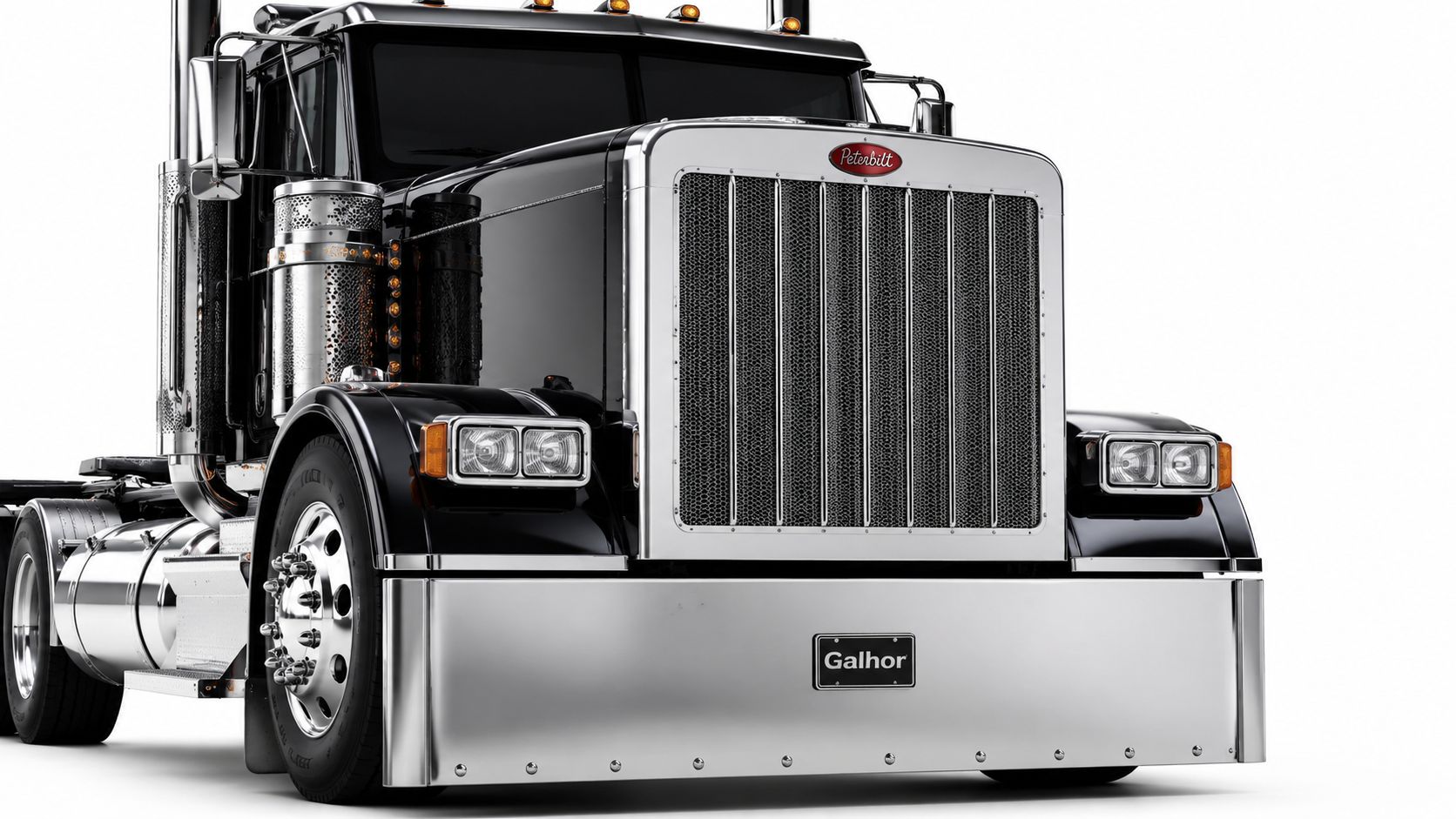
A bumper's height and width are only the starting point. The Chrome bumper for Peterbilt 378 / 379 from Galhor, Inc. is made from 10-gauge chrome-plated steel with a mirror-polished finish, or 3 mm chrome-plated Stainless Steel 304/430. It is available in standard mount and blind mount versions, with a direct bolt-on fit for Peterbilt 378 / 379 and no drilling or cutting required.
Material changes the decision. Steel gives the bumper a different weight and cost profile, while stainless options address a different balance of corrosion resistance, finish, and service conditions. Select the material together with the mount style rather than assuming every listed variant shares the same construction.
The surface finish also needs review. The chrome uses a triple-layer hexavalent chrome process with 35 microns of nickel. That specification matters when the truck works through wet roads, winter treatment, frequent washing, or long highway miles. A low-cost replacement can look acceptable at delivery and still create more finish work later.
Grilles, hoods, and sheet metal follow the same logic
Hood length controls more than the hood itself. It affects grille selection, fender shape, hood extensions, pivot areas, and the way the front panels meet. Confirm whether the truck has the 119-inch hood or 127-inch hood before comparing grille or sheet-metal listings.
Side-specific parts create another common ordering error. Driver-side and passenger-side fender sections, hood panels, and related brackets can have different shaping or drilling. Use the truck's side and existing mounting holes when ordering, and review the Peterbilt 379 fenders reference before choosing replacement panels.
A bumper with light openings or a tow hitch cutout is a different order from a plain face bar, even when both suit the same model family. Match the cutout layout, mount style, material, hood length, and OE cross-reference. If the truck has repaired mounting points, take measurements and photos before freight is booked. That small check can prevent an expensive return and keep a working truck out of service.
Lighting Mirrors and Exterior Trim
A 379 can look complete until the first replacement light, mirror, or trim piece reaches the bench. A part may match the model name yet miss the truck's mounting holes, side position, or existing finish. Read the bumper, mirror, and trim listing as a fitment record, then compare its OE cross-reference with the truck's parts before ordering.
Hole layout drives the purchase
Bumper lighting starts with the metal layout. One 379 bumper listing specifies a 16-inch-tall profile, a center tow hitch cutout, and six 6-inch oval light openings (bumper cutout example). Those details determine which lamps and bezels will install cleanly. Confirm the opening shape, spacing, and mounting method rather than ordering lights by truck model alone.
The same check applies to light bars and auxiliary lamps. Compare the existing holes and wiring location with the replacement part, especially on a truck that has had a bumper repaired or changed. If a cutout layout is wrong, the installer may need new brackets, filler work, or a second freight order.
Mirrors and trim balance finish with service life
Mirror housings, brackets, cab trim, and polished add-ons serve both appearance and daily use. Chrome suits a show truck or a highway tractor that receives regular cleaning. Polished stainless is usually a more practical choice where winter roads, wash chemicals, and road film would quickly expose pitting or corrosion. The finish affects replacement work as well as appearance, since a damaged or rusty piece becomes another maintenance task.
Match the side, bracket style, bolt pattern, and finish to the existing assembly. A mirror that looks right in a catalog can still sit incorrectly if the arm or mounting plate belongs to another configuration.
If the truck is already receiving a bumper, order the matching light layout with it. Separate orders can leave mismatched openings and add avoidable freight.
Cab accessories require the same scrutiny. A drop visor for Peterbilt 379 must suit the cab shape, mounting points, and surrounding finish, not just the 379 badge.
Suspension Driveline and Mechanical Parts
A 379 that pulls under braking, shakes at road speed, or leaves a fluid trail needs a system diagnosis before anyone orders parts. Chasing symptoms with a random replacement wastes bay time and can leave the original fault untouched. Start with the affected system, identify the chassis component, then verify its OE cross-reference and configuration.
Start with the subsystem map
The 379 service manual organizes repairs by system, covering hubs, wheels and tires; front and rear axles; brakes; air system and tubing schematics; transmission; clutch; driveshaft; frame; cab; cooling; engine removal and installation; instrumentation; electrical with wire schematics and circuit protection; steering; suspension; lubrication and filters; noise control; and HVAC (379 service manual structure). Use that structure as the starting point for parts research, not the model name alone.
A brake complaint belongs in the brake system. A temperature problem belongs in cooling. Air, electrical, and cooling faults can affect other components, so confirm the circuit, hose routing, connector, or mounting arrangement before ordering. If the truck has a nonstandard repair history, compare the installed part with the schematic and record the existing configuration.
Match mechanical parts to the chassis
Driveshaft work depends on shaft length, slip arrangement, yoke pattern, and universal-joint size. Suspension components must match the axle, spring or air layout, mounting points, and available clearance. Brake parts need the correct axle and system specification. Two 379s can share a model badge while carrying different mechanical assemblies.
Check the OE number against the current component, then confirm side, dimensions, and mounting details with the supplier. That extra check costs less than returning a heavy part or putting a revenue-earning truck back in the bay. Order by verified system and component, not by a broad “379 parts” search.
OEM vs Aftermarket vs Reproduction Parts
The right channel depends on the job. A structural or safety-related part demands confirmed specifications. An exterior piece may allow more choice, provided hood length, side-specific fitment, mounting points, and the OE cross-reference all match. The goal is a truck that returns to work without a second installation.
Channel trade-offs that matter
| Channel | Availability | Lead Time | Corrosion Resistance | Best For |
|---|---|---|---|---|
| OEM | Uneven across older 379 sheet metal channels | Can be slower when stock is thin | Depends on the original part | Original-spec restorations and exact-match jobs |
| Aftermarket | Broad on common wear and collision items | Often faster when inventory is on hand | Depends on the material and build | Working trucks that need direct-fit replacement |
| Reproduction | Depends on third-party stamping and stock | Can be slower when supply is low | Varies by maker and coating | Older exterior pieces that are no longer easy to source |
Older 379 sheet metal and exterior parts can be difficult to source. The availability guidance notes that some OEM-supplied items are no longer easy to find, while reproduction supply depends on third-party stamping and low-stock inventory (379 parts and reproduction availability). Confirm the OE number, hood length, left or right side, dimensions, and mounting arrangement before choosing a substitute.
Aftermarket parts often make sense for a working truck when inventory is available and the listing provides clear fitment information. Reproduction parts can keep an older exterior configuration intact, but the maker, coating, stamping accuracy, and expected lead time deserve closer review.
The lowest purchase price may cost more after installation if the part needs rework, develops rust quickly, or delays the truck. Compare material, fit, corrosion resistance, warranty terms, and delivery timing against the truck's workload. A revenue-earning 379 usually needs the part that reduces repeat labor, not the part with the lowest initial price.
For a broader comparison of supply channels, see Are OEM parts better than aftermarket.
Steel vs Stainless 430 vs Stainless 304
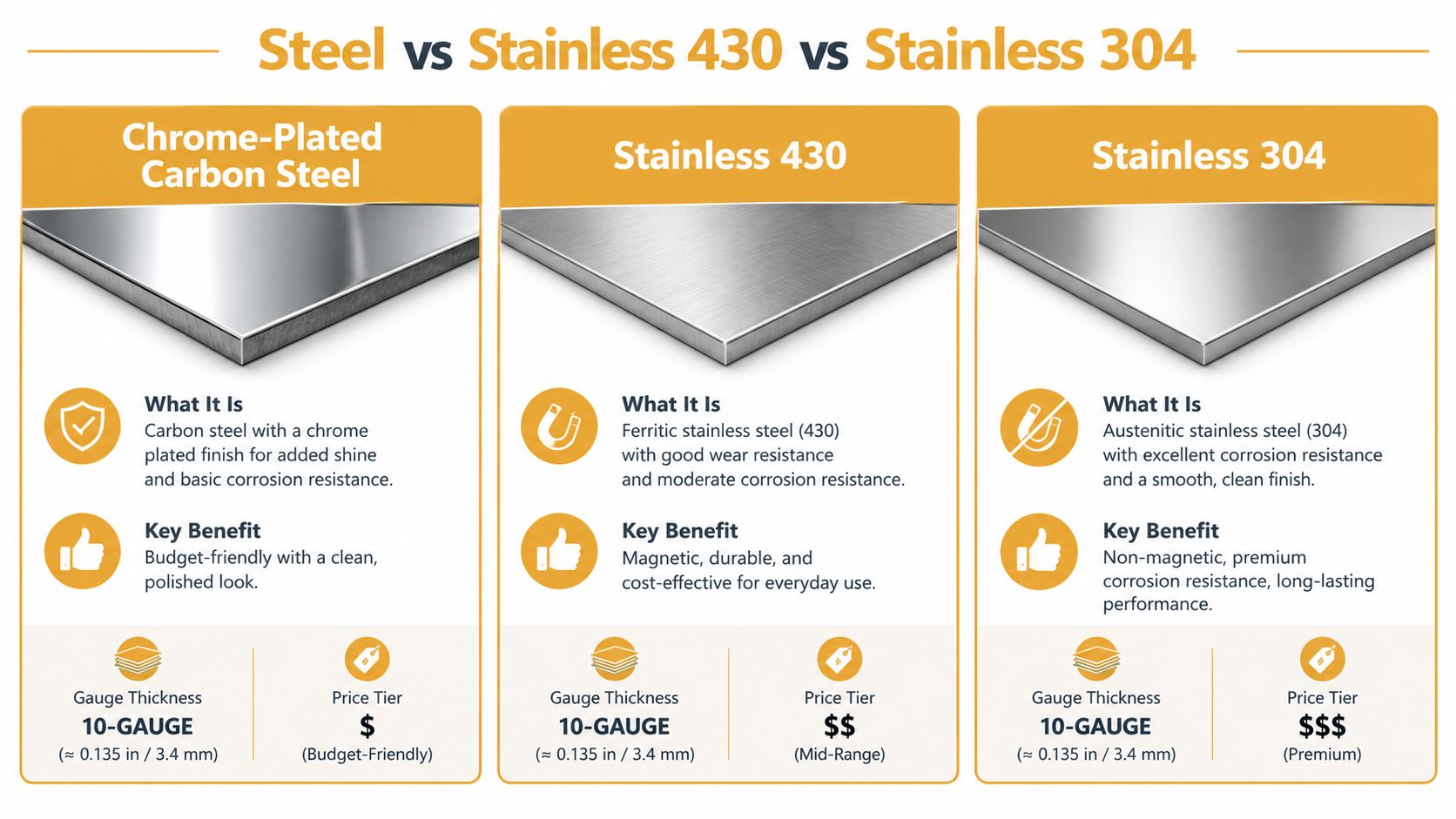
A 379 bumper or trim piece gets judged in real-world conditions, on salt, grime, wash chemicals, and heat cycles. Material choice decides how much touch-up work you buy later.
The three realistic choices
Chrome-plated carbon steel gives the classic look and appears in 10-gauge form on bumper builds like the Galhor 378 / 379 bumper. It keeps the upfront price down and fits the period-correct look, but winter salt and poor care will show up faster.
Stainless 430 is a 17% chromium ferritic stainless steel used for decorative trim, and it resists corrosion from atmosphere, fresh water, steam, and many petroleum products (Type 430 stainless data). The same data sheet notes better chloride-stress-corrosion cracking resistance at high temperatures than austenitic Types 304 and 316.
Stainless 304 is usually the premium call for exterior bumpers. One source describes it as an austenitic alloy with 18-19.5% chromium and 8.0-10.5% nickel, with stronger corrosion resistance than 430 in chloride and pitting conditions and an ultimate tensile strength of 73,200 psi (Type 304 stainless overview).
What works where
A truck that stays in fair weather can run chrome-plated steel and do fine with regular cleaning. Mixed weather use points toward 430, especially when the truck still needs a cleaner look without jumping straight to premium stainless.
Salt-belt routes, winter washdowns, and trucks that live outside push the choice toward 304. It costs more up front, but it holds up better where corrosion starts first, at seams, edges, and fastener points.
The right call follows the truck's route and duty cycle. A showroom finish matters less than a part that stays on the truck and stays presentable without constant rework.
Sourcing Lead Times and Shipping Logistics
A truck sitting in the bay does not care how good the bumper looks on paper. If the part is on the shelf, the repair moves. If it is backordered, the truck keeps burning time and shop space.
Stock status changes the whole plan
Galhor's in-stock stainless steel 430 and 304 flat bumpers can ship within 48 hours, while made-to-order carbon steel units typically ship in 4 to 6 weeks. That gap decides whether a truck is back on the road quickly or parked while parts are built. For collision work and home-time upgrades, lead time belongs in the order decision from the start.
Large parts like bumpers usually move by LTL freight, so shipping speed across the United States matters as much as the part spec. A shop that turns collision work every day needs a fast-ship option to keep bays open. An owner-operator planning an upgrade around home time needs a delivery window that matches the calendar, not a guess.
Fast shipping is part of the fitment check. The right bumper that shows up late still hurts uptime.
Galhor also backs its bumpers with warranty coverage for manufacturing defects and clear shipping and returns policies. If a defect shows up, or the order needs review, that support gives the buyer a cleaner path to fix the problem. For revenue trucks, that matters just as much as finish quality.
Order the material, mount style, and cutout layout first, then place the order while the truck is still in the bay. That cuts the chance of a second freight charge and keeps the repair moving.
Quick-Reference Fitment Checklist
A 379 bumper or grille can look right and still miss the truck by an inch. Start with the build details that control fit, then order against those, not the photo.
- Confirm the model year, because the 379 runs from 1987 to 2007 and that range is only the first filter.
- Confirm hood length, because 119-inch and 127-inch setups can call for different front-end parts.
- Confirm the side, because driver and passenger parts are not always interchangeable.
- Confirm the mounting style, because bumper fit can vary between standard mount and blind mount.
- Confirm the cutout layout, because lights, tow openings, and bumper shape have to match the truck.
- Verify the OE cross-reference, because part numbers like RPG001, 13-03507, and 13-03508 help keep grille orders straight.
- Choose the material for the route, because carbon steel, 430, and 304 handle salt and weather differently.
- Check stock and lead time, because a quick ship can keep a revenue truck moving.
Peterbilt 379 Parts FAQs
Will 389 parts fit a 379? Sometimes the shape looks close, but the fit still depends on the exact mount, hood length, and front-end layout. I always check the truck details before sending a bumper, grille, or sheet metal piece.
What if I don't know my hood length? Measure the front end and compare it with the truck's build details. Use the VIN decode if you have it, or match the hood and grille layout against known 119-inch and 127-inch setups before you order. That check saves a return.
What should I do when a listing only says “fits 1987-2007”? Treat it as a broad filter. Ask for hood length, side, mount style, and OE cross-reference before you pay. If the seller cannot answer those points, the listing is not complete enough for a working truck.
Can I order by appearance alone? You can, and that is how wrong-fit parts end up on the dock. A 379 bumper or trim piece has to match finish, cutouts, and mounting style before it matches the look. Send the truck details first, then place the order.
Galhor Inc. builds direct-fit chrome bumpers for Class 8 trucks, with material choices, mount styles, and cutout layouts set up for real working trucks. If you are sorting out parts for Peterbilt 379, visit Galhor Inc. and match the bumper setup to your hood length, mount, and finish before the truck loses another day.