

Class 8 Truck Accessories That Actually Pay Off
You're parked outside a chrome shop in Amarillo with road grime still stuck to the tanks and a fresh hit on the front bumper. Your Peterbilt 389 needs to get back under the load before sundown, and the choice is sitting on the counter: a $600 chrome-plated bumper or a $1,200 stainless version. The cheaper part looks good today. The heavier-duty option may look better after another winter, another gravel road, and another run through the Salt Belt.
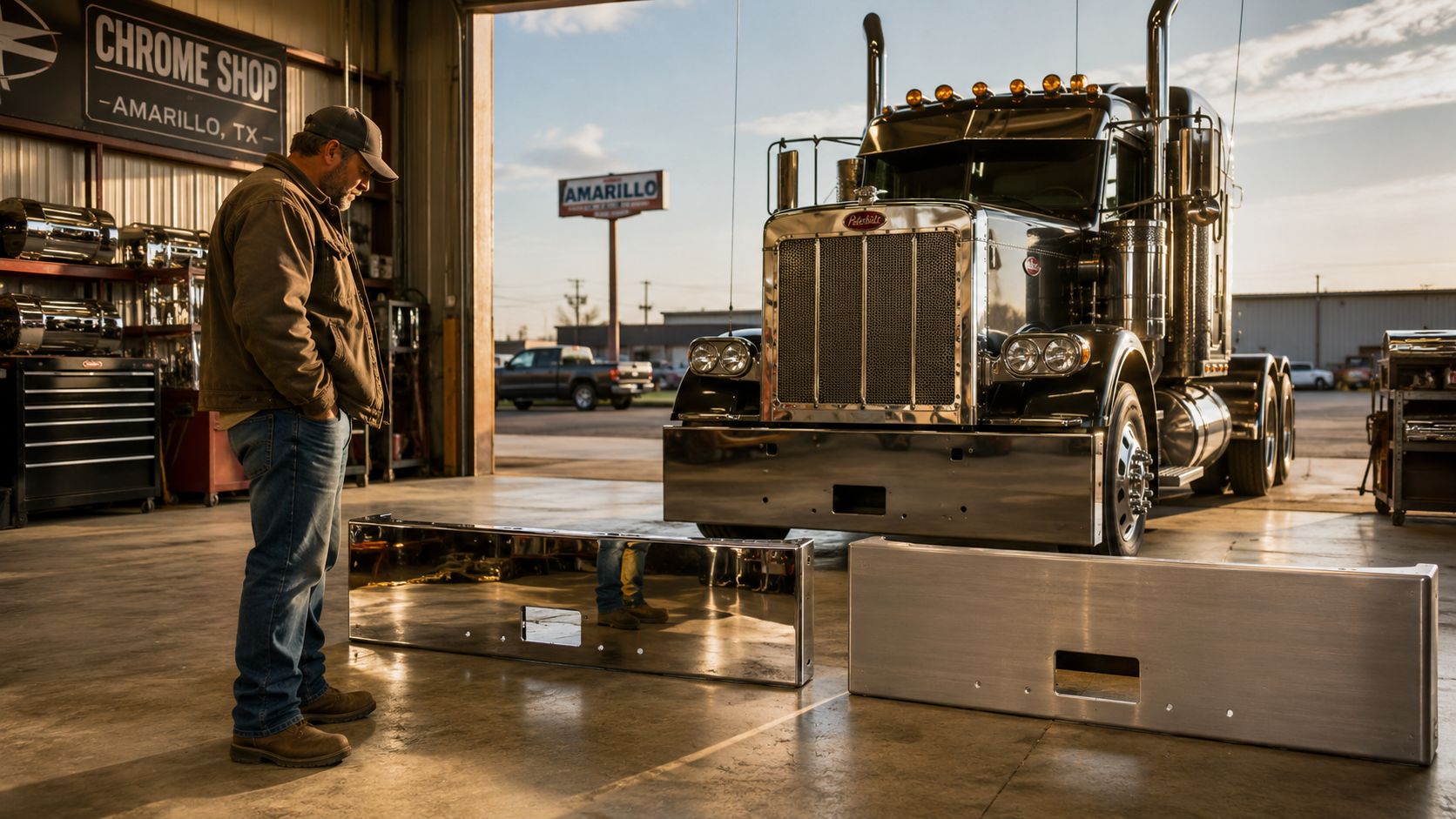
That decision is the core conversation behind class 8 truck accessories. Every bumper, light, mirror, step, storage box, and aerodynamic panel has a payback story. Some protect uptime. Some reduce drag. Some survive corrosion. Others are mostly style, and there's nothing wrong with that if you know what you're buying.
The mistake is treating every shiny part as equal. A bumper that saves a road call, a mirror that improves visibility, or a fairing that trims drag deserves priority over trim that only looks good at the fuel island. Material, thickness, exact fitment, installation, and long-term resale value all belong in the same buying decision.
Table of Contents
- The Long-Haul Reality Every Driver Knows
- What Class 8 Trucks Actually Are
- Choosing the Right Material for the Job
- Accessories That Earn Their Keep on the Road
- Real ROI From Smart Accessory Choices
- Fitment Steps That Prevent Costly Mistakes
- Build Your Priority Buy Plan
The Long-Haul Reality Every Driver Knows
The shop in Amarillo smells like hot steel, tire rubber, and polishing compound. A driver stands beside his Peterbilt 389, looking at two bumpers while his phone keeps lighting up with dispatch messages. One bumper carries the lower price. The other carries a stainless construction that costs more up front.
The driver isn't shopping for a trophy. He's trying to get back on the road without buying the same repair twice. Road debris already proved the original bumper had a job beyond looking sharp. It protected the front end, took the impact, and now needs to be replaced without creating a new problem at the next inspection or wash bay.
Practical rule: Buy the part for the worst road and worst weather your truck actually sees, not for the parking lot where you install it.
Winter changes the math quickly. Salt, moisture, freeze-thaw cycles, gravel, and repeated cleaning attack exposed metal. Chrome-plated steel can make sense for a truck that spends most of its time in dry conditions and gets regular care. Stainless steel usually makes more sense when corrosion would force another replacement or create downtime.
The same thinking applies to the rest of the truck. A light bar may improve visibility, but it also needs secure wiring and a housing that can handle vibration. A step should provide dependable footing in mud and ice, not just match the bumper. A storage box can protect tools from weather and keep a driver from wasting time searching through the sleeper.
The accessory market follows working trucks
The broader commercial-vehicle accessories market is a useful neutral proxy for Class 8 demand. One estimate placed that market at USD 93.9 billion in 2023 and projected it to reach USD 146.2 billion by 2032, an increase of about 55.7% over nine years, with a CAGR above 5% from 2024 to 2032. Trucks represented over 42% of market share in 2023, according to the commercial vehicle accessories market estimate.
That matters because Class 8 tractors are the highest-value heavy-duty trucks in freight and long-haul work. Accessory demand follows fleet expansion, replacement cycles, customization, and the cost of keeping a truck productive.
The rest of this guide treats accessories like a chrome-shop owner would. Check the metal. Check the mount. Check the chassis. Then ask whether the part pays back through uptime, fuel use, durability, comfort, or resale.
What Class 8 Trucks Actually Are
A Class 8 truck sits in the heaviest commercial vehicle bracket, with a GVWR above 33,000 pounds. That group includes the highway tractors most drivers call semis, along with heavy vocational trucks built for demanding work.
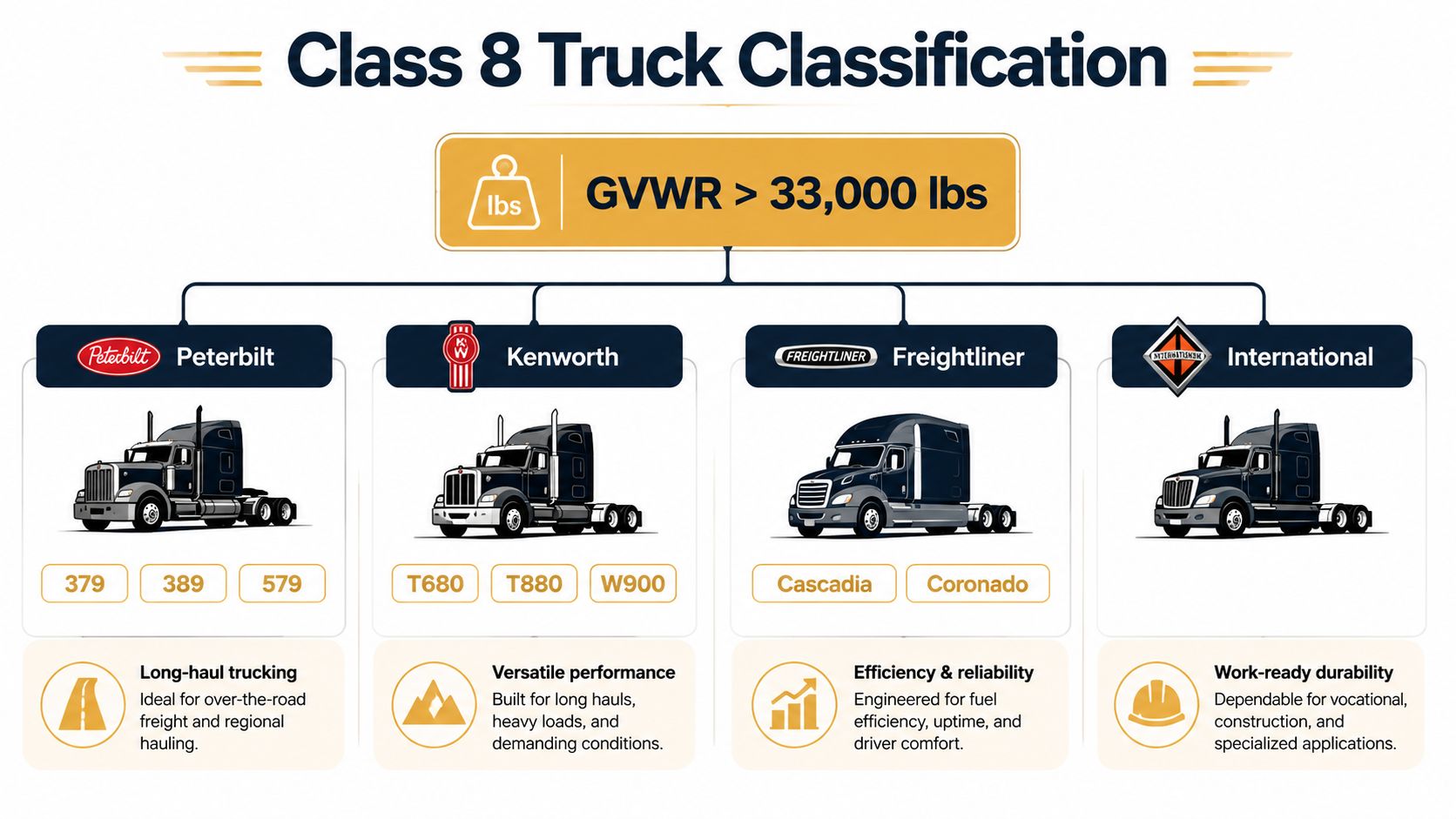
Common models include:
- Peterbilt: The 379, 389, and 579 cover classic long-nose styling and newer highway applications.
- Kenworth: The T680, T880, and W900 serve highway freight, vocational work, and traditional owner-operator builds.
- Freightliner: The Cascadia and Coronado use different body designs, mounting systems, and aerodynamic treatments.
- International: LT and HX trucks cover highway and heavy vocational applications.
- Other major brands: Mack, Volvo, and Western Star also build Class 8 trucks for U.S. freight and specialized work.
The class rating tells you the truck's weight bracket. It doesn't tell you which bumper, mirror, fender, bracket, or light assembly will fit. That distinction saves buyers from expensive returns.
Identify the truck before choosing the part
Write down the exact:
- Manufacturer and model
- Model year
- Chassis series or generation
- Day cab or sleeper configuration
- Front axle and hood arrangement
- Existing bumper mount style
A sleeper cab usually has different proportions and accessory needs than a day cab. A long-haul tractor may need a different fairing layout, mirror setup, and storage arrangement than a regional day cab. Model-year refreshes can move bracket locations, change grille contours, or alter electrical connections.
Peterbilt's body builder manual lists a front-of-bumper-to-front-frame dimension of 11.4 inches and a front-axle-to-front-frame dimension of 19.6 inches, which shows why bumper fitment depends on chassis measurements, not just the badge on the hood. The Peterbilt heavy-duty body builder manual is the right kind of reference to use before ordering.
Independent fitment listings cross-list 18-inch and 20-inch blind-mount bumpers for specific models including the Kenworth W900A, W900B, W900L, W990L, Peterbilt 359, 379, 388, 389, and Freightliner Classic series. That model and generation detail appears in this Class 8 bumper fitment listing.
For an older Peterbilt, the Chrome bumper for Peterbilt 378 / 379 uses 10-gauge chrome-plated steel with a mirror-polished finish, with a 3 mm chrome-plated Type 304 or Type 430 stainless option. It's available with standard or blind mounting and is listed as a direct bolt-on for Peterbilt 378 and 379 applications.
Choosing the Right Material for the Job
Material choice controls how an accessory handles corrosion, impact, cleaning, scratches, and replacement. Don't choose by shine alone. Ask where the truck runs, how often it sees salt, and whether a damaged part can be replaced without taking the truck out of service.
Type 304 stainless steel offers better general corrosion resistance than Type 430. Type 430 still performs well against atmospheric exposure, fresh water, and steam, but its resistance to pitting and crevice corrosion is lower than Type 304's, as documented in the stainless steel grade data.
| Material | Corrosion Resistance | Weight (lbs per ft) | Approx. Cost | Best Use |
|---|---|---|---|---|
| Stainless 304 | Strong general corrosion resistance, well suited to harsh exposure | Not specified in verified data | Not specified in verified data | Bumpers and parts exposed to salt and moisture |
| Stainless 430 | Good atmospheric resistance, lower pitting and crevice resistance than 304 | Not specified in verified data | Not specified in verified data | Bumpers and trim in milder exposure |
| Chrome-plated carbon steel | Bright finish, but the plating remains the corrosion barrier | Not specified in verified data | Not specified in verified data | Budget-conscious builds with regular care |
| Polished aluminum | Lightweight material option, but surface damage can show easily | Not specified in verified data | Not specified in verified data | Lightweight panels and selected trim |
The table leaves out weight and price figures because those depend on the specific part, thickness, shape, and supplier. A bumper isn't priced or weighed by metal name alone.
Thickness matters after the first hit
A Canadian technical review found that a heavy-duty bumper increased fuel consumption by 2% in testing, partly because of added weight. That same review noted that stainless-clad bumper outer layers were about 42 thousandths of an inch thick, compared with 2 to 4 thousandths of an inch for typical chrome plating. The Canadian heavy-duty truck aerodynamics review helps explain why a clad or stainless surface can resist rust better after abrasion or impact.
Type 430 can be a sensible middle ground, especially when the truck needs a polished appearance without the full material choice of Type 304. Carpenter rates Type 430 humidity resistance as excellent, salt spray resistance as moderate, and seawater exposure as restricted in its Type 430 stainless data sheet.
Chrome-plated steel still has a place. It gives a classic show-truck finish and can fit a budget build, but it demands honest maintenance expectations. If the truck works through salted northern routes, corrosion resistance should outrank the lowest initial price.
Accessories That Earn Their Keep on the Road
A working Class 8 truck should earn its accessories in a clear order. Safety, uptime, comfort, and fuel use come before decorative trim. Style still matters, especially for an owner-operator protecting resale value, but a polished part that creates a repair headache isn't a smart upgrade.
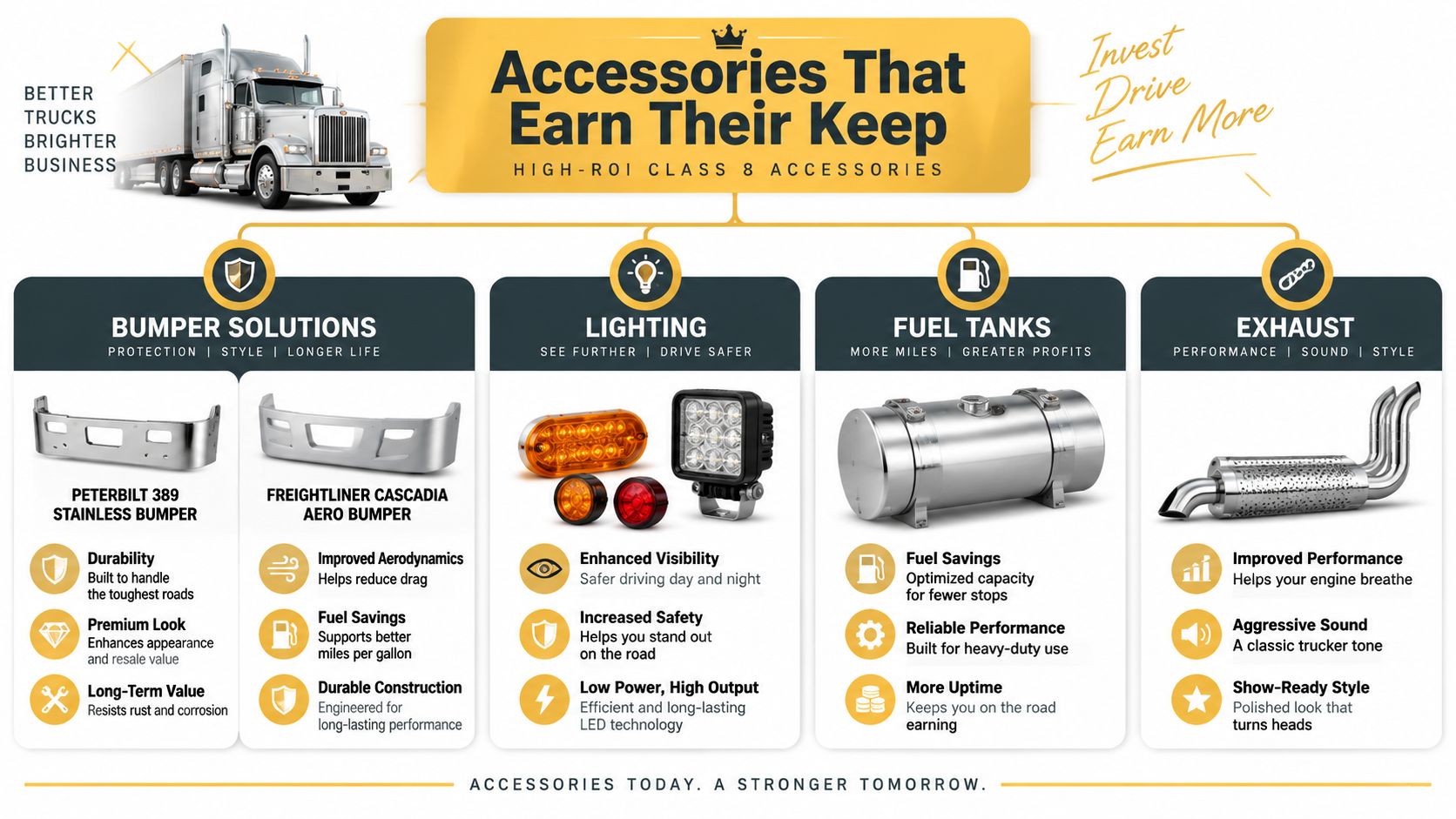
Start at the front of the truck
A heavy-duty bumper protects the front structure and sets the truck's appearance. For a Peterbilt 389, choose a bumper with verified chassis fitment, a construction suited to your climate, and enough thickness to handle road debris without turning a minor hit into a full front-end repair.
Freightliner Cascadia owners should pay closer attention to aerodynamic bumper designs and clearance around sensors, lamps, and body panels. The right part must support the truck's existing airflow strategy rather than add weight or create gaps.
Lighting comes next. LED projector headlights, marker lights, and sealed housings can improve visibility and reduce the nuisance of frequent bulb or housing replacement. Match the light assembly to the truck's electrical system, especially on newer trucks with integrated vehicle electronics.
Spend on contact points and visibility
Heated mirrors help in freezing weather. Anti-glare convex spots give the driver a better view around the trailer and blind zones. A mirror upgrade earns its keep when it prevents a scrape, missed object, or unsafe lane change.
Cab steps and grab handles also deserve more attention than they get. Drivers climb in and out during rain, ice, mud, and loading work. A stable step with a useful grip protects comfort and helps reduce slip risk.
Storage boxes under the cab or on a headache rack keep chains, tools, straps, and repair supplies protected. Organized storage reduces wasted time and keeps loose equipment from damaging the sleeper or frame.
For tire-related planning, use a practical maintenance resource such as semi tire pressure monitoring guidance when deciding whether monitoring equipment belongs in the first upgrade group.
Aerodynamic add-ons deserve a calculation, not a guess. The ICCT summarized independent testing showing that individual aerodynamic aids typically reduced distance-specific fuel use by about 1% to 15%, while combinations of devices reduced fuel use by 25% or more. The ICCT review of aerodynamic drag and rolling resistance supports prioritizing roof deflectors, side skirts, chassis fairings, and wheel-area treatments on trucks that spend most of their time at highway speed.
Sun visors, fender guards, exhaust pieces, and polished trim can add visual appeal and help an owner-operator stand out. Buy them after the truck has dependable lighting, mirrors, footing, storage, and airflow management. A sharp truck sells better when its service records and working condition support the appearance.
Real ROI From Smart Accessory Choices
A part earns its place when it cuts operating cost, prevents downtime, protects resale value, or does two of those jobs at once. Start with your own fuel records, repair invoices, mileage, service history, and trade-in results. A generic fuel-savings promise is not a business case.
Build the calculation around three payback buckets:
Fuel: Compare fairings, roof deflectors, side skirts, and wheel-area improvements with actual highway miles and fuel purchases. Use a baseline from several comparable trips, then measure after installation. For example, at 2,500 miles per week and $4 per gallon, a 3% fuel saving would cover a $1,500 fairing kit in roughly five months, assuming the truck's baseline fuel use supports that saving. Replace the placeholder inputs with your own records before buying.
Downtime: Add the cost of the part, installation, freight, lost revenue, towing, and shop time. A corrosion-resistant bumper or sealed lighting assembly may pay back through fewer replacements and road calls, even when fuel savings are minimal. Record each avoided repair instead of assigning an unsupported annual figure.
Resale: A straight bumper, complete lighting, clean storage, documented installation, and sound service history can strengthen buyer confidence. The return depends on truck model, condition, demand, and maintenance. Cosmetic chrome may help resale, but it usually belongs after working equipment has paid for itself.
| Accessory | Upfront Cost | Annual Payback | Payback Period |
|---|---|---|---|
| Aerodynamic fairings and side skirts | Verify current quote | Measure fuel use before and after installation | Based on measured fuel change |
| Corrosion-resistant bumper | Verify material and current quote | Track avoided replacement and downtime | Based on actual repairs avoided |
| Sealed LED lighting | Verify assembly and installation quote | Track replacements and road calls | Based on actual service history |
| Heated mirrors and convex spots | Verify current quote | Track visibility-related repairs and driver value | Based on operating results |
| Cosmetic chrome trim | Verify current quote | Resale and owner satisfaction | Often a style-led decision |
Use a simple road-call formula: total event cost equals repair parts, labor, towing, missed loads, and the driver's paid idle time. One avoided event can change the payback more than a small appearance upgrade.
Weight belongs in the calculation too. The heavy-duty bumper penalty noted earlier means protection and construction must be balanced against added mass. Choose the bumper that handles your work without automatically buying the thickest option.
For wheel upgrades, review aluminum wheels for semi trucks alongside tire requirements, axle loads, maintenance, corrosion exposure, route conditions, and resale plans. Weight reduction only counts as ROI when it produces a measurable operating benefit.
Fitment Steps That Prevent Costly Mistakes
Wrong fitment turns a simple bumper purchase into a shop delay. The part may look right in a photo and still miss the frame, grille, hood, tow hooks, sensors, or mounting holes by enough to stop installation.
Peterbilt measurements show why model names alone aren't enough. A bumper order needs the exact truck identity and the physical dimensions behind it.
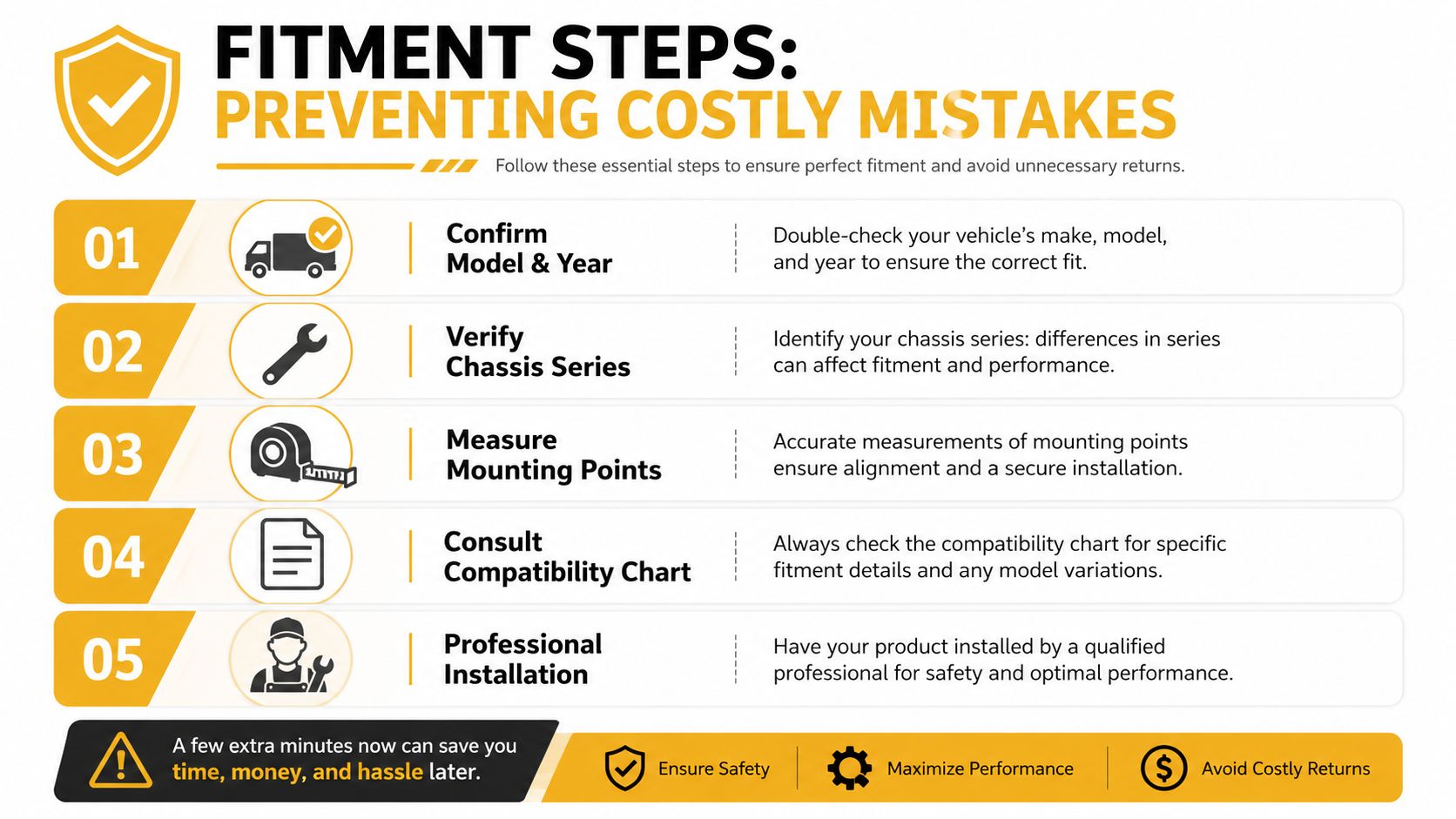
Follow this checklist before ordering
- Confirm model and year. Record the manufacturer, model, chassis series, model year, day cab or sleeper configuration, and any front-end changes. A 2018 Peterbilt 389 bracket shouldn't be assumed to seat a 2022 unit.
- Verify chassis measurements. Measure chassis width, frame rail thickness, bumper mount height, and the distance between mounting points. Compare those measurements with the supplier's fitment details.
- Choose the mounting style. Standard mount and blind mount aren't interchangeable choices. Decide whether the installation should use visible fasteners or a blind-mount appearance, and confirm whether the selected setup requires drilling or cutting.
- Check electrical compatibility. Newer Cascadia and T680 trucks may use CAN-bus electrical systems. Confirm harness connectors, load requirements, warning systems, and any needed adapters before changing headlights or marker lights.
- Protect working clearance. Aerodynamic panels must clear tire chains, load bars, tires, suspension movement, and fifth-wheel positions. A fairing that contacts a tire or chain will cost more than it saves.
- Save the paperwork. Keep OEM part numbers, measurements, supplier invoices, installation notes, and warranty documents. Those records help with future repairs and give a buyer confidence at resale.
Installation deserves the same attention
A direct bolt-on part can still be installed poorly. Check fastener grade, bracket condition, frame alignment, wiring protection, and final clearance. If the truck took an impact, inspect the mounts and frame before bolting on a replacement bumper.
Use a documented truck accessories installation checklist when the job involves wiring, blind mounts, sensors, or aerodynamic panels.
Before you sign off: Turn the steering lock to lock, inspect tire and chain clearance, test every lamp, and verify that the bumper sits square to the hood and frame.
Build Your Priority Buy Plan
An owner-operator and a fleet manager shouldn't buy class 8 truck accessories in the same order. One person may value comfort and resale on a single truck. A fleet needs repeatable parts, predictable maintenance, and fast replacement across multiple units.
The owner-operator plan
Start with the parts you touch and depend on every day.
- First, improve the work environment. An air-ride seat, dependable LED headlamps, heated mirrors, and secure grab points support long-haul comfort and visibility. Move these purchases to the front when the truck runs high annual mileage or the driver spends long periods away from home.
- Next, address fuel use. Add chassis fairings, side skirts, roof deflectors, or other verified aerodynamic equipment when the truck spends most of its time at highway speed. Record fuel use before installation and compare it under similar routes and loads.
- Then, protect the front end. Choose chrome, Type 430 stainless, or Type 304 stainless based on road salt, moisture, impact exposure, and the truck's expected ownership period. A northern route justifies more corrosion resistance than a dry regional route.
- Finish with storage and appearance. Headache racks, storage boxes, sun visors, fender guards, and polished trim make sense once the truck's core working systems are dependable. Good appearance can support resale, but it can't replace service records.
The fleet manager plan
Standardize bumper profiles, lighting assemblies, brackets, and wiring practices across the fleet. Consistency makes inspections, stocking, technician training, and roadside replacement easier.
Validate aerodynamic packages with the testing and documentation your operation requires, including SAE Type IV testing where that standard fits the fleet's specification process. Defer cosmetic upgrades to the lease-end refresh or planned appearance cycle unless branding requires them earlier.
Use trigger conditions instead of impulse buying:
- High annual mileage: Prioritize aerodynamic equipment and driver comfort.
- Corrosive winter routes: Move Type 304 or suitable corrosion-resistant construction higher on the list.
- Frequent front-end damage: Standardize bumper protection and inspect mounting hardware after every impact.
- Short ownership cycle: Document every upgrade and keep the original parts where practical.
- Long ownership cycle: Favor durable materials, serviceable wiring, and parts with dependable fitment.
The commercial-vehicle accessories market projection shows why this category continues to attract spending, but your truck's records are more useful than a broad market forecast. Pull current maintenance invoices, fuel logs, annual miles, route exposure, and trade-in goals. Match those facts to the priority plan before the next spec or replacement cycle.
Galhor Inc. offers configurable, direct bolt-on chrome bumpers for Peterbilt, Kenworth, Freightliner, and Volvo Class 8 trucks, with material and finish options suited to working trucks and show builds. Visit Galhor Inc. to check fitment, select the bumper configuration for your chassis, and order with U.S. support and freight delivery options.