
Does Stainless Steel Rust? Causes, Grades and Prevention
November 15, 2026 · Francisco Hornelas

Yes, stainless steel can rust, but its chromium content, at least 10.5 percent by definition, generally makes corrosion slower and more localized than on ordinary steel. On a truck bumper, trouble usually starts around salt deposits, scratches or trapped moisture.
A mirror finish doesn't tell you how well a bumper will handle a northern winter. The steel underneath, the route you run and the way you wash it matter more. Whether you're buying a Peterbilt 389 bumper or keeping a Kenworth W900 chrome bumper looking sharp, the right choice starts with matching the material to the work.
Table of Contents
- Yes, Stainless Steel Can Rust, but Far More Slowly
- Why Chromium Makes Stainless Steel Resist Rust
- What Makes Stainless Steel Rust on a Truck
- 304 vs 430 Stainless Steel Rust Resistance
- Tea Staining and Real Rust on Truck Bumpers
- How to Keep Stainless Steel from Rusting
- Match Your Grade and Order Your Bumper Today
Yes, Stainless Steel Can Rust, but Far More Slowly
Yes, stainless steel can rust when its protective surface breaks down. The World Stainless corrosion guide defines stainless steel by its minimum 10.5% chromium content, which allows a protective surface film to form. That protection is built into the alloy, not just applied over it.
For a heavy-duty truck owner, the useful distinction is corrosion-resistant, not rust-proof. Stainless usually handles road moisture and air better than ordinary carbon steel. It still needs attention when the truck runs through winter brine, coastal spray or long stretches of wet weather.
The main trouble spots are easy to recognize: salt and deicing chemicals on the face, scratches or damaged plating at impact points, and moisture held in seams and bolt holes. A bumper can look clean from the driver's seat while its backside stays packed with salty road dirt.
Orange spots don't automatically mean the entire bumper has failed. Start with cleaning and inspection, not a replacement order. Surface staining, rust from embedded iron particles and deep corrosion call for different fixes, so find out what you're dealing with before polishing over it or blaming the material.
Why Chromium Makes Stainless Steel Resist Rust
A stainless bumper gets corrosion protection from the metal itself. A chrome-plated carbon steel bumper relies heavily on its coating to keep water away from the steel underneath. Once that coating chips, the exposed base metal doesn't have stainless steel's built-in protection.
When stainless meets air, chromium at the surface reacts with oxygen. It creates a very thin passive film, a protective skin that separates the underlying iron from the environment. According to the British Stainless Steel Association's selection guide, this film can repair minor mechanical damage when oxygen reaches the surface, while nickel helps it reform after disturbance.
The difference between protection within the alloy and protection from a coating matters after road damage.
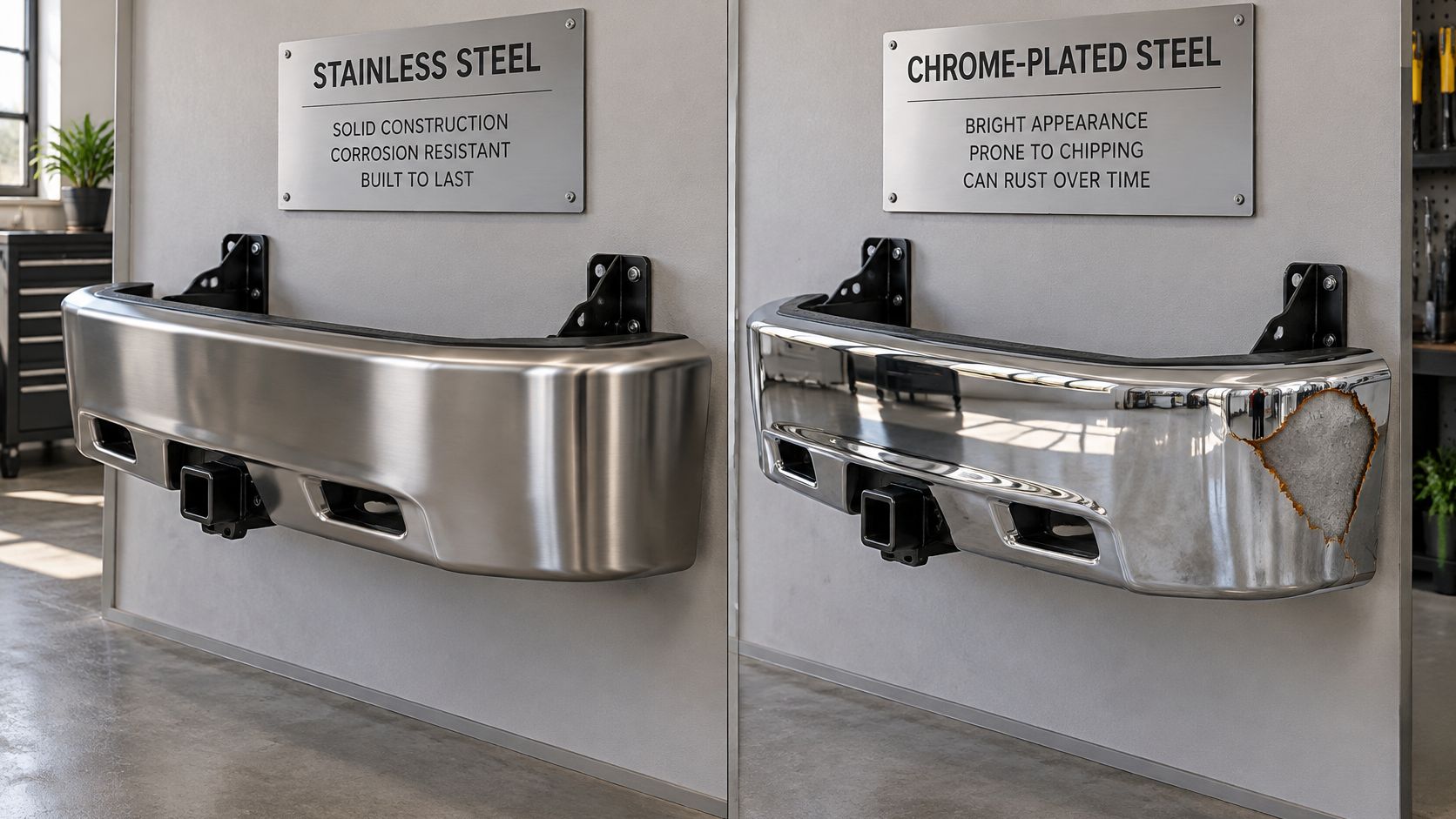
A scratch isn't always a failure
A light scratch on clean stainless can repassivate. It doesn't automatically become a permanent rust opening. The problem is a scratch packed with salt, dirt or iron particles, especially where water can't drain.
Carbon steel behaves differently. Its rust can spread and flake, leaving more metal exposed. Stainless corrosion often begins at a small contaminated spot or a hidden crevice, which makes early inspection useful.
Shop rule: Self-repairing doesn't mean self-cleaning. The surface still needs clean air, drainage and removal of deposits.
Don't treat every mark with a more aggressive abrasive. A dirty buffing wheel or a brush previously used on ordinary steel can leave contamination behind. Clean the surface first, identify the damage, and use tools reserved for stainless.
For a polished or chrome-plated stainless bumper, appearance and corrosion protection are related but separate jobs. Polish improves the look. Sound metal, a clean surface and proper drainage preserve the part.
What Makes Stainless Steel Rust on a Truck
Road salt and deicing brine deserve first attention on northern routes. Chlorides can attack weak points in the protective surface, especially when road film holds them against the bumper. The Nickel Institute's corrosion-prevention guidelines explain how chloride exposure and trapped moisture promote pitting and crevice corrosion.
Use this checklist to spot the exposures your truck brings back to the yard.
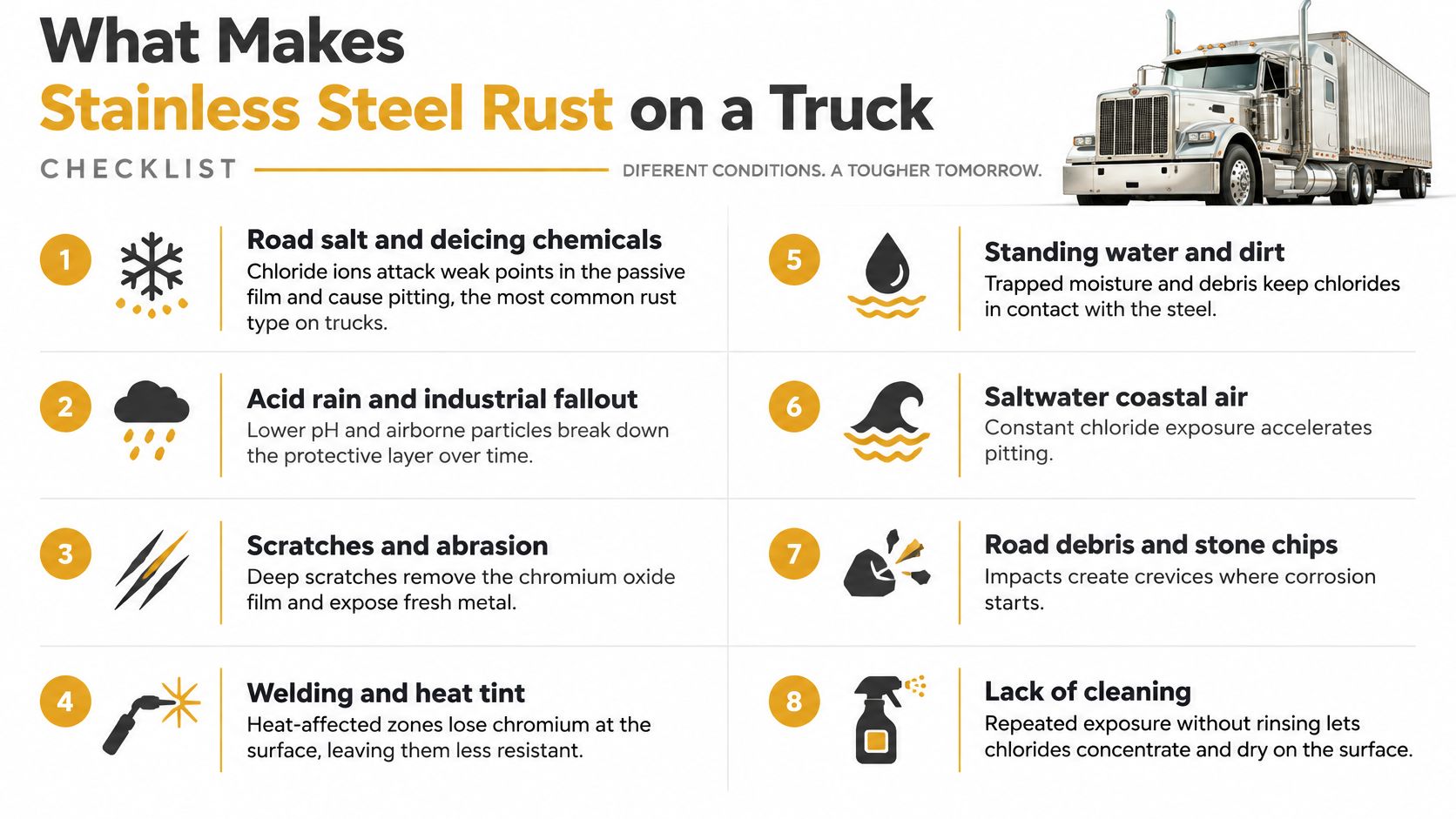
Rust triggers on a stainless truck bumper
| Condition | Why it breaks protection | Where it shows on a bumper |
|---|---|---|
| Road salt and deicing chemicals | Chlorides attack weak points and can cause pitting | Lower edges, face and weld seams |
| Coastal spray and salty wash water | Salt residue remains through repeated wetting and drying | Entire face and mounting brackets |
| Scratches, dents and chipped chrome | Damage exposes the substrate and can trap contamination; clean stainless can still repassivate | Impact points, corners and plating edges |
| Trapped moisture and dirt | Crevices retain moisture and concentrate chlorides | Bolt holes, cutouts and backside cavities |
| Carbon steel contamination | Transferred iron particles rust on the surface | Anywhere steel tools or grinding dust touch |
| Welding heat tint | Heat-formed oxide and chromium-depleted material reduce local resistance | Weld zones and bracket joints |
A stone hit isn't the same problem on every bumper. On plated carbon steel, it may expose rust-prone steel. On plated stainless, the underlying alloy still provides protection, although the damaged area needs inspection. Understanding triple chrome plating helps separate coating damage from failure of the base metal.
Welding needs special care. Buffing a discolored weld until it shines doesn't necessarily restore corrosion resistance. Heat tint and affected material may require professional removal and surface treatment.
This video provides another visual reference for stainless corrosion.
Before the next haul, rate your exposure:
- Salted roads: Look for dried white residue behind the bumper.
- Coastal or wet routes: Check brackets and pockets that don't dry.
- Visible damage: Inspect corners, scratches and plating edges.
- Shop contamination: Keep grinding dust and ordinary steel brushes away.
More exposure calls for closer inspection, not just more polish.
304 vs 430 Stainless Steel Rust Resistance
Buy the grade for the route, not for the showroom reflection. 430 stainless steel can be a practical choice for a dry inland truck. 304 stainless steel gives buyers more corrosion resistance for mixed routes and winter service.
The chemistry ranges for these grades come from the World Stainless corrosion-resistance training module, which lists approximately 16–18% chromium for 430 and 17.5–20.8% chromium with 8–10.5% nickel for 304.
Stainless grades compared for truck exposure
| Grade | Chromium and nickel | Corrosion resistance | Best truck use |
|---|---|---|---|
| Type 430 | About 16–18% chromium, little or no nickel | Moderate | Dry inland routes with little salt |
| Type 304 | About 17.5–20.8% chromium, 8–10.5% nickel | Good to high | Mixed routes and northern winter salt |
| Type 316 | Chromium-nickel alloy with added molybdenum | Strongest chloride resistance of these choices, but not immune | Coastal and heavy deicing-salt routes |
Type 430 isn't automatically a poor bumper material. The Carpenter alloy-selection guide describes its usefulness in fresh water and non-marine atmospheric exposure. For a truck that stays inland and gets regular cleaning, paying more for another alloy may not be your first priority.
Type 304 makes more sense when the truck's work changes with the season. A dry summer lane can become a brine-covered winter route. Its stronger general corrosion resistance gives you more margin, but it doesn't turn skipped washes into a sound maintenance plan.
When coastal service changes the choice
Type 316 deserves consideration for sustained coastal and heavy chloride exposure. Molybdenum improves resistance to chloride attack, as explained in the World Stainless corrosion guide. It isn't a promise that salt can sit on the metal indefinitely.
Choose for the harshest route the truck regularly runs, not the weather at its home terminal.
For a mixed fleet, that may mean different materials on trucks that look identical. An inland day cab and a long-haul coastal tractor don't face the same exposure.
Check the actual grade on the quote. Stainless steel alone isn't a complete material specification, and chrome describes the finish rather than the alloy. If the seller can't identify the substrate, you can't make a useful corrosion comparison.
Tea Staining and Real Rust on Truck Bumpers
Say an owner-operator notices a brown haze across the lower bumper face after a northern winter run. The chrome still reflects well, and there aren't obvious flakes or holes. That may be tea staining, not evidence that the whole bumper is deteriorating.
The World Stainless structural-stainless presentation describes tea staining as surface discoloration from early localized corrosion associated with chloride exposure. Rough, contaminated or persistently wet surfaces are more vulnerable, and lower-alloy stainless grades can stain or suffer more serious attack in marine conditions.
Clean it before judging it
Wash the area with fresh water and a mild, non-chloride cleaner. Use a clean microfiber cloth, rinse thoroughly and dry the surface. For stubborn oxidation, follow a stainless steel oxidation-removal procedure rather than reaching for a wire wheel.
For a practical field check, photograph the clean area and inspect it again after a couple of dry days. A returning stain calls for closer investigation of retained salt, contaminated fasteners or damaged metal. It isn't, by itself, proof that replacement is necessary.
Look for these warning signs:
- Distinct pits: Small cavities remain after the discoloration is removed.
- Lifting chrome: Rust extends underneath plating edges or forms blisters.
- Fastener damage: Corrosion surrounds bolts, brackets or mounting holes.
- Rapid recurrence: The same spot stains again despite proper cleaning and drying.
Don't use a fingernail check as a structural inspection. Visible thinning, cracking or damage around mounting points needs professional assessment.
If a fleet manager finds the same haze across several trucks at one terminal, check the shared conditions first. Wash water, cleaning products, salt exposure and missed backside cleaning may explain the pattern better than separate material defects.
A clean-looking face doesn't settle the question. Inspect the back, lower return and mounting interfaces before deciding whether the problem is cosmetic or deeper.
How to Keep Stainless Steel from Rusting
A useful wash routine reaches the places a quick drive-through rinse misses. The World Stainless pickling and passivation guide explains why contamination removal and proper surface treatment matter. For truck owners, the practical lesson is simple: don't leave salt and iron contamination sitting on the metal.
A wash routine that reaches the backside
- Rinse promptly after salt exposure. Use fresh water before deposits dry into seams and edges. Removing the salt source matters more than making the face shine.
- Wash with soft tools. Use a microfiber cloth or soft nylon brush with mild, non-chloride detergent. Skip steel wool and carbon steel brushes because they can transfer iron.
- Flush hidden pockets. Work clean water through bolt holes, cutouts, lower returns and backside cavities. A clean front face won't protect a salty mounting interface.
- Dry trapped areas. Use a clean towel or controlled compressed air where water collects. Don't leave a wet pocket beneath a bracket after washing.
- Inspect before polishing. Check scratches, plating edges, fasteners and weld zones. Have coating damage or corrosion treated appropriately instead of buffing over it.
- Record the wash and findings. Add the route, exposure and problem areas to the maintenance log. That lets a fleet manager adjust service for the trucks that need it.
Cleaning schedule by route type
Use these as starting maintenance intervals, not guarantees against corrosion. Shorten them when deposits remain or staining appears.
| Route | Wash interval | Focus areas |
|---|---|---|
| Northern winter routes with road salt | After every salt exposure, with a full wash at least weekly | Lower edges, seams and bolt holes |
| Coastal or marine routes | Weekly, plus after salt spray | Entire face, brackets and cutouts |
| Dry inland routes | Monthly | Cutouts, backside cavities and fasteners |
| Heavy industrial or chemical exposure | Every two weeks, with prompt attention after direct contamination | Edges, weld zones and drainage points |
Keep a visual reminder near the wash supplies.
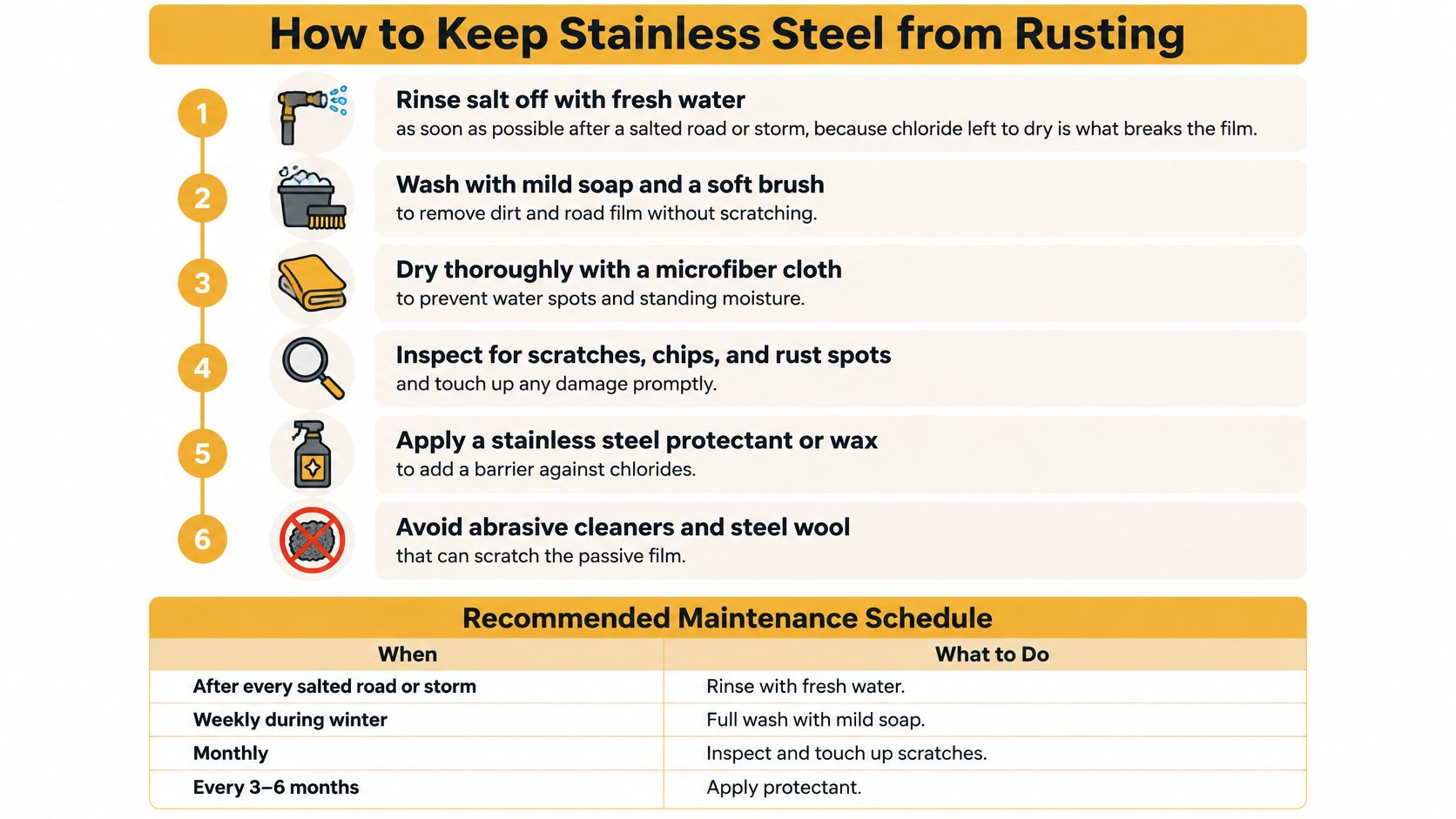
A compatible protectant can supplement cleaning, but it can't remove salt already trapped behind the bumper. Avoid sealing dirt beneath a fresh coat of wax.
Maintenance priority: Wash away contamination first. Polish and protect the clean surface afterward.
Build bumper care into the truck's broader rust-prevention routine. Frequent cleaning, not repeated polishing alone, is what keeps chloride deposits from sitting on stainless.
Match Your Grade and Order Your Bumper Today
Start with the specification, not the photo. A bumper needs the right material, enough metal for its intended service and correct mounting geometry. A deeper drop changes clearance, too, so consider driveways, loading areas and rough approaches before choosing the look.
Use this checklist for a Peterbilt 389 bumper, Kenworth W900 chrome bumper, or a Freightliner or International replacement:
- Material: Get the base steel grade in writing, not just stainless or chrome.
- Thickness: Check the listed gauge or millimeter thickness. Heavier material can improve resistance to bending, but thickness doesn't replace corrosion resistance.
- Fitment: Confirm the exact model, year, cutouts and mounting pattern. Don't assume related truck models share brackets.
- Finish: Distinguish polished stainless from chrome-plated stainless and chrome-plated carbon steel.
- Installation: Confirm the mounting kit, bracket holes and clearance before removing the old bumper.
Buy for service life
Our stainless bumper choices include chrome-plated 430 and 304. The 304 option has higher nickel content, uses heavier-gauge steel and has deeper chrome saturation, making it a salt-tolerant choice for coastal rigs. Confirm the model-specific thickness rather than assuming every configuration uses the same sheet.
Our manufacturing-defect coverage is 2 years for carbon steel, 4 years for stainless steel 430 and 5 years for stainless steel 304. Review the written warranty terms before ordering, and don't confuse defect coverage with a maintenance-free promise.
Match the grade to your salt exposure, verify fitment, and set the wash schedule before installation. Long-term value comes from avoiding preventable damage and repeat replacement work, not buying the lowest-priced bumper.
Galhor Inc. offers chrome-plated stainless steel bumpers for truck owners who want route-appropriate durability and a professional finish. Visit Galhor Inc. to confirm your grade, model and mounting details, then order your bumper with fast shipping across the United States. Choose the steel for your route and keep it clean so your upgrade earns its place on the truck.