

Freightliner Cascadia Chrome Bumper Buying Guide
You're halfway through a long haul when a piece of road debris hits the front of your Freightliner Cascadia. The truck still runs, but the bumper is bent, the fog-light opening no longer lines up, and the next delivery may be delayed while a shop searches for the correct replacement. Choosing a Freightliner Cascadia chrome bumper before that situation happens can protect uptime, appearance, and your repair budget.
The right choice depends on more than shine. Generation, model year, cab layout, mounting brackets, material, thickness, light cutouts, tow holes, and radar clearance all affect whether the bumper installs cleanly. This guide breaks down those decisions for owner-operators, fleet managers, and truck enthusiasts who want a durable direct-bolt replacement for real U.S. highway conditions.
Table of Contents
- Why Your Freightliner Cascadia Chrome Bumper Choice Matters More Than Looks
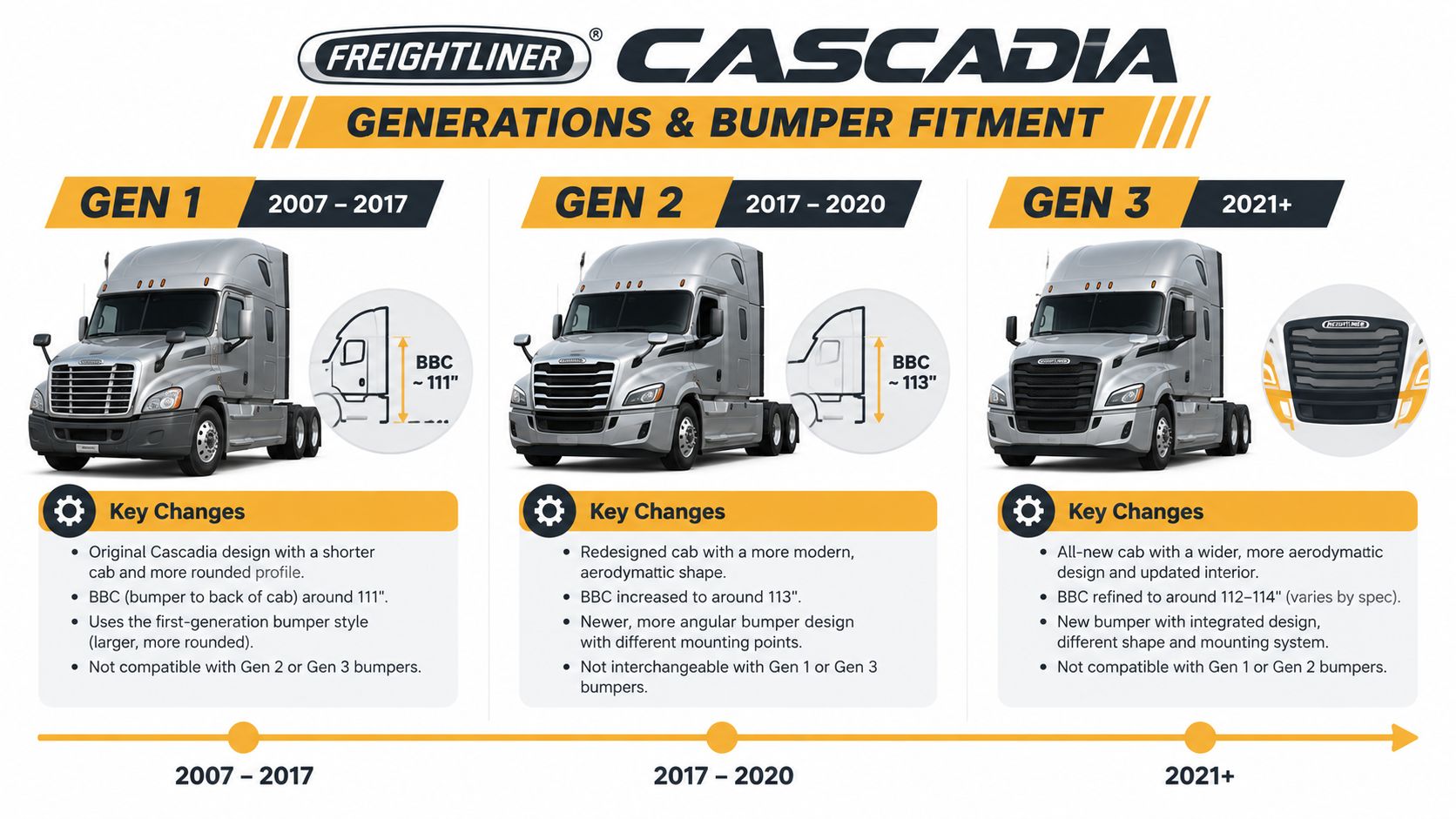
- Understanding Freightliner Cascadia Generations and Bumper Fitment
- Chrome Bumper Materials and Finishes Compared for Real World Durability
- Customization Options That Ensure a Perfect Match for Your Cascadia
- Installation and Maintenance Tips to Maximize Uptime and Shine
- How to Buy With Confidence From Configuration to Delivery
- Upgrade Your Cascadia Today With the Right Chrome Bumper
Why Your Freightliner Cascadia Chrome Bumper Choice Matters More Than Looks
An owner-operator may spend days moving freight through rain, road salt, ice-melt residue, and construction zones. A bumper takes the first abuse from stones, spray, and minor contact. It also frames the truck's front end, so a poor replacement can make an otherwise well-kept Cascadia look unfinished.
The Freightliner Cascadia has been in continuous production since 2007, with model years beginning in 2008. By 2024, Freightliner said it had produced its one-millionth Cascadia, making it the first Class 8 truck to reach that milestone, according to the Cascadia production history. That long service life means buyers are dealing with a wide range of generations, submodels, fleet specifications, and used-truck configurations.

The business cost of a poor match
A bumper that requires drilling, cutting, or bracket changes can turn a straightforward repair into a shop project. That may mean another appointment, more labor, and a truck sitting instead of earning. A bumper that looks right online but lacks the correct fog-light or radar opening can create the same problem.
Freightliner's own timeline records major Cascadia platform updates in 2007, 2012, 2017, 2019, and 2022, showing how much the truck family has changed while remaining a core North American heavy-duty platform. The importance of a good semi-truck bumper comes down to that combination of protection, appearance, and service readiness.
Practical rule: Buy for the truck in front of you, not for a bumper photo that only shows the general model name.
A sound buying decision follows a simple order. First, identify the exact Cascadia year and configuration. Next, match the bumper profile and mounting hardware. Then choose the material and finish for your routes, climate, and maintenance habits. Finally, confirm cutouts, warranty terms, freight delivery, and expected production time before placing the order.
Understanding Freightliner Cascadia Generations and Bumper Fitment
A Freightliner Cascadia chrome bumper isn't universal across every truck wearing the Cascadia badge. Platform updates changed front-end shapes, brackets, cab layouts, and aero components. A bumper can look correct in a listing photo yet fail at the bolt holes, light openings, or safety-system cutouts.
Freightliner's fourth-generation specifications show a 14.5-inch Hendrickson Aero Clad aluminum bumper, wheel cut up to 50 degrees, and several 116-inch and 126-inch BBC layouts, as shown in the official fourth-generation Cascadia specifications. BBC means bumper-to-back-of-cab measurement. It describes the cab and chassis layout, but it does not by itself confirm bumper compatibility.
Start with the truck identity
Record these details from the truck, parts paperwork, or VIN information before ordering:
- Model year: Similar body styling can hide different brackets.
- Cascadia model: Confirm whether the truck is a 113, 125, or another configuration.
- Cab layout: Day Cab, XT, and sleeper arrangements affect surrounding geometry.
- Bumper style: Identify a flat, wrap-around, three-piece, or aero-integrated design.
- Lighting and safety equipment: Check fog lights, oval lights, tow openings, and radar-related openings.
- Mounting hardware: Photograph the brackets and bolt locations.
Cab configuration also affects the space around the front assembly. Published Cascadia information lists different cab-to-back-of-cab measurements for Day Cab, 36-inch XT, 48-inch XT, 60-inch XT, and 60-inch RR configurations. Use those details to identify the truck, then verify the bumper's actual mounting pattern. The cab measurement works like a map reference, not a guarantee that two bumpers interchange.
Watch model-year bracket changes
Parts coverage identifies mounting-bracket and bolt-pattern changes around 2018, with listings separating earlier Cascadia applications from newer Next Gen applications. Some listings group Cascadia 113 and 125 models across broad year ranges, but that range does not replace a hardware check. The Cascadia bumper fitment catalog reinforces the practical rule: confirm the year, brackets, bolt locations, and required openings before purchase.
For a 2012 through 2017 truck, the Chrome bumper for Freightliner Cascadia (2012–2017) is listed with 10-gauge chrome-plated steel, an 11-gauge 430 stainless-steel option, a Gauge-7 mounting bracket, and direct-bolt installation. Configuration-based openings cover tow holes, fog holes, and lights. The finish uses a triple-layer hexavalent chrome process with 35 microns of nickel, and the bumper is sold individually with warranty coverage for workmanship and material defects.
Chrome Bumper Materials and Finishes Compared for Real World Durability
Material choice determines how a bumper handles winter roads, moisture, impact, and routine cleaning. Chrome-plated carbon steel can deliver a bright traditional truck look, while stainless options focus more on corrosion resistance and long-term maintenance.
Class 8 bumper products can be specified in 0.125-inch and 0.160-inch thicknesses, according to an industry truck bumper specification sheet. The same source describes a bright mirrored finish with more than 10 times the chrome-plating thickness of conventional chrome in a specified bumper product, with the stated purpose of resisting cracking, pitting, peeling, and fading. Thickness and finish are separate decisions, so ask for both.
Compare the main options
| Material Option | Corrosion Resistance | Best Use Case |
|---|---|---|
| Chrome-plated carbon steel | Bright traditional finish, but chrome and exposed steel can suffer rust, pitting, peeling, or finish damage in salt and ice-melt conditions | Buyers who want classic chrome appearance and a strong steel bumper |
| Chrome-plated 430 stainless steel | 430 stainless contains 17% chromium and offers good resistance to atmospheric moisture, fresh water, steam, foodstuffs, nitric acid, and many petroleum products, as described in the 430 stainless material data | Routes needing more corrosion resistance than traditional plated steel, with a bright exterior |
| Chrome-plated 304 stainless steel | 304 contains roughly 18% chromium and 8% nickel and is the stronger corrosion-resistance choice compared with 430 in harsh weather, especially for pitting and crevice exposure, according to this stainless steel comparison guide | Trucks working through severe winter exposure, coastal air, or frequent wet conditions |
Chrome-plated steel isn't automatically a poor choice. It can make sense for a truck that sees controlled maintenance and needs the classic polished appearance. The risk rises when salt, sand, and moisture stay trapped around chips, seams, brackets, or mounting areas.
Think about lifecycle value
Traditional chrome bumpers need regular washing and inspection. Corrosion-resistant stainless can reduce finish-related maintenance, but buyers still need to select the correct gauge, profile, and mounting system. A stronger material won't correct a wrong bolt pattern or an opening placed for the wrong light.
The comparison of chrome-plated steel and chrome-plated stainless steel helps frame the decision in practical terms. Choose chrome-plated carbon steel for the appearance and steel construction you need, 430 stainless for a useful corrosion-resistance step, or 304 stainless when harsh exposure deserves the added protection. For all three, confirm the actual thickness and finish process before comparing value.
Customization Options That Ensure a Perfect Match for Your Cascadia
A bumper can have the correct general shape and still be wrong for the truck. The cutouts must match the equipment already installed, and the profile must leave the surrounding aero parts, lights, tow points, and sensors in their intended positions.
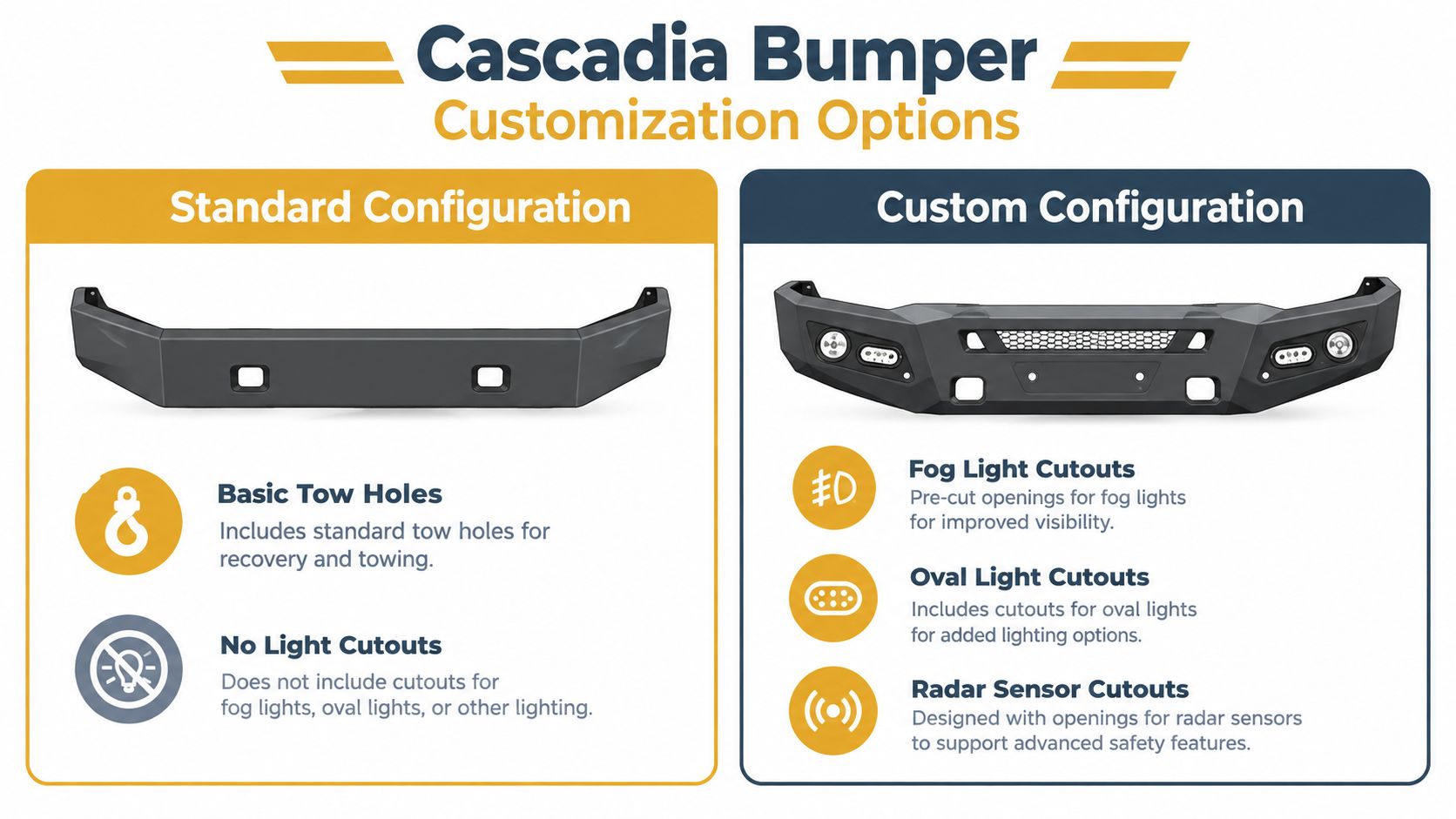
Cascadia bumper listings distinguish between 18-inch and 20-inch chrome wrap-around bumpers, different light openings, radar compatibility, and earlier versus newer applications. These options aren't just styling choices. They determine whether the bumper clears the truck's equipment and whether the finished front end looks factory.
Match each opening to existing equipment
Use the current bumper as a template, but don't rely on appearance alone. Check the actual equipment behind each opening.
- Tow holes: Confirm their location and size before selecting a flat or wrap-around design.
- Fog-light openings: A bumper with no fog cutout won't work as a clean replacement for a truck equipped with fog lamps.
- Oval-light openings: Some Cascadias use different light shapes and configurations, so verify the lamp style rather than ordering by year alone.
- Radar openings: Newer safety systems may require clear, correctly placed radar-compatible areas in the front fascia.
- No-cutout configuration: This can suit a basic setup, but unused openings can look unfinished and may expose gaps around equipment.
Freightliner describes the Fifth Generation Cascadia around the Max Aero Bumper, front wheel-well closeouts, a hood-to-bumper seal, and chassis fairings. The Fourth Generation adds a rugged three-piece bumper and integrated air deflector, according to the current Cascadia specifications. Replacing the bumper without considering those parts can change airflow management or create interference during service.
Profile and bracket selection matter
Wrap-around bumpers extend farther around the front corners and can suit trucks built for a more substantial appearance. A flatter profile may better match a specific factory setup or a custom truck build. Neither profile is automatically correct.
Bracket changes around 2018 make the mounting system especially important. Ask the seller to confirm the bolt pattern and bracket design for the exact year, model, and front-end configuration. A direct-bolt replacement should align with factory attachment points without forcing the installer to drill new holes or cut the bumper.
The cleanest custom look starts with factory alignment. Chrome can't hide a bumper that sits crooked or leaves a sensor opening in the wrong place.
Installation and Maintenance Tips to Maximize Uptime and Shine
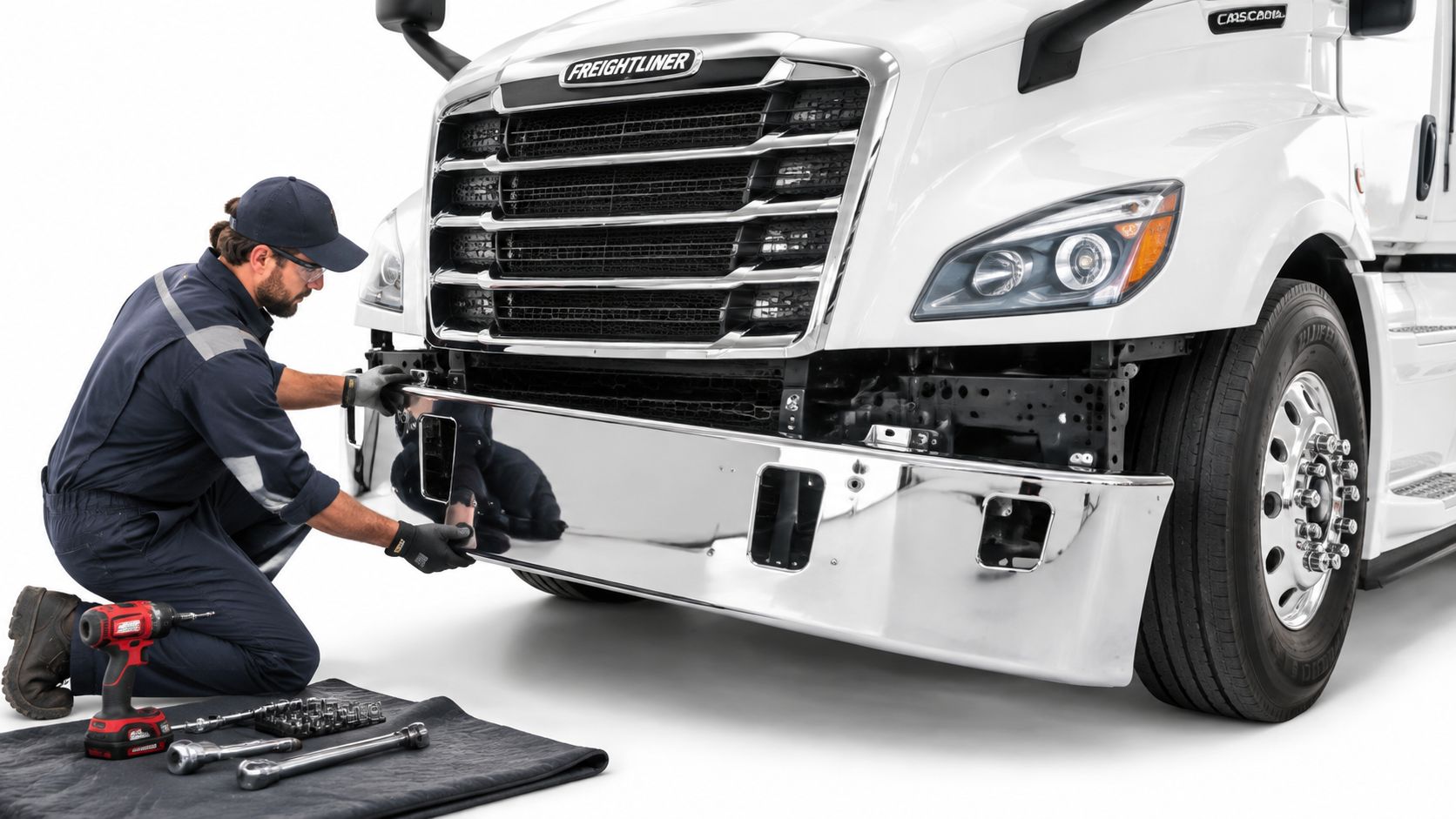
A direct-bolt bumper should be treated as a replacement assembly, not a fabrication project. Freightliner workshop material describes the front bumper as a removable assembly with defined attachment points. NHTSA-published guidance that references the Cascadia workshop manual assigns 0.3 labor hours for front bumper assembly removal and replacement, as shown in the NHTSA service document.
That service time supports a practical fleet goal, fast replacement with the original mounting geometry preserved. Actual shop time can vary with damage, seized hardware, missing brackets, lighting, radar equipment, and access around the front end.
Use a controlled installation process
- Inspect before removal. Photograph the existing bracket positions, wiring, light assemblies, tow points, radar openings, and aero seals.
- Compare both parts. Place the replacement beside the old bumper and verify profile, holes, brackets, and openings before lifting it into position.
- Use the supplied hardware correctly. Don't force a bolt through a misaligned hole. Misalignment may indicate the wrong bracket or application.
- Protect wiring and sensors. Keep harnesses clear of sharp edges and confirm radar areas aren't blocked by the bumper or mounting hardware.
- Check the aero package. Reconnect seals, deflectors, closeouts, and fairing-related parts so airflow and service access remain as designed.
- Test every function. Confirm lights, tow access, sensor clearance, and panel alignment before returning the truck to work.
Keep the finish working for you
Wash road salt and ice-melt residue off the bumper before it dries into seams and mounting areas. Use a clean soft cloth and a product suitable for the finish. Avoid aggressive tools that can scratch mirror polish or damage plated surfaces.
Traditional chrome is vulnerable to rust, pitting, peeling, and finish defects in harsh road environments. Stainless alternatives are positioned as more corrosion-resistant, but they still benefit from regular cleaning, especially after winter runs. Inspect the underside and bracket area because surface damage often begins where drivers can't see it during a quick walk-around.
How to Buy With Confidence From Configuration to Delivery
A bumper purchase should begin with a complete configuration, not a generic product title. Confirm the Cascadia year, model, profile, material, thickness, bracket, cutouts, and finish. Save a photo of the current bumper and verify the order against the truck before payment.
A 3D configurator can reduce mistakes by letting buyers choose the brand, model, year, style, cutouts, and finish in one workflow. The practical value of using a 3D configurator instead of traditional online shopping is that it brings fitment decisions into view before the order is finalized.
Confirm production and freight timing
In-stock stainless steel 430 and 304 flat bumpers can ship within 48 hours, while made-to-order carbon steel units typically ship in 4–6 weeks, based on Galhor's published company information. Treat those timeframes as planning inputs, then confirm current status before scheduling a repair or taking a truck out of service.
LTL freight delivery is normal for a Class 8 bumper because of its size and shape. Plan for a delivery location that can receive oversized freight, inspect the packaging before signing, and document visible damage immediately. If the truck is needed for a scheduled load, leave enough time for transport, inspection, and installation.
Know who stands behind the order
Galhor Inc. processes and supports orders from Magnolia, Texas. Its products use U.S.-sourced steel and are manufactured in Mexico under strict quality control, with warranty coverage for manufacturing defects, stated shipping and returns policies, and support through official distributors and chrome shops across the United States.
Before you order: Have the VIN details, model year, current bumper photos, bracket photos, light configuration, and delivery address ready. Good fitment support starts with good truck information.
Upgrade Your Cascadia Today With the Right Chrome Bumper
The right Freightliner Cascadia chrome bumper follows a clear decision path. Confirm the year and model first. Match the generation, bracket, profile, and aero package next. Then select chrome-plated carbon steel, 430 stainless, or 304 stainless based on your routes, weather exposure, maintenance routine, and long-term ownership plans.
Don't overlook cutouts. Tow holes, fog lights, oval lights, and radar-compatible openings must match the equipment on the truck. A bumper that bolts on but blocks a sensor, leaves a lamp unsupported, or conflicts with an aero seal isn't a successful replacement.
Thickness and finish deserve equal attention. Class 8 bumpers are available in real material thicknesses, and a triple-layer chrome process with 35 microns of nickel is specified for a deep mirror finish on applicable Galhor products. For owner-operators and fleet managers, the value comes from proper alignment, dependable service, and less time spent correcting a poor purchase.
Confirm lead time before ordering, especially if the unit is made to order. For a working truck, fast shipping across the United States matters, but accurate fitment matters more. The best delivery is the bumper that arrives ready for a direct-bolt installation and keeps the truck looking professional on every lane.
Configure your exact Cascadia bumper, verify the openings and brackets, and order the material that fits your operating conditions. Visit Galhor Inc. to review configurable chrome and stainless bumper options for Freightliner and other Class 8 trucks, with U.S. support and shipping arrangements built around working fleets. Upgrade your truck today with a bumper selected for fit, durability, and long-term uptime.