

Truck Bumper Replacement Cost What U.S. Drivers Pay in 2026
Truck bumper replacement parts typically run about $800 to $2,500, while installed totals often land near $1,500 to $3,800. Heavy-duty packages commonly list parts around $1,700 to $2,000 or more, with installed totals near $2,200 to $2,900 or more, because material, finish, fitment, and labor can change the bill quickly.
You're probably looking at the damage after a dock tap, a deer strike, or road debris hit during a long haul. The truck still runs, but the bumper is bent, the chrome is split, or the mounting points no longer sit square. For a Peterbilt 389, Kenworth W900, Freightliner, International, or Volvo Class 8 truck, the right replacement isn't just a piece of shiny metal. It has to fit the frame, clear the lights and sensors, handle harsh road conditions, and arrive before downtime starts costing more than the part.
Table of Contents
- Introduction Why Truck Bumper Replacement Cost Varies So Much
- Understanding What Makes Up Your Total Replacement Cost
- How Material and Finish Change the Price and Lifespan
- OEM vs Aftermarket Pricing and Fitment Compared
- Labor Installation Shipping and Warranty Costs Explained
- Real World Examples and Smart Ways to Save Without Cutting Corners
- Conclusion Choose the Right Bumper for Your Truck and Budget
Introduction Why Truck Bumper Replacement Cost Varies So Much
There's no single truck bumper replacement cost for every Class 8 rig. A basic replacement and a heavy-duty chrome bumper may serve the same general purpose, but their construction, finish, mounting system, and shipping requirements can be very different.
A damaged Peterbilt 389 with a standard steel bumper may need a straightforward replacement. A Kenworth W900 with a custom drop bumper, fog-light cutouts, blind mounts, and a polished finish requires a more exact match. The truck model and year matter because frame width, mounting points, grille shape, light openings, and sensor locations aren't the same across every configuration.
Current market guides and retailer listings place many truck bumper parts in the roughly $800 to $2,500 range, with installed totals often around $1,500 to $3,800 when labor and complexity are included, as outlined in this truck bumper installation cost guide. Heavy-duty front bumper packages can list parts near $1,700 to $2,000 or more, with installed totals around $2,200 to $2,900 or more from the same market reference.
Counter rule: Don't price the bumper by width alone. Price the material, finish, fitment, mounting method, freight, and time your truck will be off the road.
The biggest cost buckets are easy to understand:
- Material: Carbon steel, 430 stainless steel, and 304 stainless steel carry different corrosion and durability tradeoffs.
- Finish: Chrome plating, polishing, paint, and powder coating change both appearance and maintenance needs.
- Fitment: Direct bolt-on parts usually require less fabrication than a bumper needing drilling, cutting, or bracket changes.
- Labor: Heavy parts, hidden mounts, wiring, and sensor cutouts can add shop time.
- Shipping: Class 8 bumpers often require freight handling and careful packaging.
- Downtime: A cheaper bumper that delays a truck can cost more in lost use than a faster, properly matched replacement.
The rest of the estimate becomes much easier once you identify which of these buckets applies to your truck.
Understanding What Makes Up Your Total Replacement Cost
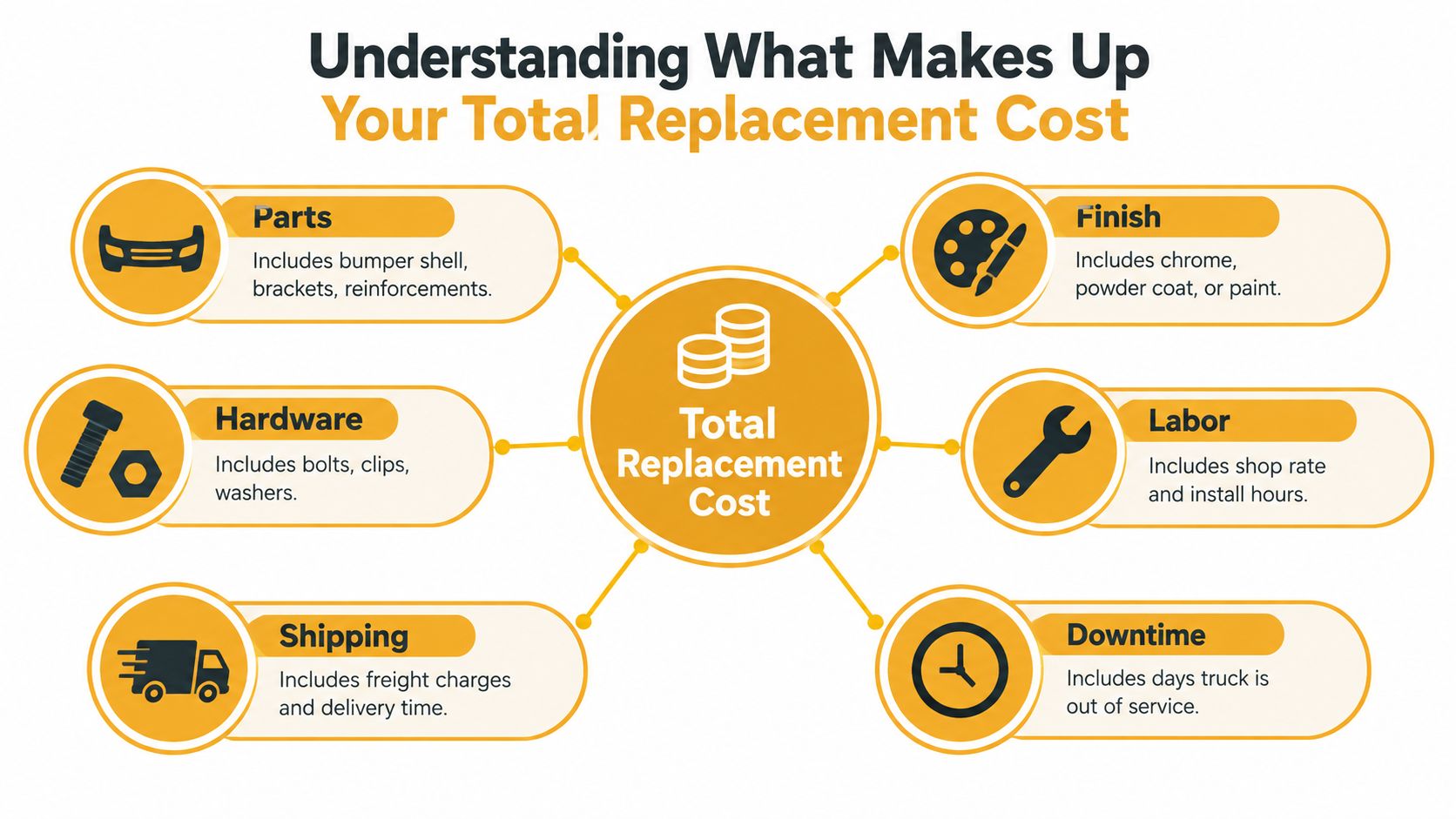
Think of the final bill like building a working truck, one layer at a time. The bumper shell is only the first layer. Brackets, reinforcements, finish, fasteners, labor, freight, and downtime all affect the amount you pay.
Start with the part itself
The shell gives you the base price, but the construction underneath determines how much work the shop must handle. A bumper may include mounting brackets, reinforcement sections, light openings, fog-light cutouts, sensor provisions, and hardware. A steel bumper can also require more careful handling because of its weight and support requirements.
A basic repair may cost less than full replacement when the bumper can be straightened, polished, or repaired without compromising its structure. Replacement makes more sense when the shell is badly folded, the reinforcement is damaged, the mounting points are distorted, or the finish cannot be restored economically.
A direct bolt-on option such as Steel chrome bumper uses 10-gauge chrome-plated steel, a mirror-polished surface, standard or blind mounting, and no drilling or cutting according to its product specifications. It also uses a triple-layer chrome process with 35 microns of nickel and includes coverage for workmanship and material defects.
Add the finish and hardware
Chrome adds a visible finish and requires plating and polishing work. Stainless steel may be polished or chrome-plated, depending on the product. Paint and powder coat can serve different operating needs, but the correct choice depends on exposure, appearance, and how much upkeep you'll accept.
Hardware includes bolts, clips, washers, brackets, and reinforcement pieces. Reusing damaged hardware can create alignment problems or loose mounts, so the shop should inspect every fastener and mounting point before installation.
Count the work around the bumper
Labor covers removal, inspection, fitting, alignment, tightening, and any wiring or sensor work. Freight covers the cost of getting a large, protected part to your location. Downtime covers the days your truck isn't earning because the correct part hasn't arrived or the installation isn't finished.
Historical repair references place straightforward truck bumper replacements around $500 to $1,500, while extensive damage or heavy-duty equipment can push replacement into the $2,000 to $5,000 range, according to this truck bumper replacement cost reference. Those figures show why repairability and structure matter more than the word “truck” by itself.
How Material and Finish Change the Price and Lifespan
Material selection affects more than the first invoice. It influences corrosion resistance, weight, finish retention, repair options, and how the bumper looks after months of rain, road salt, gravel, and wash cycles.
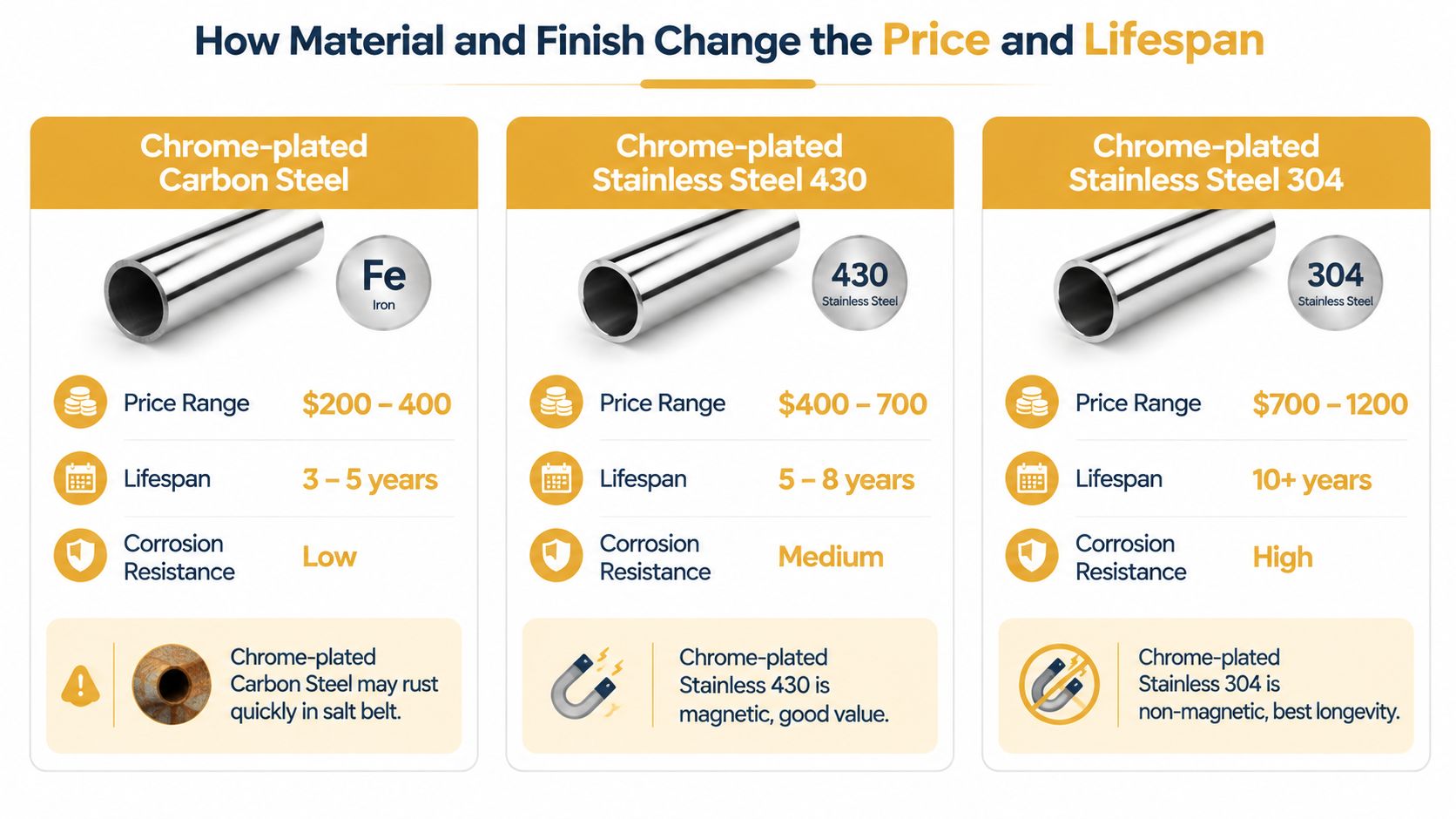
The three common Galhor choices are chrome-plated carbon steel, chrome-plated stainless steel 430, and chrome-plated stainless steel 304. Each can produce a bright truck-show appearance, but they suit different operating conditions and budgets.
| Material | Main strength | Main tradeoff | Best fit |
|---|---|---|---|
| Chrome-plated carbon steel | Strong, familiar construction with a chrome finish | Requires more attention in corrosive conditions | Budget-conscious replacements and controlled operating conditions |
| Chrome-plated stainless steel 430 | Stainless construction with a value-focused balance | Offers less corrosion resistance than 304 | Working trucks that need a durable appearance without the highest material cost |
| Chrome-plated stainless steel 304 | Strong corrosion resistance and premium longevity | Usually carries a higher parts cost | Salt-belt routes, harsh weather, show trucks, and long-term ownership |
The provided material comparison shows why buyers should verify the construction rather than assume every chrome bumper is the same. Galhor's premium options use 3 mm stainless steel 304 or 430, a direct bolt-on fit, and a triple-layer chrome finish with 35µm nickel, details documented in this Kenworth T680 chrome bumper specification.
Carbon steel versus stainless steel
Chrome-plated carbon steel can be a practical choice when the purchase price and familiar construction matter most. It still needs proper care, especially on trucks that run through the salt belt or spend long periods in wet conditions. A chip, scratch, or neglected edge can become a corrosion point.
Stainless steel 430 is often the middle-ground option. It can provide a polished, professional look with added resistance compared with ordinary carbon steel. Stainless steel 304 is the stronger long-term choice for operators who regularly face winter salt, coastal moisture, or demanding wash conditions.
Finish quality matters just as much as the base metal. A mirror-polished surface exposes dull spots and uneven preparation, while a triple-layer chrome process with a nickel layer helps create the deep shine buyers expect on a Peterbilt 389 bumper or Kenworth W900 chrome bumper.
For a deeper material comparison, review chrome-plated steel versus chrome-plated stainless steel before choosing the finish for your route and maintenance routine.
OEM vs Aftermarket Pricing and Fitment Compared
OEM and aftermarket bumpers can both be correct choices. The right answer depends on whether you're trying to restore factory appearance, improve corrosion resistance, shorten replacement time, or customize the front of the truck with a drop profile and selected cutouts.
OEM parts generally offer a familiar match for the original truck configuration. They can make sense for fleet standardization, warranty processes, or a truck that must retain a factory appearance. The downside is that availability, material options, finish choices, and dealer pricing may be less flexible.
A well-engineered aftermarket bumper can offer broader choices. You may be able to select chrome-plated carbon steel, 430 stainless steel, or 304 stainless steel, then specify the truck model, year, mounting style, light openings, fog-light cutouts, and finish. Fitment still has to be verified carefully. “Aftermarket” doesn't automatically mean universal, and a part that looks close may still need unwanted modifications.
| Criteria | OEM Bumper | Aftermarket Bumper |
|---|---|---|
| Initial choice | Factory replacement configuration | Wider range of materials and styles |
| Fitment | Built around original specifications | Can be direct bolt-on when matched correctly |
| Finish | Factory appearance | Chrome, polished stainless, drop, and custom options |
| Availability | Depends on dealer and model | May offer faster or more flexible sourcing |
| Warranty support | Tied to the OEM supply chain | Depends on the manufacturer and seller |
| Customization | Usually limited | Cutouts, mount type, thickness, and style may vary |
Use a Class 8 decision matrix
| Your priority | Practical choice |
|---|---|
| Lowest upfront spend | Compare a straightforward steel replacement with the cost of repair |
| Fastest return to service | Confirm stock status, freight timing, and direct bolt-on fit before ordering |
| Long-term corrosion resistance | Compare 430 and 304 stainless construction for the truck's routes |
| Show-truck appearance | Focus on mirror polish, chrome depth, cutout alignment, and drop style |
| Fleet consistency | Standardize model, year, mount type, finish, and replacement procedure |
The important question isn't whether OEM or aftermarket is always better. It's whether the selected bumper matches the truck and the job. Galhor's OEM bumper versus aftermarket comparison offers another way to review the tradeoffs before placing an order.
For a Peterbilt 389 bumper, confirm the exact year and mount style. For a Kenworth W900 chrome bumper, verify the profile, grille relationship, and desired drop. Freightliner and International buyers should check light openings, fog cutouts, and frame mounting points before comparing prices.
Labor Installation Shipping and Warranty Costs Explained
The installed price is where many buyers get surprised. A bumper can look like a simple bolt-on part, but the shop still has to remove the damaged unit, inspect the frame and mounts, align the replacement, tighten the hardware correctly, and reconnect any lights or sensors.
Installation method affects the labor bill
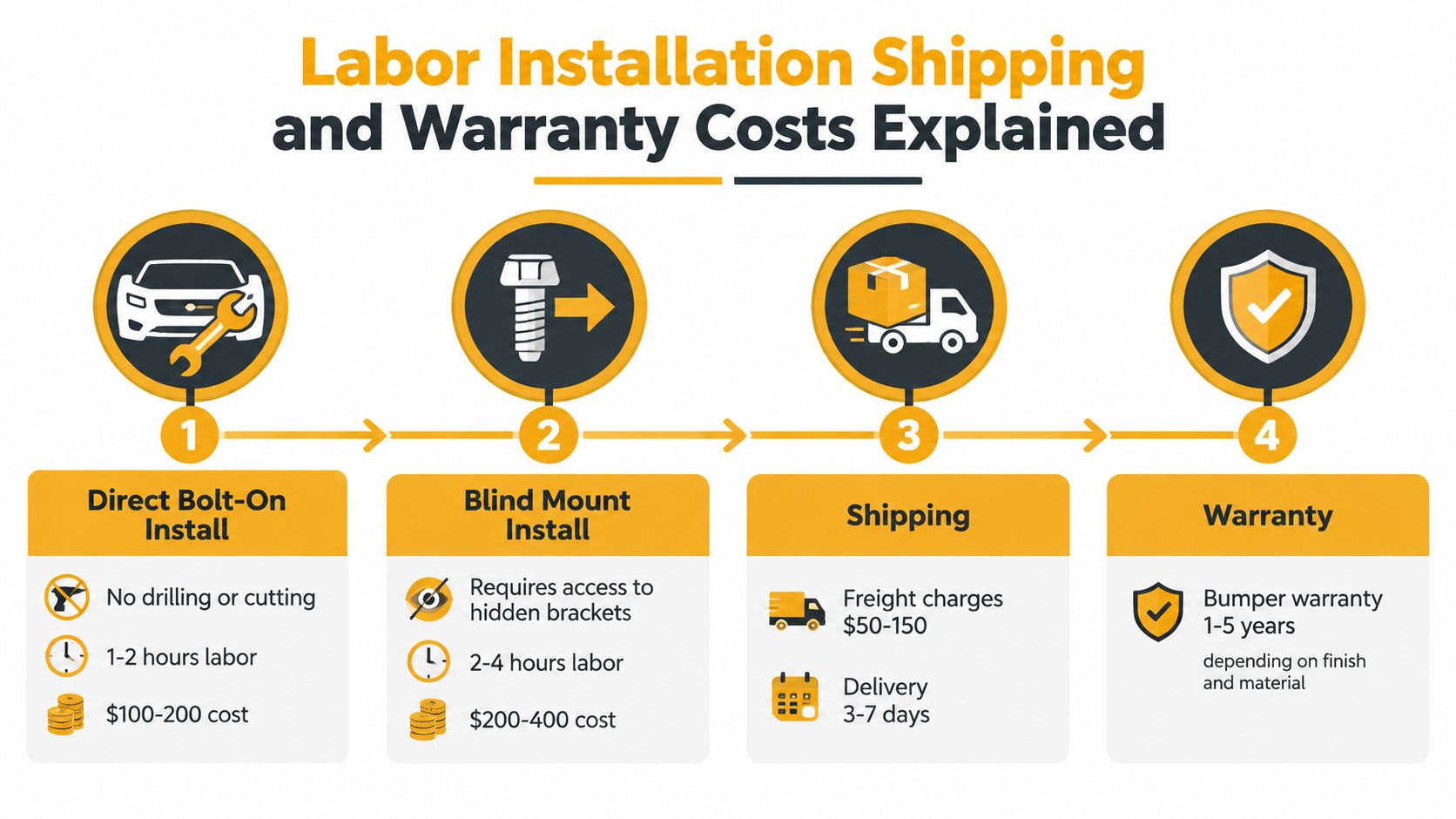
A direct bolt-on bumper can reduce fabrication work because the mounting points are designed to match the truck. A blind mount can still be a clean installation, but the installer may need more access to hidden brackets and fasteners. Drilling, cutting, bracket changes, lighting work, or sensor integration can add complexity.
Before you approve labor, ask the shop these questions:
- Mount type: Is the bumper standard mount, blind mount, or another configuration?
- Modification: Will the installer need to drill, cut, weld, or change brackets?
- Hardware: Are replacement bolts, washers, and clips included?
- Electrical work: Do the light openings and wiring match the truck?
- Inspection: Will the shop check the frame and reinforcement before fitting the new part?
A direct bolt-on heavy-duty bumper in Galhor's collection is listed from $874.99, with options using 10-gauge chrome-plated steel or 3 mm stainless steel 304/430, as shown in this heavy-duty bumper collection. That listing reinforces a point many buyers miss. Two bumpers with similar dimensions can carry different prices because their material grade and finish differ.
Freight and lead time matter
Large bumpers need protective packaging and freight handling. LTL shipping can affect both the final invoice and the delivery schedule, so review how LTL freight shipping works before ordering a part for a truck that has a tight dispatch schedule.
In-stock stainless steel 430 and 304 flat bumpers may ship within 48 hours, while made-to-order carbon steel units typically ship in 4 to 6 weeks, based on Galhor's stated product information. That difference can matter more to a fleet than a small parts-price gap. Confirm the current lead time, delivery address requirements, inspection process, and return policy before payment.
Warranty coverage also belongs in the cost calculation. Coverage for manufacturing defects and materials can protect the purchase, but it doesn't replace correct fitment or damage caused by an accident, improper installation, or neglect. Keep the order details and inspect the bumper as soon as freight arrives.
Real World Examples and Smart Ways to Save Without Cutting Corners
The best savings come from matching the bumper to the truck before the order is placed. Choosing the wrong year, mount type, or light opening can turn a direct replacement into a fabrication job.
Three common shop-counter situations
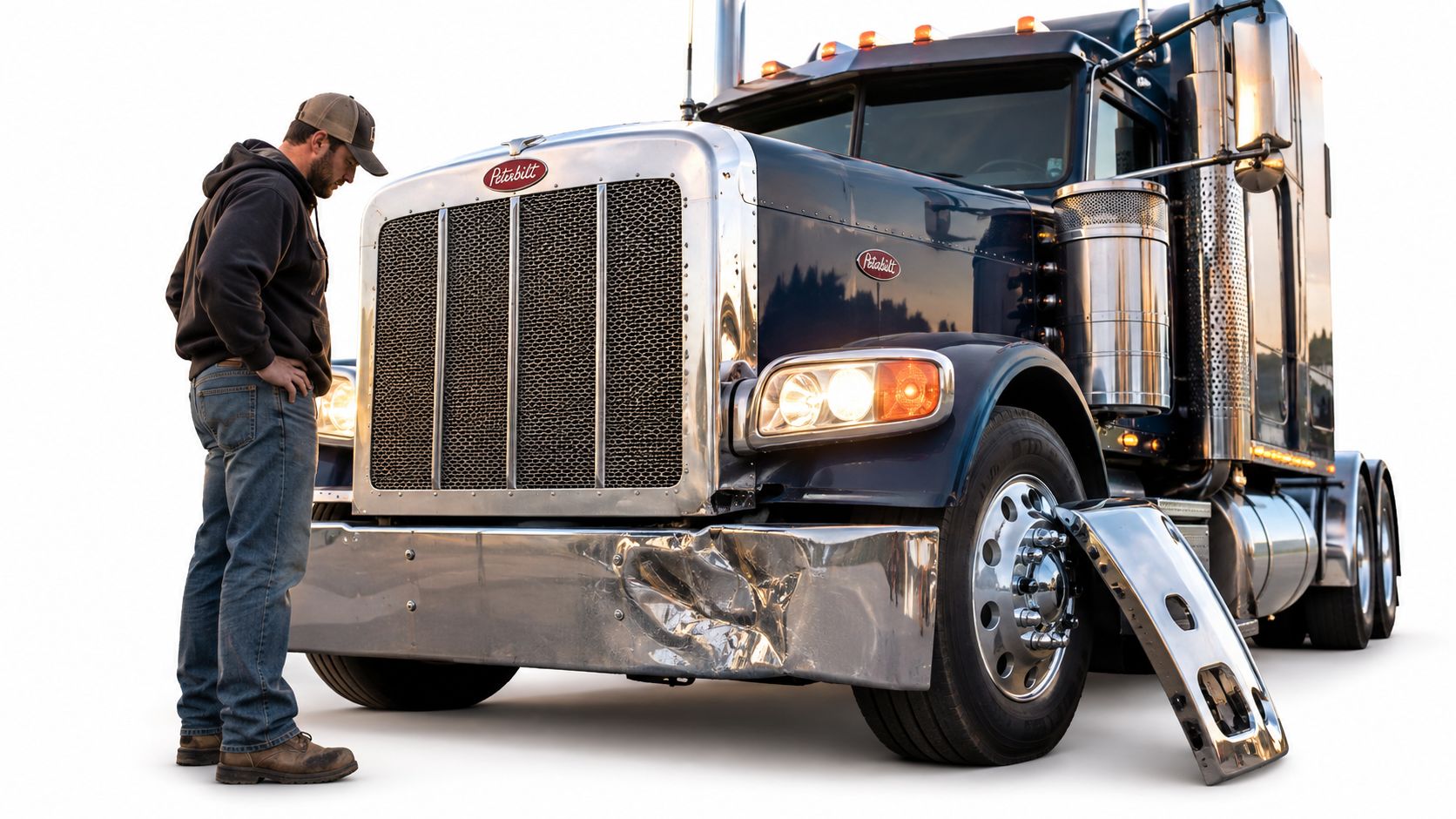
A Peterbilt 389 takes a deer strike. The owner-operator wants the truck back on the road and wants the front end to look right. The first step is checking whether the impact bent the reinforcement or frame mounts. If the structure is sound, the buyer can compare a chrome-plated carbon steel replacement with 430 or 304 stainless, then add the correct fog-light and light openings. The lowest part price isn't useful if the cutouts don't match the truck.
A fleet needs matching Kenworth W900 bumpers. The maintenance manager should standardize the model year, mount type, finish, and cutouts before ordering. Buying several correctly configured bumpers together may simplify installation planning, but the fleet still needs to confirm freight handling and delivery timing for every truck.
A Freightliner Coronado from 2002 to 2009 needs a direct-bolt-on upgrade. The available configuration uses 10-gauge chrome-plated steel or 11-gauge 430 stainless steel, a standard direct-bolt-on fit, and selected fog-hole and light-opening cutouts. That gives the owner a clear comparison between familiar chrome steel and a stainless option without assuming the two materials have the same long-term maintenance needs.
Save money before the bumper ships
- Confirm fitment first: Record the truck brand, model, year, mount type, cutouts, and desired finish.
- Check the structure: Have a shop inspect brackets, reinforcement, and frame mounting points before ordering.
- Compare the full bill: Add the part, freight, labor, hardware, and expected downtime.
- Choose material by route: Stainless can make more sense for salt, moisture, and long-term ownership, while carbon steel may suit a controlled budget.
- Order during stock windows: In-stock options can help avoid extended waits when uptime matters.
- Protect the finish: Clean road salt and grime before they sit on the chrome or polished surface.
A bumper that lasts longer and keeps the truck looking professional can support resale value and reduce repeat replacement work. That isn't a promise of a specific return. It's a practical lifecycle calculation based on how often the truck runs through harsh weather, how much downtime the fleet can absorb, and whether the owner plans to keep the truck.
Conclusion Choose the Right Bumper for Your Truck and Budget
Your truck bumper replacement cost depends on more than the size of the part. Material grade, thickness, chrome or polished finish, truck fitment, mounting method, labor, freight, and lead time determine what you'll spend.
Before ordering a bumper for a Peterbilt, Kenworth, Freightliner, International, or Volvo, check this list:
- Model and year: Confirm the exact Class 8 application.
- Style: Decide between a standard profile, drop bumper, or custom appearance.
- Material: Compare chrome-plated carbon steel, 430 stainless steel, and 304 stainless steel.
- Thickness: Verify the stated gauge or millimeter construction.
- Cutouts: Match fog lights, headlights, sensors, and other openings.
- Mount type: Confirm standard, blind mount, or direct bolt-on fit.
- Finish: Choose chrome, mirror-polished stainless, or another specified surface.
- Shipping: Confirm freight timing, packaging, and delivery requirements.
- Warranty: Read coverage for manufacturing and material defects.
A 3D configurator can help you select the brand, model, year, style, cutouts, and finish before purchase. That kind of verification is valuable because the cheapest bumper on paper can become the most expensive option after rework, extra labor, or missed dispatch time.
Choose the material for your routes, the finish for your working conditions, and the fitment for your exact truck. You'll get better value from a bumper that installs correctly, withstands long hauls and rough weather, and keeps the truck looking professional.
Galhor Inc. offers configurable chrome and stainless steel bumpers for Class 8 trucks, including Peterbilt, Kenworth, Freightliner, and Volvo applications, with direct bolt-on options and freight support across the United States. Review your truck's model, year, cutouts, mount type, and finish at Galhor Inc., then upgrade your truck today with a bumper matched to the way you work.