

Kenworth Truck Accessories: The Expert’s Selection Guide
You pull into the yard after a hard winter run and notice two problems at once. The bumper has taken a hit from road debris, and the lighting around the front end no longer gives you the clean visibility you need at night. A shiny replacement may look right at the truck stop, but the better choice also has to survive salt, vibration, long hauls, and the hours required to install it.
Kenworth truck accessories include far more than chrome trim. Bumpers, mirrors, lighting, grille guards, sleeper upgrades, and aerodynamic pieces affect how a Class 8 truck works and holds its value. The right part improves protection and serviceability. The wrong part can create fitment problems, extra labor, and a finish that fails before the truck has earned its keep.
Table of Contents
- Why Your Kenworth Setup Matters Beyond Appearance
- Choosing Between Chrome Plated Steel and Stainless Steel
- Understanding Fitment and Model Specific Requirements
- Installation Labor and Time Estimates
- Maintenance Realities for Chrome and Bright Metals
- Making the Final Decision for Your Rig
Why Your Kenworth Setup Matters Beyond Appearance
A salt-belt truck can look sharp at the fuel island and still cost hours in upkeep. Road salt, stone strikes, tight docks, tow equipment, and vibration attack the bumper, brackets, lamps, and grille surround. If a bumper flexes into the grille or leaves tow-hole hardware misaligned, its finish is irrelevant. The accessory has failed at the job it was bought to do.
Mirrors, lighting, and aerodynamic pieces create similar trade-offs. A mirror needs a rigid mount that keeps the image steady over rough pavement. Auxiliary lights need protected wiring, sound mounting points, and enough clearance for service work. Aero parts should follow the body lines and avoid loose edges that collect dirt or catch damage.
Practical rule: Buy the accessory for the work your truck performs, not only for the reaction it gets at the fuel island.
Kenworth's production history also explains why exact fitment matters. Founded in January 1923, the company had produced more than 1.3 million Class 5–8 trucks by its 2023 centennial, compared with 78 trucks in its first year, according to Kenworth's historical overview. That large installed base supports a broad supply of replacement bumpers, mirrors, lighting, trim, and mounting hardware. It also creates plenty of opportunities to order a part that looks close but does not match the truck.
Design changes create different parts
The W900 line arrived in 1963, followed by the T600A in 1985, the W900L in 1990, and the W990 in 2018. Each generation changed hood length, grille shape, mirror location, bracket position, or lighting layout. A bumper for a W900L is not automatically correct for another W900 configuration, even when the two trucks appear related.
The T600A's aerodynamic design changed how the hood, cab, and exterior hardware meet. That matters during installation. Brackets may need different clearance, lamps may sit in different positions, and a part that fits the bolt pattern can still interfere with service access.
Salt-belt maintenance exposes the hidden cost of a decorative choice. A pitted chrome bumper that needs bi-weekly washing and annual re-polishing can add 8–12 hours of labor per winter compared with stainless. That time includes cleaning, inspection, removal of surface oxidation, and correcting areas where corrosion has begun around edges or hardware.
Transport Topics reported that Kenworth's Chillicothe, Ohio plant produced its 750,000th truck in 2023 after opening in 1974, while the company had passed 1.3 million Class 5–8 trucks overall. The aftermarket is broad, but year, model, hood configuration, mounting points, and intended use still determine whether an accessory saves time or creates another shop visit.
Choosing Between Chrome Plated Steel and Stainless Steel
A bumper that looks identical on the lot can behave very differently after a winter of salt, gravel, and pressure washing. Material choice affects impact response, corrosion, cleaning time, and whether a damaged finish remains a cosmetic problem or becomes structural rust.
Independent technical guidance from Hendrickson's bumper material document describes typical chrome-plated steel as having only about 2–4 thousandths of an inch of chrome plating. A stone strike, bent corner, or damaged bolt hole can break that thin barrier. Salt and moisture then reach the steel beneath, with corrosion commonly starting at lower edges, hardware openings, and impact points.
A stainless-steel-clad bumper can use a 42-thousandths-of-an-inch protective outer layer. That gives corrosive service more material to work through before the underlying structure is affected. Stainless still needs cleaning after salt exposure and can show damage from impact, but it gives operators more tolerance on salted highways and coastal routes.
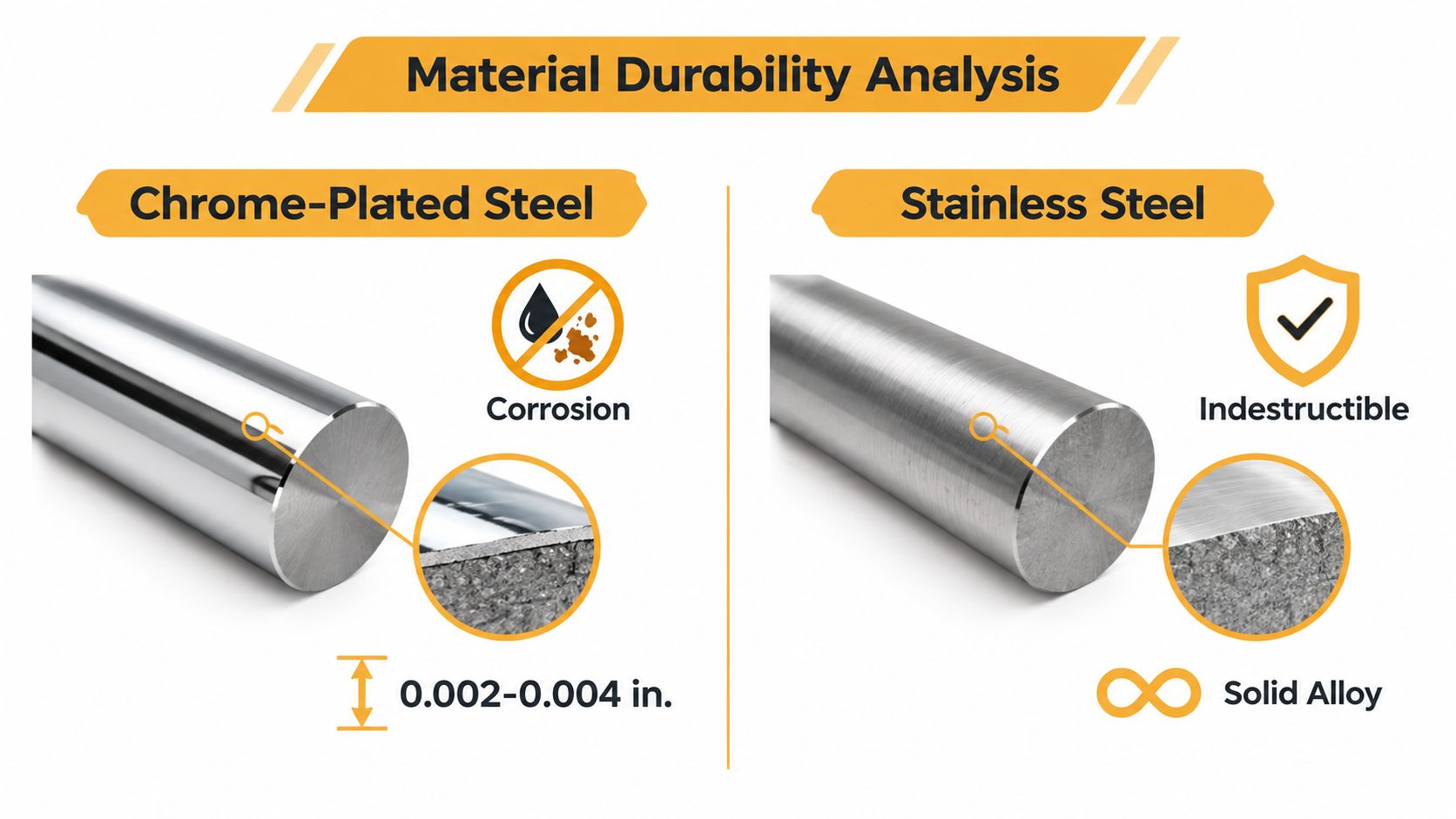
What the material options mean in practice
Galhor lists three bumper choices, chrome-plated carbon steel, chrome-plated stainless steel 430, and chrome-plated stainless steel 304, in its bumper materials information. Carbon steel may suit a truck where initial cost and straightforward replacement matter most. Stainless options make more sense when corrosion exposure and maintenance labor carry greater weight.
The plating system also affects service life. Galhor describes a hexavalent triple-layer chrome process with 35 microns of nickel on its Kenworth T680 chrome bumper product page. A good finish cannot correct a weak substrate, but sound construction and proper plating give the surface better protection during daily use. For a detailed comparison of substrates and plating, see chrome-plated steel versus chrome-plated stainless steel.
| Choice | Main strength | Main concern | Suitable use |
|---|---|---|---|
| Chrome-plated carbon steel | Familiar bright finish and rigid construction | Exposed steel can rust after plating damage | Appearance-focused builds with regular care |
| Chrome-plated 430 stainless steel | Better corrosion tolerance than carbon steel | Still requires cleaning and inspection | Winter routes and general heavy-duty use |
| Chrome-plated 304 stainless steel | Strong corrosion resistance for harsh exposure | Higher material commitment | Coastal service and severe corrosive conditions |
Warranty terms provide another comparison point when product specifications are close. Galhor's warranty policy lists 4 years for Stainless 430 and 5 years for Stainless 304. That coverage does not replace inspection or cleaning, but it helps match the material to expected exposure and ownership plans.
Understanding Fitment and Model Specific Requirements
A bumper can have a flawless finish and still be unusable on the truck in front of you. Fitment depends on the chassis family, model year, hood configuration, mounting style, and cutout layout. Before ordering a Kenworth W900 chrome bumper, T680 replacement, or 18 inch drop bumper, verify the truck's actual configuration instead of matching a product photo.
Aftermarket catalogs separate families such as W900, T680, T880, T800, T600, T660, and T700. The Kenworth accessories catalog lists ranges including W900L 2003–2024 and T680 2013–present for particular bumper applications. Those ranges narrow the choice, but they do not confirm the bumper style, bracket position, or openings on your truck.
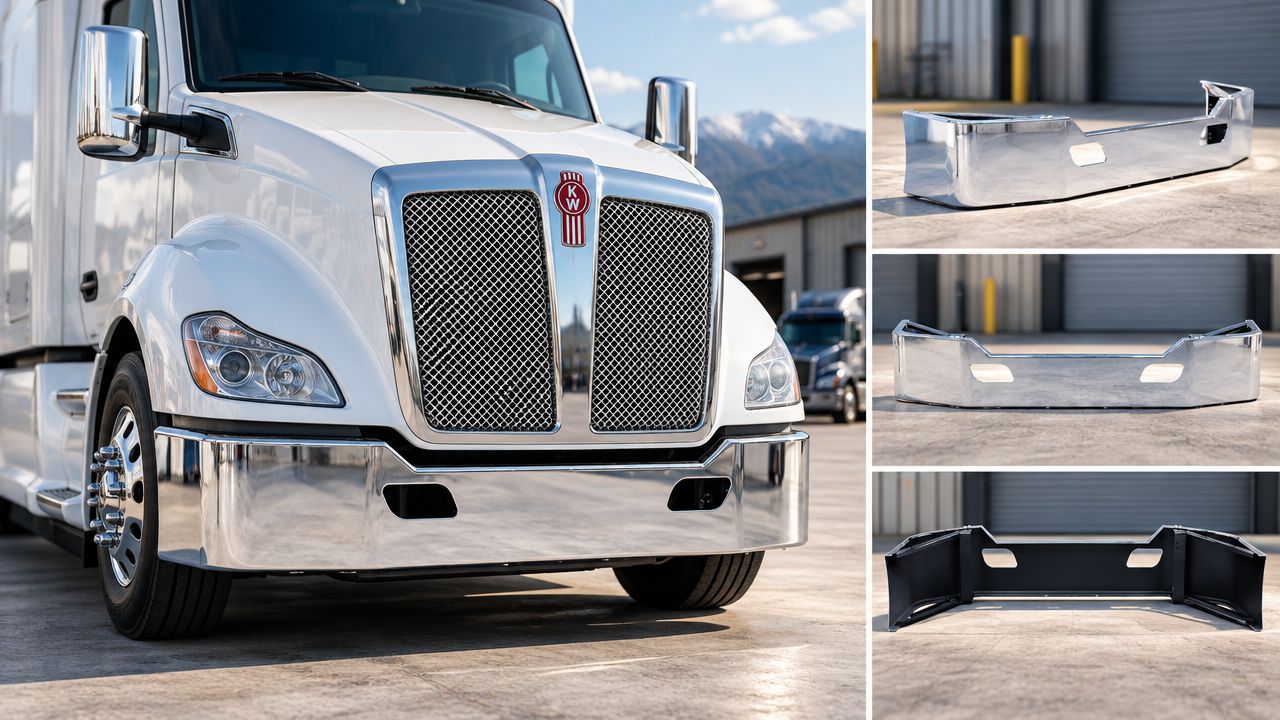
Read the fitment details before you buy
Begin with the model and year, then check the hood, grille surround, bumper height, mounting position, tow-hole layout, fog-light openings, and existing brackets. A minor dimensional mismatch can create contact at the frame horns, tow holes, or grille surround. Correcting that problem takes shop time and can damage a new finish.
Use this checklist:
- Confirm the chassis family: A T680, T880, W900, and T800 can require different bumper geometry.
- Match the model year: Body revisions can change hood length, grille spacing, and bracket locations.
- Select the cutouts: Tow holes, fog holes, and light openings must suit the truck's equipment.
- Check the mount: Standard and blind-mount bumpers require different installation methods.
- Inspect the brackets: Confirm the supplied hardware and mounting points before removing the original bumper.
For a specific example, the Chrome bumper for Kenworth T680 (2008–2017) uses 10-gauge chrome-plated steel, with an 11-gauge 430 stainless steel option. It has a Gauge-7 mounting bracket, direct bolt-on installation without modifications, and configuration-based tow-hole, fog-hole, and light openings. Its finish uses a triple-layer chrome process with 35 microns of nickel, and the bumper is sold individually.
The Kenworth T680 chrome bumper fitment guidance provides further detail on T680 geometry. Confirm dimensions and mounting details before ordering. A truck badge identifies the family, not every fitment requirement.
Installation Labor and Time Estimates
A bumper swap that looks simple in the yard can become a half-day shop visit once seized hardware, wiring, or finish protection enters the job. A direct bolt-on bumper generally takes 2–4 hours with two people, provided the truck and hardware are in good condition, as outlined in truck accessory installation guidance. The crew must secure the truck, support the old part, remove its hardware, position the replacement, and verify alignment. See detailed time and tool requirements in the truck accessories installation guide.
Salt-belt service changes the labor calculation. Seized fasteners on a 3-year-old chrome bumper can add 1–2 hours of drilling or cutting compared with stainless hardware, turning a two-hour bolt-on into a half-day shop visit. Rusted brackets, collision repairs, and damaged wiring create similar delays. Chrome also needs protection during cutting and handling, because a fresh scratch can create another repair task before the truck returns to work.
Separate bolt-on work from custom work
A direct-fit replacement usually follows this sequence:
- Support the old bumper before removing the last fasteners.
- Inspect brackets, wiring, and mounting points for hidden damage.
- Compare the replacement's cutouts and hardware with the existing setup.
- Install the hardware loosely so the bumper can be centered and leveled.
- Check grille clearance and side alignment before final tightening.
Lighting packages, grille guards, sleeper equipment, and other complex accessories may require drilling, fabricated brackets, or wiring. That is installation work rather than a straightforward replacement, and it may call for a body shop or qualified truck electrician.
Shop-floor advice: Book the truck for the complete job, including inspection, cleanup, and testing. A fit check before final tightening can prevent a second teardown.
Professional installation can pay for itself when the truck earns revenue every day. A qualified shop can find bent brackets, protect wiring, and confirm that tow equipment and lamps remain usable. For an owner-operator, avoiding a repeat appointment may matter more than saving several hours of labor.
Maintenance Realities for Chrome and Bright Metals
A chrome bumper can add cleaning time to every winter route. Salt and brine collect along the lower edge, behind brackets, around fasteners, and inside cutouts. Left there, the residue creates extra washing, inspection, and repair work before corrosion reaches mounting areas.
Independent coverage recommends cleaning chrome parts in winter climates every 2–4 weeks to reduce pitting and rust. Treat that interval as a planning reference, not a fixed rule. A truck running salted mountain passes needs more attention than one working dry inland roads.
Build care into the route routine
A winter rinse takes more than spraying the visible face. Clean the back side, lower seams, bolt holes, and bracket pockets. Use a product suitable for chrome or stainless, then dry the surface so salty water does not evaporate in place. Include inspection time in the wash schedule.
Check for:
- New chips: Mark damage early, before moisture reaches the underlying metal.
- Cloudy spots: Separate surface dirt from pitting or early corrosion.
- Fastener corrosion: Replace damaged hardware before stains spread to nearby areas.
- Loose brackets: Vibration can widen holes and change bumper alignment.
- Hidden residue: Salt often remains behind the bumper after a quick wash.
The operational cost is labor. Cleaning every few weeks across a winter season adds repeated truck time, cleaner use, and inspection work. Stainless may reduce the cleaning burden, while chrome demands closer attention to keep its finish presentable and its mounting hardware serviceable.
That difference matters more on a high-mileage truck. Include routine washing, inspections, possible refinishing, and downtime in the ownership calculation, rather than comparing purchase prices alone. A polished bumper can remain a sound choice for a show truck or dry-route rig, but the same finish may create avoidable work on a salt-belt fleet.
Stainless still needs care after road film, impacts, or staining. The practical choice is the finish your route can support and your crew can maintain.
Making the Final Decision for Your Rig
Choose the bumper from the route backward. A dry-route show truck can justify a mirror finish, while a salt-belt fleet may spend more on washing, inspections, seized hardware, and finish repairs than the purchase price suggests. Stainless can reduce that maintenance burden, but complex brackets, cutouts, and custom lighting still add installation hours.
Before ordering, calculate the operating cost:
Purchase price + winter washes × labor rate + estimated installation hours × shop rate + likely repair or replacement cost.
For a carbon-steel bumper in regular salt service, include earlier replacement risk rather than assuming the finish will remain serviceable. Confirm model, year, hood configuration, cutouts, brackets, mounting style, material thickness, and access for future repairs. Read the warranty terms, including the listed 4-year Stainless 430 and 5-year Stainless 304 periods where applicable, using the published warranty information.
The right Kenworth truck accessories support uptime, not just appearance. Compare the labor required to fit and maintain a Peterbilt 389 bumper, Freightliner bumper, International bumper, or Kenworth replacement on your actual route. Fitment and service access should decide before shine.
Galhor Inc. offers configurable chrome bumpers for Kenworth, Peterbilt, Freightliner, and Volvo Class 8 trucks, with carbon steel, 430 stainless steel, and 304 stainless steel options. Review fitment, cutouts, finish, and mounting details at Galhor Inc., then match the bumper to your truck, route, and maintenance plan.