

What Is Freight Delivery and How Does It Actually Work
Freight delivery is the movement of goods from a shipper to a consignee by road, rail, sea, or air. In the EU, maritime transport handled 67.0% of freight transport performance in 2024, while road handled 25.7%, so a Class 8 truck moving a load is often one link in a much larger delivery chain (Eurostat freight transport data).
A chrome shop may be dealing with freight delivery right now. The counter guy calls a carrier to move a pallet of polished bumpers from Texas to a dealer in Ohio, and a Class 8 tractor hooks to the trailer the next morning. The shipment isn't a small parcel in a cardboard box. It needs a pallet, a bill of lading, dock planning, freight pricing, and a carrier that knows how to handle oversized or damage-sensitive parts.
For an owner-operator, fleet manager, or shop owner, understanding freight delivery means fewer surprises at pickup and delivery. It also helps you choose between LTL, truckload, rail, intermodal, air, and ocean service when you're shipping a Peterbilt 389 bumper, a grille, a hood, or a set of brackets.
Table of Contents
- What Freight Delivery Actually Means
- Main Freight Modes Explained Simply
- The Freight Shipment Lifecycle Step by Step
- Key Freight Terms Every Trucker Should Know
- What Really Drives Freight Cost and Transit Time
- How Freight Delivery Connects to Class 8 Trucking
- Practical Takeaways and Common Freight Delivery Questions
What Freight Delivery Actually Means
The working definition
Freight delivery is the contracted movement of goods between a shipper and a consignee. The shipper gives the freight to a carrier or broker. The carrier moves it through one or more transportation modes. The consignee receives it, checks the shipment, and signs for delivery.
The freight may travel by road, rail, sea, or air. In the United States, road freight is especially important because trucks connect ports, factories, warehouses, dealers, repair shops, and final customers. A container unloaded from a vessel still needs a truck. A rail shipment still needs a drayage move to or from the ramp. Even air freight usually needs a truck at each end.
Freight differs from parcel shipping in a few practical ways:
- Weight and size: Freight commonly moves as a pallet, skid, crate, or multiple pieces rather than as a small box.
- Handling: A forklift, pallet jack, dock, or liftgate may be required.
- Pricing: Carriers look at weight, dimensions, density, freight class, lane, and accessorial services.
- Documentation: The BOL records what the carrier picked up and what the consignee should receive.
LTL, or less-than-truckload, combines shipments from several customers on one trailer. FTL, or full truckload, gives one shipper the trailer or a dedicated portion of the move. That distinction affects handling, timing, and cost.
Practical rule: Treat a heavy-duty bumper like freight from the moment it leaves the shop. Protect the finish, record the piece count, and make sure the paperwork matches the actual shipment.
A driver who understands the process can spot a bad load description before it becomes a re-bill. A fleet manager can compare carrier service instead of choosing only the lowest quote. A chrome shop can also plan packaging around the delivery network, where freight may be transferred, staged, and inspected before it reaches the dealer dock.
Main Freight Modes Explained Simply
The right mode depends on how much freight you have, how fast it must arrive, and how many handoffs the parts can tolerate.
Six modes through a trucker's lens
FTL uses one trailer for a single shipper or load. It makes sense when a fleet is moving enough bumpers, hoods, or pallets to use the trailer efficiently, or when direct service matters more than consolidation. A 53-foot dry van can move a larger parts order from a manufacturer to a distribution center with fewer handling points.
LTL combines smaller shipments from several shippers. A single skid of brackets heading to a fleet shop may fit LTL better than paying for a whole trailer. LTL is useful, but every terminal transfer adds another point where packaging, labels, and piece counts matter. For a plain-language explanation of the service, see this LTL freight shipping guide.
Intermodal moves a container between truck and rail, and sometimes ocean. It can lower the cost on long inland lanes, but the freight passes through more handoffs. The truck handles the pickup and delivery legs, while rail handles the long middle section.
Rail is a practical choice for bulk commodities and intermodal containers moving long distances over land. It isn't usually the first choice for one replacement bumper, but it can support large supply chains that feed truck routes.
Air freight is fast and expensive. A shop generally reserves it for an urgent, high-value, or lightweight part when downtime costs more than the premium transportation charge.
Ocean freight carries massive international volumes in containers. A bumper manufacturer may use ocean service for imported material or export orders, but a truck still carries the container between the port, rail ramp, warehouse, and customer.
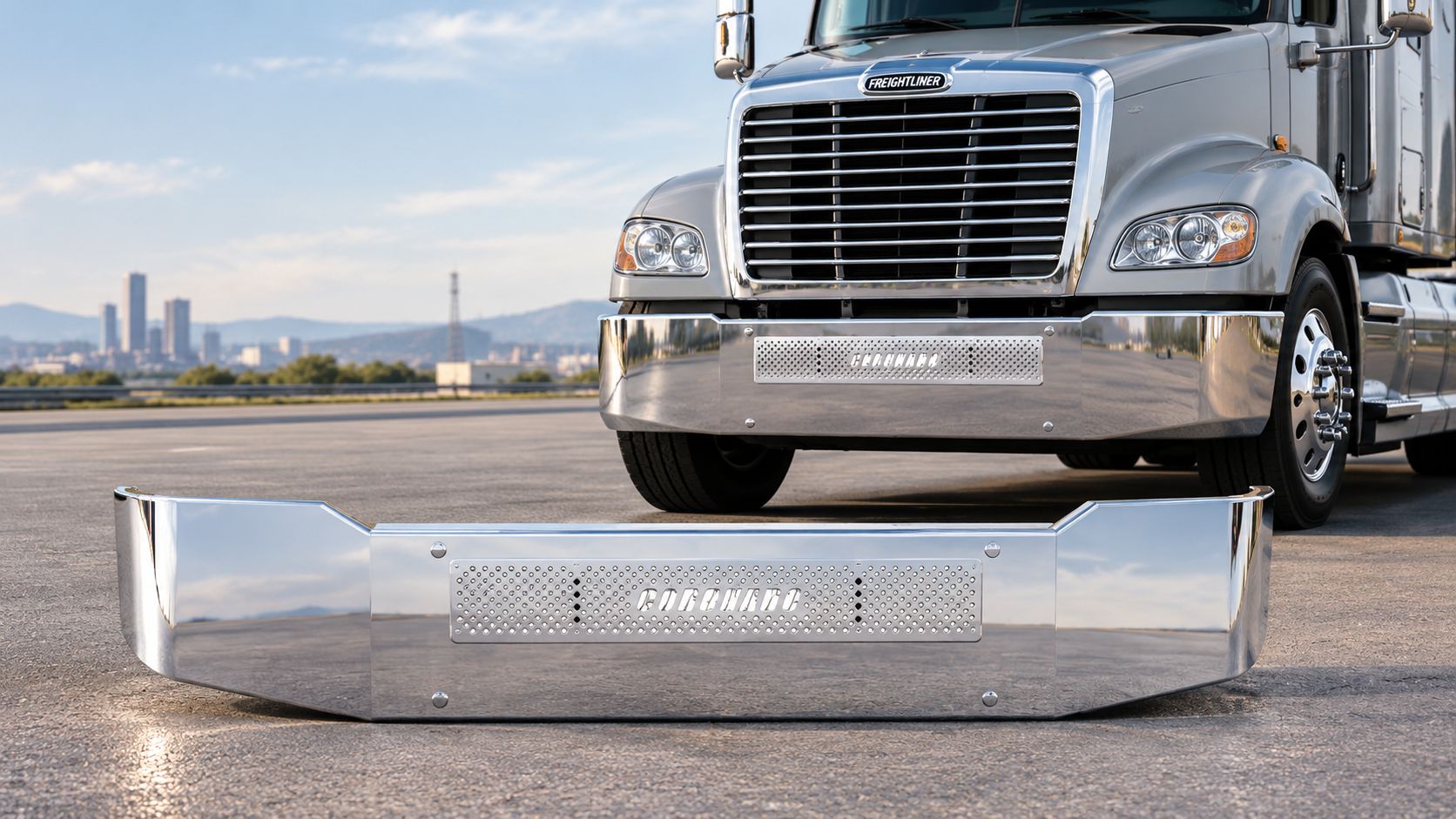
The Chrome bumper for Freightliner Coronado (2002–2009) is one example of a heavy-duty part that can move through a freight network. It uses 10-gauge chrome-plated steel with a mirror-polished finish, with an 11-gauge 430 stainless steel option, and has direct bolt-on installation for the specified Freightliner model.
| Mode | Best Use Case | Cost Level | Transit Time | Best Fit for Class 8 Parts |
|---|---|---|---|---|
| FTL | Large or direct shipments | Higher total charge, efficient for full loads | Direct and scheduled | Multiple pallets, urgent dealer replenishment |
| LTL | Smaller palletized orders | Lower total charge than a dedicated trailer | Variable because of terminals | One skid of brackets, bumpers, or shop parts |
| Intermodal | Long-distance container moves | Often cost-focused | Slower than direct truckload | Planned replenishment and containerized freight |
| Rail | Bulk and long-haul inland movement | Cost-focused for suitable freight | Planned, less flexible | Bulk materials and intermodal containers |
| Air | Urgent, high-value parts | Highest cost level | Fast | Critical replacement parts |
| Ocean | International container volumes | Cost-focused for large moves | Longest planning horizon | Imported materials and export freight |
The Freight Shipment Lifecycle Step by Step
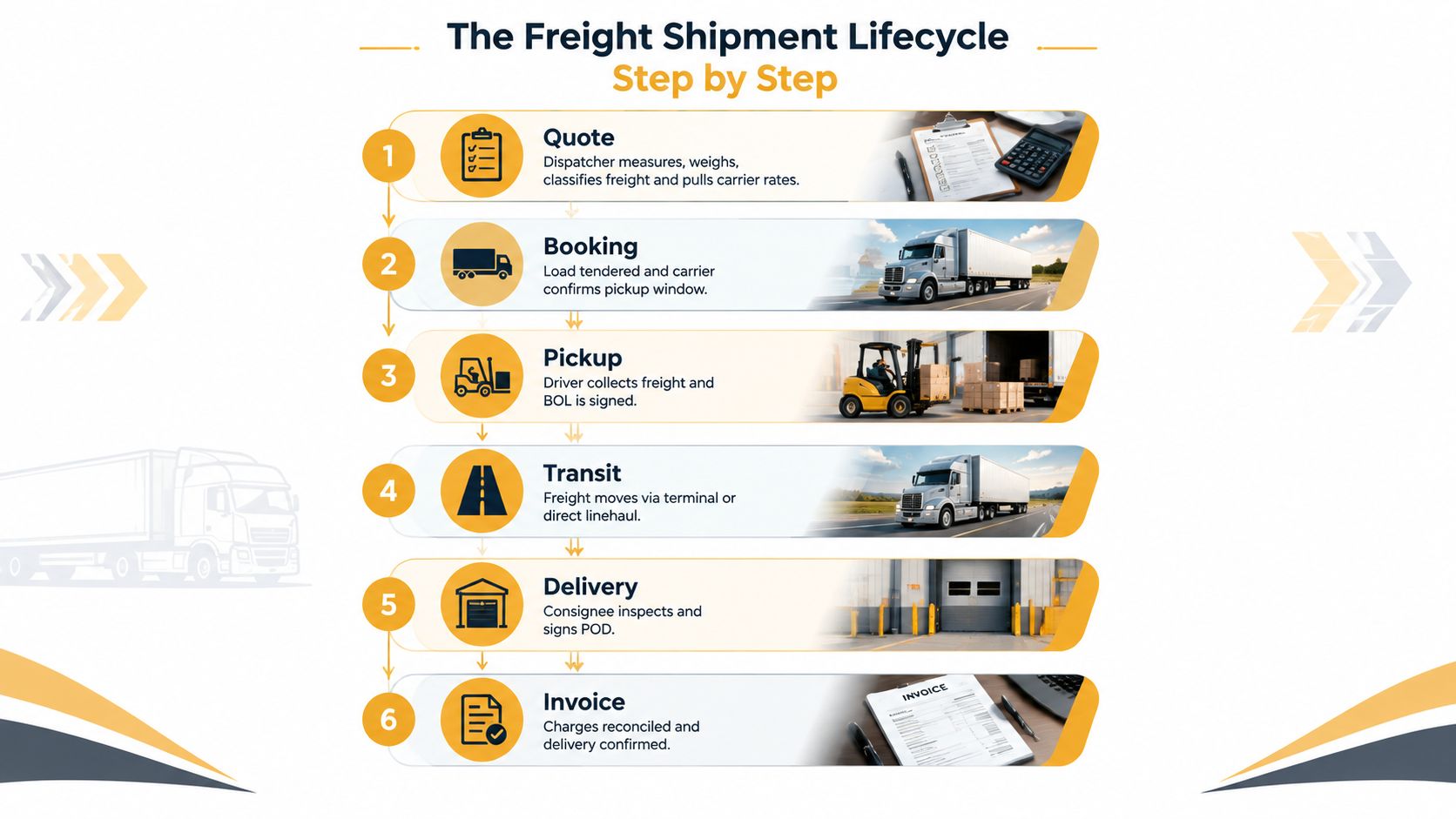
A freight shipment moves through a chain of decisions and handoffs. Each stage creates a chance to prevent a delay.
From quote to pickup
1. Quote: The dispatcher or shipping clerk measures the pallet, weighs it, identifies the freight, assigns the class, and requests rates from carriers or a freight broker. A wrong dimension can change the charge later.
2. Booking: The shipper tenders the load to a carrier. The carrier confirms the pickup window, equipment needs, and delivery instructions. If the receiver requires an appointment or a liftgate, that information belongs in the booking record.
3. Pickup: The driver checks the freight at the dock. The shipper and driver use the BOL to confirm the pieces, condition, weight, and destination. Both sides should note visible damage before the trailer leaves.
The driver doesn't just grab a pallet and roll. A chrome bumper needs protection from straps, forks, dock edges, and contact with other freight. A clear description and accurate piece count make the delivery record easier to defend if a claim appears later.
The road to proof of delivery
4. Linehaul: The carrier moves the shipment from the origin to the destination, either directly in FTL service or through terminals in LTL service.
5. Hub transfer: LTL freight may move through breakbulk or regional terminals. Workers unload, sort, and reload shipments for the next lane. Weak packaging, loose labels, and unclear handling instructions create trouble.
6. Final delivery: The driver brings the freight to the consignee. The receiver may inspect the bumper, use a liftgate, schedule an appointment, and sign the proof of delivery. The carrier then reconciles charges and closes the shipment.
A useful freight shipment lifecycle visual helps teams see that delivery isn't complete when the trailer reaches the yard. It ends when the consignee signs and the paperwork supports the move.
Delays usually start at a handoff. Check the quote, pickup details, terminal movement, appointment, and delivery access before blaming the highway.
Key Freight Terms Every Trucker Should Know
A dispatcher calls about a chrome bumper, the shop manager checks the pickup paperwork, and the driver needs the same facts at the dock. Clear freight terms keep those three people working from one shipment record instead of guessing from shorthand.
The paperwork and tracking terms
- Bill of Lading, or BOL: The shipping contract and pickup receipt. It lists the shipper, consignee, freight description, pieces, weight, class, and handling instructions.
- PRO number: The carrier's tracking identification. Give it to dispatch or customer service when checking the shipment.
- NMFC code: A classification code used to describe and price many types of LTL freight.
- Freight class: An LTL pricing category assigned from 50 to 500 under NMFC rules (LTL freight guide). The class reflects handling and shipment characteristics, not only the name of the part.
A description such as “truck parts” can leave too much room for disagreement. For a bumper, hood, or bracket, record the actual piece count, dimensions, weight, and packaging type. Those details help the carrier rate the shipment and give the shop a clearer record if the freight arrives damaged.
Weight, density, and extra services
Carriers may rate freight by actual weight or dimensional weight, whichever is greater. Dimensional weight accounts for the trailer space a shipment occupies. A large, lightly packed bumper can therefore rate differently from a compact steel part with the same scale weight. Measure the full crate or pallet, including its outside dimensions.
Accessorial charges cover services beyond ordinary dock-to-dock movement. Common examples include:
- Liftgate service: A powered platform lowers or raises freight where a loading dock is unavailable.
- Residential delivery: The destination is a residence rather than a commercial dock.
- Inside delivery: The driver carries the freight beyond the normal delivery point.
- Hazmat handling: Special rules apply when the shipment contains regulated materials.
| Term | What It Means |
|---|---|
| BOL | Pickup contract and shipment receipt |
| PRO number | Carrier tracking ID |
| NMFC code | Freight classification code |
| Class 50 to 500 | LTL pricing category under NMFC rules |
| Dimensional weight | Space-based rating measure |
| Actual weight | Scale weight of the shipment |
| Accessorial | Extra service or handling charge |
Before the tractor leaves, compare the BOL with the freight on the dock. A wrong description, piece count, or measurement can lead to a re-bill, a disputed invoice, or a claim that takes longer to settle. For a fleet moving heavy-duty parts, accurate paperwork is part of the load, just like straps and corner protection.
What Really Drives Freight Cost and Transit Time
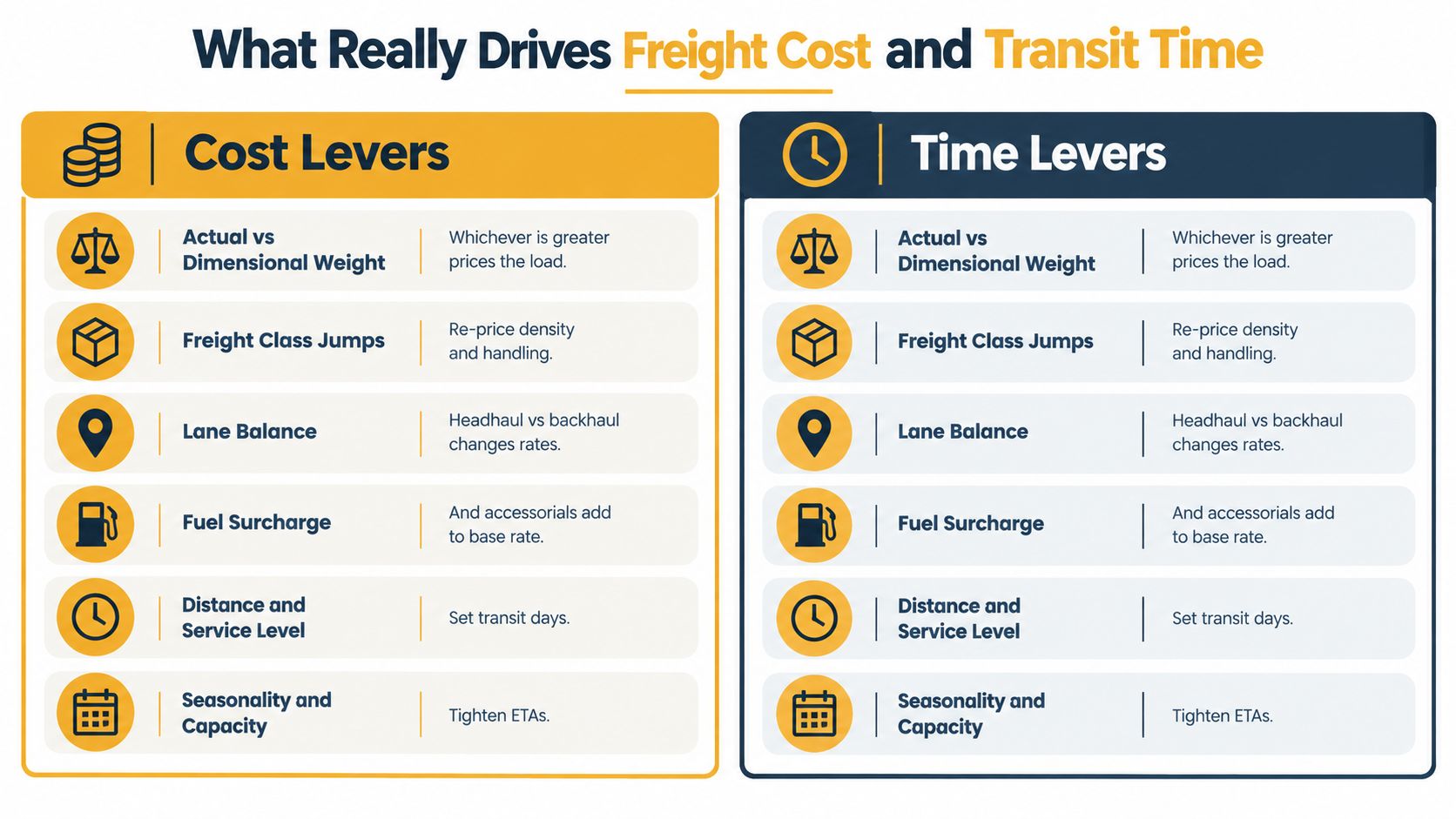
A freight quote isn't based on mileage alone. Carriers price the space, handling, risk, and service required to move a shipment through a particular lane.
The cost levers
Actual versus dimensional weight comes first. Carriers use whichever is greater, so a wide bumper crate can rate differently from a dense box of brackets. Measure the full shipping footprint, not just the metal part.
Freight class can change the quote when the shipment's density or handling profile changes. A pallet that is poorly packed, hard to stack, or vulnerable to surface damage may create more handling risk than a compact, stable pallet.
Lane balance also affects pricing. A carrier may price a lane differently depending on available capacity, shipment direction, and whether trucks have useful freight waiting at the other end. Headhaul and backhaul conditions influence the rate a shipper sees.
Fuel surcharges and accessorials sit on top of the base transportation charge. Residential delivery, liftgate use, appointments, limited access, and incorrect dimensions can all change the final invoice.
The time levers
Distance matters, but service level matters just as much. A direct truckload move has fewer handoffs than an LTL shipment, while an LTL shipment may wait for terminal sorting, reloading, and a delivery appointment.
Seasonal demand and available capacity can tighten delivery windows. A shop shipping chrome bumpers from Texas to California should give the carrier accurate dimensions and destination access details before requesting an ETA. A fleet ordering brackets from a Midwest distributor should confirm whether the receiving location has a dock or needs a liftgate.
For teams sourcing replacement parts, a focused fleet truck parts resource can help organize the product side before the transportation quote is requested.
Dispatcher's note: A low base rate isn't a low landed cost if the carrier adds reclassification, accessorials, damage handling, or missed-appointment charges later.
Benchmark the lane by cost per hundredweight, on-time delivery, claims frequency, transit consistency, and accessorial incidence. Freight benchmarking tools compare carrier and shipment data by origin, destination, mode, and freight profile (freight benchmarking guidance). A practical LTL service target used by shipping teams is 95% or above on-time delivery, but the target only helps when the team measures actual performance against the committed window.
How Freight Delivery Connects to Class 8 Trucking
Freight delivery isn't an office concept for Class 8 operators. Fleets receive parts, shops ship replacements, and drivers carry the freight that connects every part of the network.
A parts supplier may use LTL to send a bumper, grille, hood, or bracket to a dealership. The shipment rides with other customers' freight until a local driver brings it to the shop. A larger dealer replenishment may move by FTL when the order fills enough trailer space or when the receiver needs a direct arrival.
The Class 8 tractor often handles the first or last truck leg even when another mode did the long haul. A container ship brings cargo to a port, rail moves a container inland, and a truck takes it to the warehouse. An intermodal ramp feeds a truckload lane. Air freight lands at a cargo facility, then a truck completes the delivery.
Owner-operators also see freight delivery through drop shipments and parts orders. A driver may receive a replacement component at a terminal, coordinate a commercial delivery appointment, or haul a trailer loaded with parts for multiple fleet locations. The shipment's success depends on more than engine power. It depends on accurate paperwork, protected cargo, usable dock access, and clear communication.
For a broader view of the equipment these loads support, review this Class 8 truck guide. The same operating realities apply to Peterbilt, Kenworth, Freightliner, and International equipment moving through long hauls, harsh weather, and rough road conditions.
A damaged finish can turn a routine parts delivery into downtime. Shops should protect polished surfaces with suitable packaging, while receivers should inspect the part before signing. Fleets should also match the replacement part to the exact truck model, year, cutouts, mounting points, material, and finish.
Practical Takeaways and Common Freight Delivery Questions
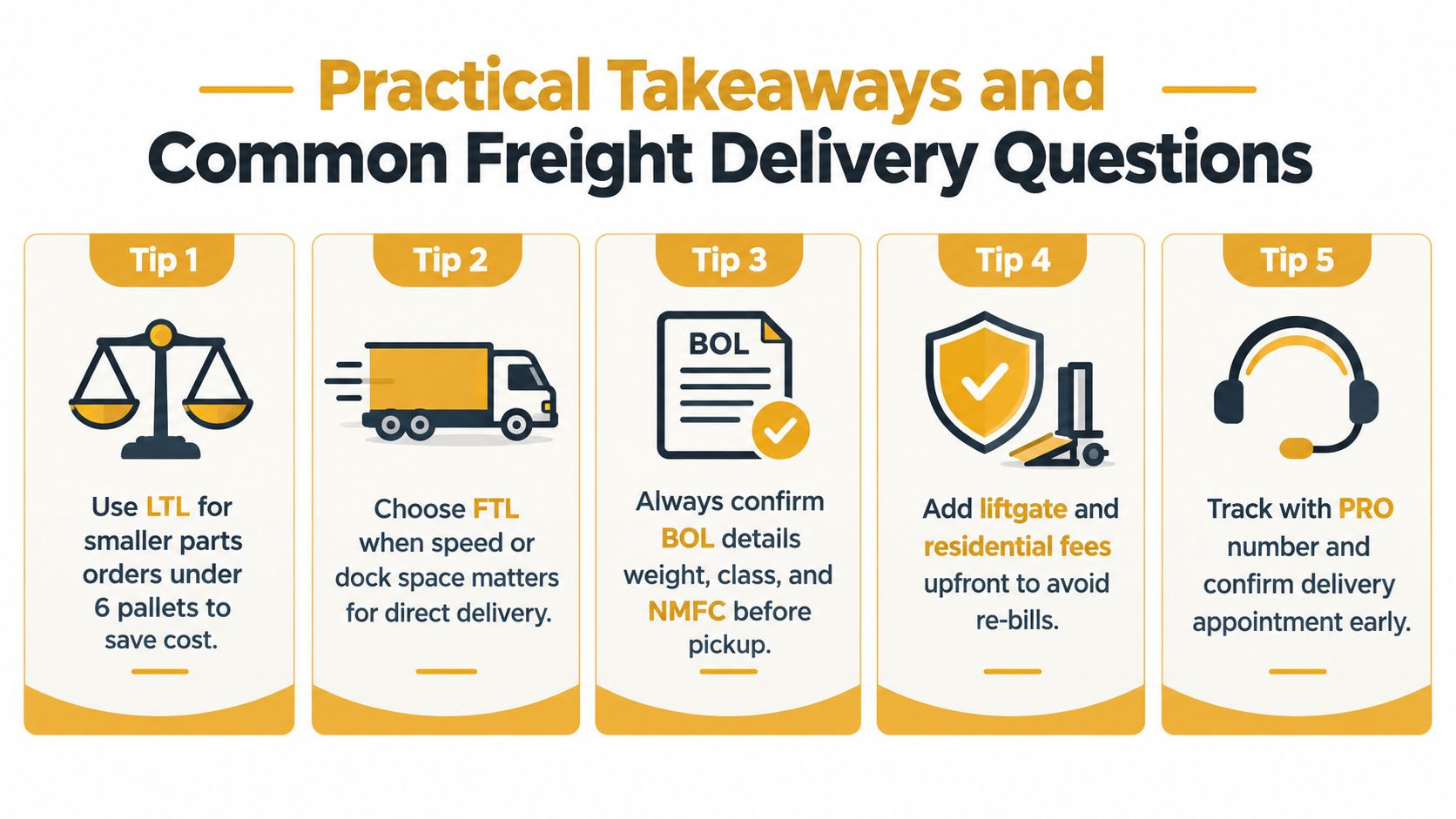
Use this checklist before the next heavy-duty parts shipment leaves the dock:
- Choose LTL carefully: Smaller palletized orders usually fit LTL better than a dedicated trailer, but terminal handling makes packaging and labeling important.
- Use FTL for direct control: Choose truckload when speed, full-load volume, or dock scheduling makes a direct move worthwhile.
- Verify the BOL: Confirm weight, dimensions, freight class, NMFC details, pieces, addresses, and accessorial needs before pickup.
- Protect chrome surfaces: Brace bumpers and other finished parts so forks, straps, and neighboring freight can't rub or bend them.
- Track the handoffs: Keep the PRO number available and confirm the delivery appointment early.
Questions operators ask
How much does freight delivery cost per mile or pallet?
There isn't one dependable price for every shipment. The carrier rates the lane, weight or dimensional weight, freight class, density, handling needs, capacity, and accessorial services. Compare complete quotes, not only the base line.
How long does standard LTL take?
Transit varies by origin, destination, terminal network, appointments, and handling. Published commitments can miss actual performance. MIT research on LTL carrier performance reported an overall on-time rate of 71%, with delays sometimes reaching three days beyond the quoted transit time (MIT LTL performance research). Build a practical buffer for time-sensitive parts.
How can a shop reduce damage claims?
Use rigid packaging, secure the part against movement, photograph its condition, count every piece, and record visible damage on the BOL and delivery paperwork. Don't sign a clean receipt when the freight clearly arrived damaged.
Freight delivery works best when the shipment is described accurately before a driver backs under the trailer. That discipline protects uptime, freight cost, and the appearance of the truck waiting in the bay.
Galhor Inc. supplies configurable chrome bumpers for Peterbilt, Kenworth, Freightliner, and Volvo Class 8 trucks, with chrome-plated carbon steel, 430 stainless steel, and 304 stainless steel options, plus LTL freight delivery support. Visit Galhor Inc. to match a direct bolt-on bumper to your truck and arrange delivery across the United States.