

Semi Truck Customization: The Owner's Guide
You're standing in the shop yard with a truck that still earns its keep, but the front end looks tired, the bumper's been kissed one too many times, and the next order can go two ways. You can buy shiny parts that look good in the lot, or you can make semi truck customization pay back in uptime, cleaner fitment, and better resale when the truck rolls out years from now. For a Peterbilt, Kenworth, Freightliner, or Volvo, the right bumper, lighting, and finish choices should protect the truck first and dress it up second.
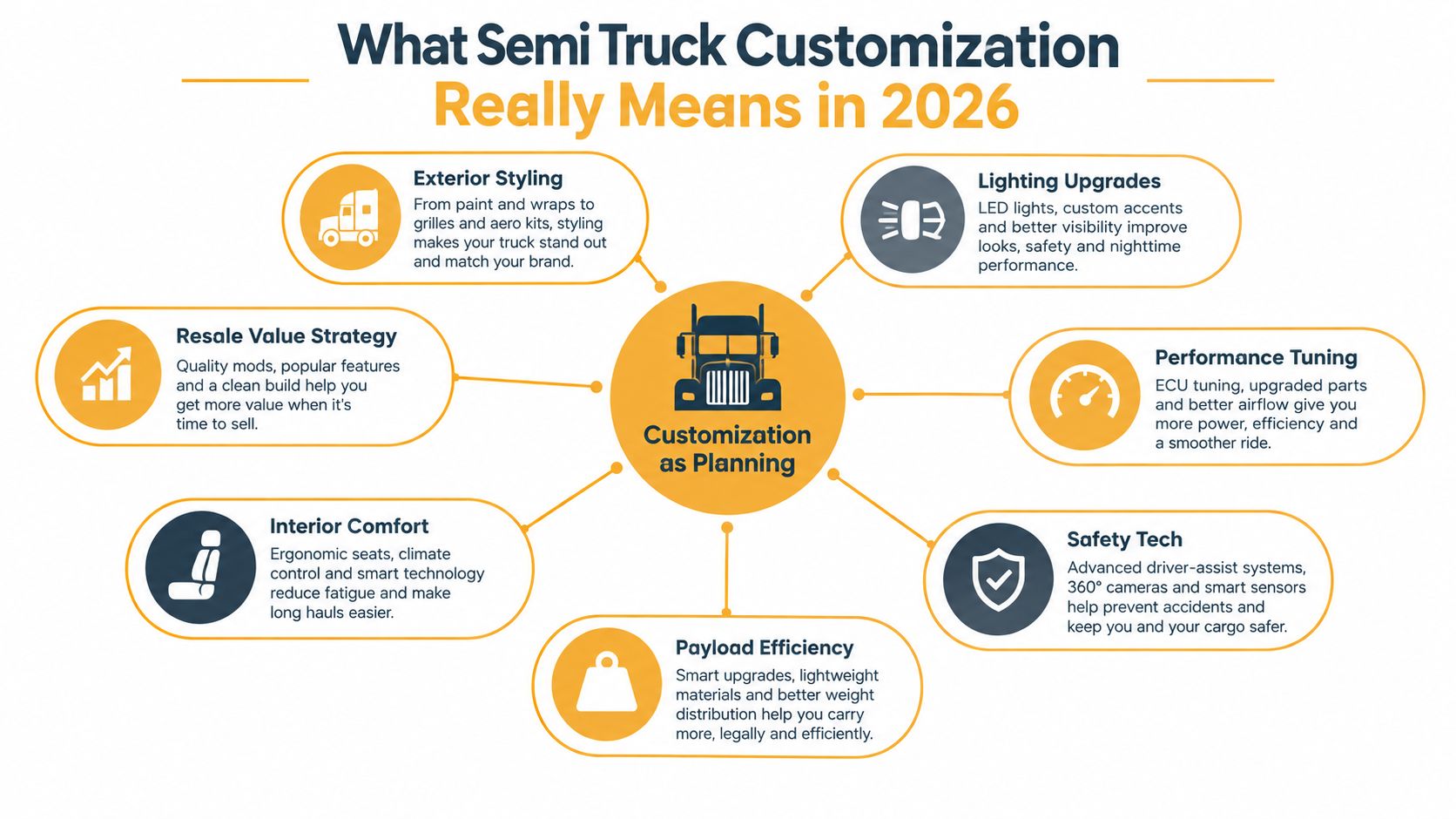
Table of Contents
- What Semi Truck Customization Really Means in 2026
- The Seven Upgrade Categories Every Driver Should Know
- Materials, Thickness, and Finish Explained Like a Shop Guy Would Explain Them
- Stainless Steel 430 vs 304 vs Chrome-Plated Carbon Steel
- Federal Rules That Decide Which Bumper and Lighting Setup You Can Buy
- Planning, Budgeting, and Sequencing Upgrades the Smart Way
- Resale, Uptime, and the Bottom Line on Every Dollar Spent
What Semi Truck Customization Really Means in 2026
A driver pulls into the shop asking for “the nice bumper,” but the underlying question is what the truck has to do after it leaves. A bumper that looks sharp in the bay but blocks a lamp, sits too far out, or makes sensor access a pain turns into a headache the first time the truck backs into a dock, runs a winter route, or gets appraised for trade-in. Semi truck customization starts with fitment, service access, and how the truck will age on the road.
The seven buckets that matter
Start with the parts that change how the truck works every day. Bumpers and lighting affect protection, visibility, and compliance. Suspension, wheels and tires, and aero add-ons change how the truck rides, rolls, and burns fuel. Paint and wraps protect the surface and shape first impressions. Interiors shape driver comfort, which matters on a run that never seems to end.
Practical rule: If a part affects safety, fuel use, or service access, it belongs in the plan before it goes on the order.
The market backing this trade is still strong. The truck and trailer parts market reached $26.19 billion in annual sales, and longer vehicle life keeps owners buying parts for years of service truck parts aftermarket. The same review notes average engine teardown mileage rising to 771,000 miles in 2014 and transmission replacement mileage to 585,900 miles, which tells you these trucks stay in the game long enough for smart upgrades to matter.
A good build also has to hold up on resale. A custom bumper and clean front-end package can help if the fitment is right, the lights stay legal, and the truck still looks easy to service. Lighting upgrades help when they improve visibility without creating a compliance mess. Interior work sells comfort, but heavy personalization can shrink the buyer pool.
That's why semi truck customization is a planning job. The best money goes into parts that protect the truck, fit the chassis cleanly, stay legal, and hold value when the truck changes hands.
The Seven Upgrade Categories Every Driver Should Know
The quickest way to waste money is to treat every upgrade like it has the same job. It doesn't. A bumper can save you from a costly front-end headache. A wrap can protect paint. A set of wheels might change the stance of the truck but do little for uptime. Knowing the category tells you what to expect at resale and on the road.
What each category really does
Bumpers protect the nose, carry lights, and set the first visual tone. A drop bumper gives a deeper look and can add function, but it also needs careful projection and fitment checks. Standard bumpers are easier to live with on many work trucks because they stay closer to the factory profile.
Lighting is mostly about visibility and signal clarity. LED setups usually make more sense for working trucks than old halogen when you want cleaner output and less attention from the maintenance bay.
Suspension changes ride quality and load control. Wheels and tires affect appearance, rolling feel, and maintenance. Paint and wraps help the truck hold its surface and visual value. Interiors support the driver, but heavy personalization can hurt the pool of future buyers. Aero add-ons matter most when fuel use matters.
| Category | Typical Upgrade | Best For | Resale Impact |
|---|---|---|---|
| Bumpers | Drop bumper or direct bolt-on replacement | Work trucks, owner-operators, collision repair | Strong when fitment is clean |
| Lighting | LED markers, marker housings, auxiliary lamps | Night work, long-haul visibility | Positive if compliant |
| Suspension | Air-ride or refreshed components | Ride comfort, fleet uptime | Moderate when documented |
| Wheels and tires | Polished aluminum or steel setups | Appearance, durability, maintenance | Mixed, depends on condition |
| Paint and wraps | Repaint or vinyl wrap | Surface protection, brand image | Good if the finish stays clean |
| Interiors | Seats, trim, storage, sound control | Driver comfort, show trucks, long runs | Mixed if too personal |
| Aero add-ons | Roof, side, and front airflow parts | Fuel-focused fleets, highway tractors | Good if they don't complicate service |
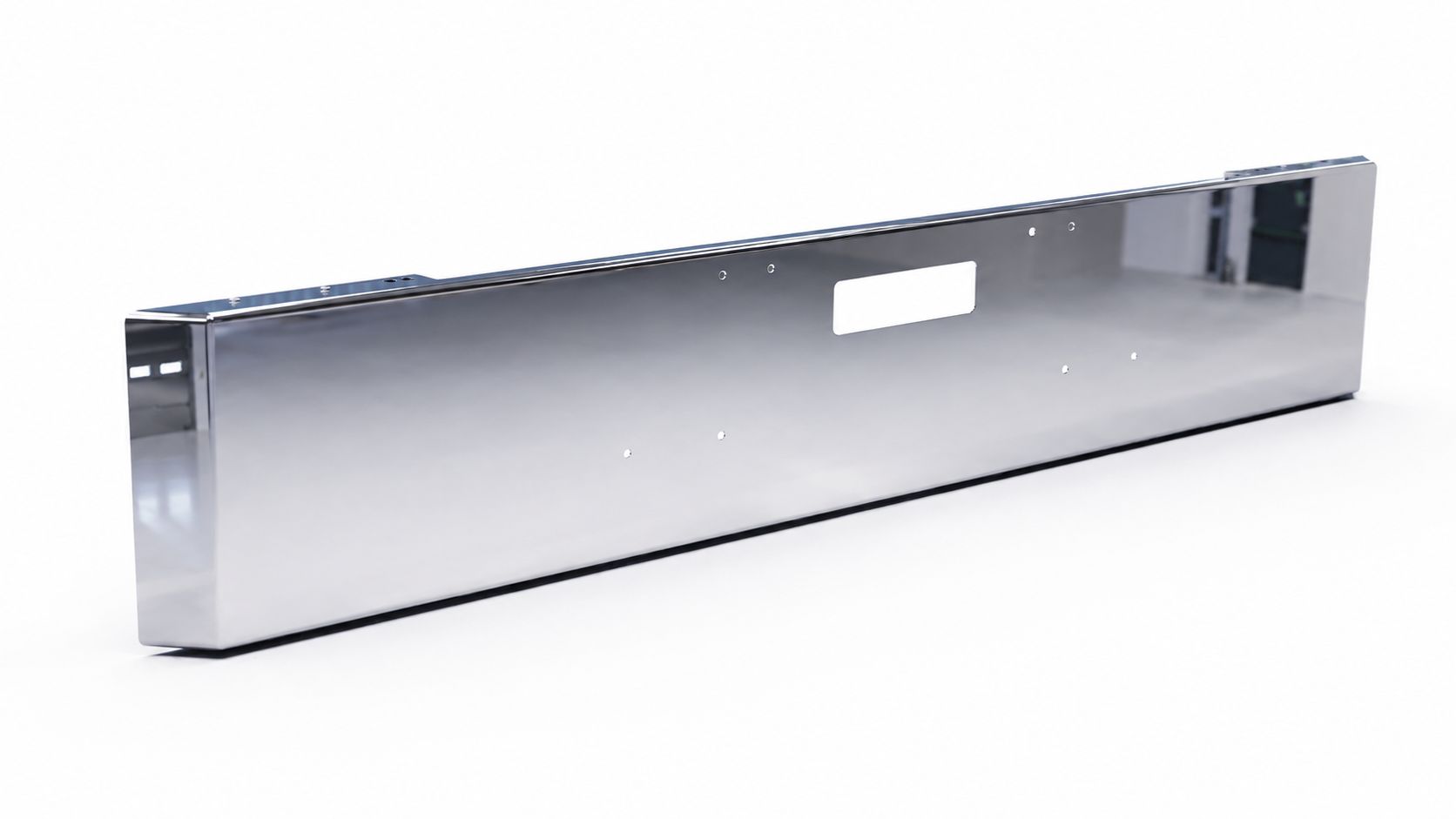
A good example is a Chrome bumper for Freightliner Classic. It's built from 10-gauge chrome-plated steel with a mirror-polished finish, and it's also offered in 3 mm chrome-plated Stainless Steel 304/430 with standard mount and blind mount options. That kind of spec matters because it tells you more than the shine does.
How to read the trade-off
A show truck can lean harder into polished parts, but a working tractor still needs easy access, sane service intervals, and the ability to take a hit without turning the whole week into shop time. If a part adds weight, complicates repair, or forces extra downtime, it has to earn that cost somewhere else. That's the part most buyers skip.
Keep the signal simple. The best-looking truck on the row is still a working truck if the parts are easy to fit, easy to inspect, and easy to replace.
Materials, Thickness, and Finish Explained Like a Shop Guy Would Explain Them
The spec sheet matters more than the sales photo. A bumper can look identical in a thumbnail and behave very differently on the truck once winter roads, wash racks, and road spray start doing their work. If you can read the material, thickness, finish, and fitment notes, you can tell which part belongs on a long-haul tractor and which one is built mainly for the lot.
What the material tags tell you
Three materials dominate premium bumpers, and the trade-offs between 430, 304, and chrome-plated carbon steel get their own section below. What matters here is knowing that the tag is only the starting point.
Thickness tells you more about the build than the shine does. On premium bumper listings, you'll see 10-gauge steel or 3 mm stainless. Those numbers help you compare structure, not just appearance. A thicker bumper usually gives more confidence around impacts, tow use, and daily abuse, but the exact fit still has to match the truck.
Finish and fitment carry the real weight
A mirror-polished surface looks right on a working tractor, but polish alone does not tell you how the part will age. Triple-layer chrome with 35 microns of nickel gives the finish more depth and corrosion protection than plain shine, which matters in humid weather and on roads that see salt. U.S.-sourced steel, in-house engineering, and direct fitment help with consistency, but they do not replace checking the truck's exact model year and body layout.
A bumper is only “bolt-on” if the truck and the part agree on cutouts, mounting points, and service access.
That is why fitment language matters. Direct bolt-on should mean no drilling, no cutting, and no guessing. Model-year-specific matters because sensor locations, lamp positions, and grille shapes change. Brand-specific fitment for Peterbilt, Kenworth, Freightliner, and Volvo helps keep the front end from turning into a custom-fabrication job.
For a closer look at stainless bumper construction and what belongs on the spec sheet, see this guide on stainless steel truck parts.
What a shop owner checks first
- Material type: 430, 304, or chrome-plated carbon steel.
- Thickness: 10-gauge or 3 mm, depending on the build.
- Finish: Mirror polish, chrome, or brushed.
- Mount style: Standard mount, blind mount, or another direct-fit layout.
- Cutouts: Lamp openings and accessory clearance for the exact truck.
If a seller cannot answer those questions fast, they probably do not know the part well enough to sell it with confidence.
Stainless Steel 430 vs 304 vs Chrome-Plated Carbon Steel
A truck running through a salt-belt winter needs a different answer than one living in coastal humidity. 304 gives you the strongest corrosion resistance of the three. 430 follows behind it. Chrome-plated carbon steel can look sharp, but once the weather turns ugly, the upkeep shows up fast.
Stainless Steel 430
430 stainless is the grade that keeps a lot of owners in the game without draining the budget. It holds a mirror finish well, costs less than 304, and still gives a clean front-end look on trucks that get washed on a regular schedule. For a Midwest owner-operator who wants appearance without paying for extra corrosion margin they may never use, it is a sensible buy.
430 sacrifices some corrosion resistance, and it wins that trade back on price and finish retention. If the truck is not living on salted roads or right off the water, it can serve for a long time without becoming a maintenance headache.
Stainless Steel 304
304 stainless earns its place when rust is the problem. Salt, humidity, and coastal air are hard on front-end parts, and 304 stands up better than 430 in those conditions. I would steer a truck toward 304 if it spends time near the coast or runs winter roads that stay wet and dirty for months.
The higher purchase price usually makes sense on equipment that stays in service year after year. You are paying for less surface trouble, fewer touch-ups, and a cleaner look that holds up longer.
Chrome-Plated Carbon Steel
Chrome-plated carbon steel is the bright-shine option for drivers who want a bold look and a shaped part that can handle heavier styling. It also fits some working trucks that get replaced on a practical schedule and do not need the same corrosion life as stainless.
The trade-off is upkeep. Chrome can look right on day one, but pitting and wear show up faster when the truck sits dirty or lives in rough weather. That makes it a fit for some show builds and some hard-use setups, as long as the owner understands the maintenance burden.
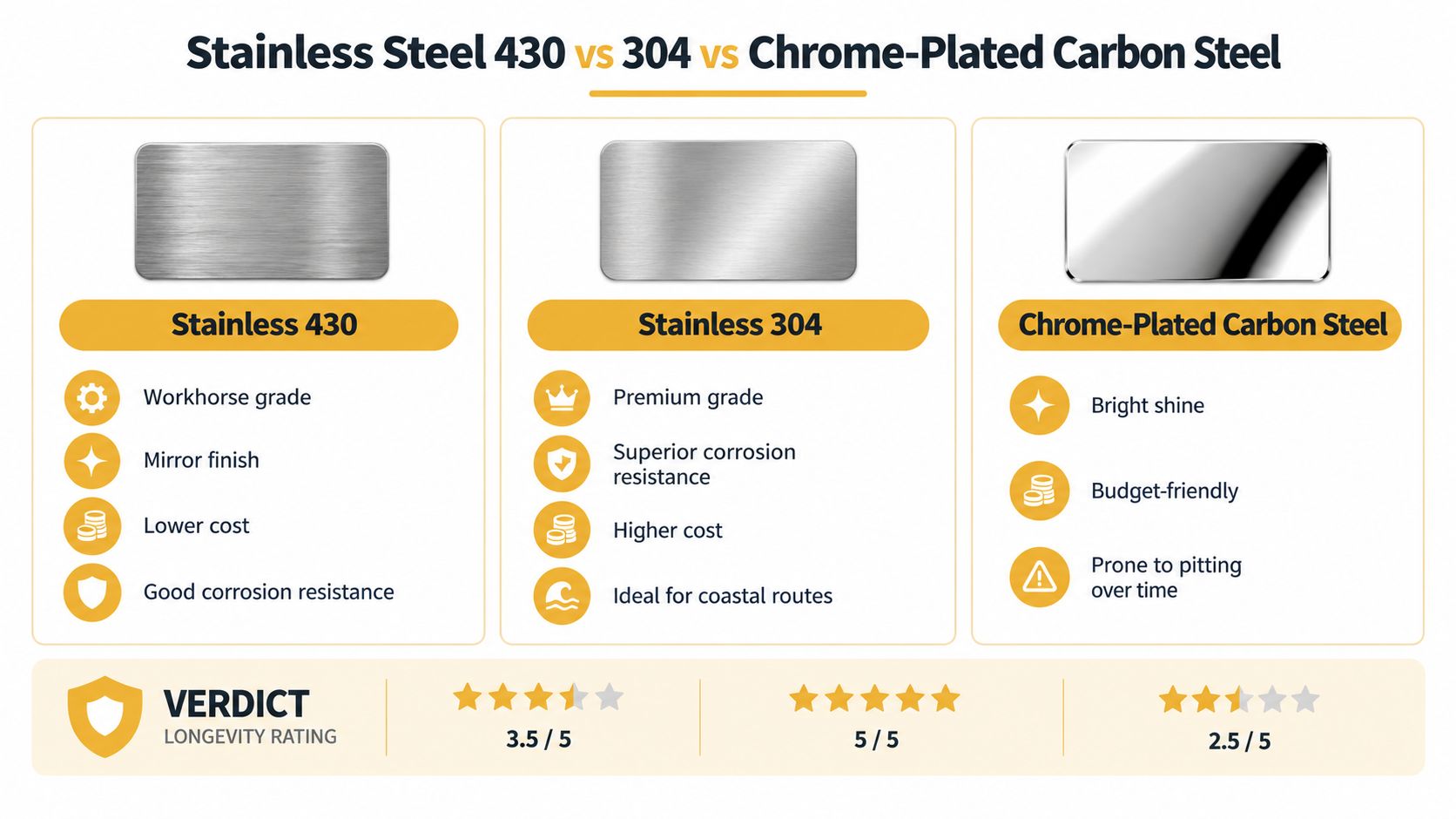
My rule of thumb stays simple. 430 works for value and clean looks. 304 makes more sense in harsh environments. Chrome-plated carbon steel belongs on trucks where style and shape matter more than low-maintenance ownership.
Federal Rules That Decide Which Bumper and Lighting Setup You Can Buy
A bumper can be built right and still create a problem if it ignores the rules it has to live under. That's why I always look at fitment and compliance together. The hardware has to clear the truck, but it also has to clear the federal limits that govern projection, lighting, and mounting.
Projection and fitment are tied together
Federal size rules say resilient bumpers must not extend more than 6 inches beyond the front or rear of the vehicle federal bumper size rule. That's a hard buying checkpoint when someone is looking at an 18-inch drop bumper or a deep custom front end. If the bumper sits too far out, it may look right in the parking lot and still create compliance trouble.
The practical move is to verify the bumper's total forward projection, the mount position, and the truck's exact profile before ordering. A clean bolt pattern doesn't solve a bad projection angle.
Lighting has to stay visible and functional
NHTSA says added lighting can't impair required equipment, and extra lamps shouldn't create glare for oncoming or following traffic NHTSA lighting interpretation. The same guidance points to the visibility of side-marker lamps, reflectors, and conspicuity schemes under Standard No. 108. That means custom cutouts, polished surfaces, grille guards, and light bars can't block or confuse the original lamp layout.
FMCSA guidance under 49 CFR Part 393, Subpart B also keeps the focus on visibility and mounting. Lamps and reflectors have to stay securely mounted, and stop lamps need to work when the brakes are applied FMCSA lighting guidance. If a bumper swap changes that, the job isn't finished.
A front bumper is not an underride guard
A heavy-duty front bumper is a bumper unless it's been tested and approved as a guard. The GAO notes that federal requirements exist for rear guards on most large trucks, while no federal requirements apply to side or front guards on large trucks GAO underride review. That means a strong-looking front bumper should not be marketed as a certified front underride guard unless it truly is one.
bumper safety standards matter because the wrong label can create the wrong expectation. For fleet specs, separate the bumper's strength, tow-point access, lighting cutouts, and clearance from any guard language.
Buy the bumper for the truck you actually run, not the brochure version of it.
Planning, Budgeting, and Sequencing Upgrades the Smart Way
A truck goes out of service when the shop starts treating upgrades like separate little jobs. That's how you end up pulling the same front end apart twice, chasing a wiring issue, or waiting on a part that should've been ordered before teardown. The clean way is to line up the truck, the part, and the calendar before any wrench turns.
Check the truck before you check out
VIN verification and model-year confirmation come first. Then look at the original lighting layout, sensor and camera locations, tow-point style, and grille integration so the new bumper doesn't block anything important. That matters even more on late-model tractors with more electronics up front than older trucks had.
Document everything before removal. Take pictures of the front end, the lamp layout, and the mounting points. If a part needs cutouts, the truck should already tell you where they belong.
Spend in phases, not all at once
A smart budget usually falls into three lanes. An essentials package covers the bumper, basic LED lighting, and wheel polish to protect the truck's face and resale. A performance package adds suspension, tires, and aero parts for fuel and uptime. A styling package handles paint, wrap, interior trim, and polished accents once the practical work is done.
The best lead times also affect sequencing. In-stock stainless bumpers can ship within 48 hours, while made-to-order carbon steel units typically take 4 to 6 weeks. That means the truck should not be torn down until the correct part is on the way.
big rig custom parts can be planned around preventive maintenance, not around a surprise breakdown. That keeps downtime down and saves your install from becoming a rush job.
Order the hard part first, then schedule the truck around it. That's how a clean build stays clean.
Resale, Uptime, and the Bottom Line on Every Dollar Spent
The best upgrades are the ones the next owner doesn't have to undo. A direct bolt-on bumper with clear material and fitment info keeps more value than a hacked-in piece with no paperwork. LED lighting that improves visibility, paint or wraps that protect the surface, and documented suspension or tire work usually read better at trade-in than a pile of one-off styling parts.
The trouble starts when the truck gets too personal. Overdone interiors, oddball aero parts that hurt fuel economy, or lighting layouts that create compliance headaches can narrow the buyer pool fast. A fleet buyer wants a truck they can put right to work, not a rebuild project.
Galhor Inc. offers configurable chrome bumpers for Class 8 trucks with brand-, model-, and year-specific fitment, and the company supports direct bolt-on ordering through its web setup. That matters because the paperwork and the part need to match the truck. When the fitment is right and the install is documented, the truck sells easier.
Keep the finish, keep the function, and keep the file. That's the checklist I'd want in the cab: confirm fitment, confirm forward projection, confirm tow-point access, document the original configuration, photograph the finished install, and save every piece of paperwork.
If you're ready to upgrade a working tractor without guessing at fitment, materials, or compliance, take the next step with Galhor Inc.. Build the bumper around the truck, not around the catalog photo, and you'll end up with a cleaner install, less downtime, and a better shot at strong resale later.