

Volvo Truck Parts: A Practical Guide for Owner-Operators
The delivery window doesn't care whether a failed part is genuine Volvo, aftermarket, or remanufactured. If your VNL throws a turbo actuator fault on I-80, the nearest shop is hundreds of miles away, and the load must arrive on schedule, the only question that matters is whether the correct Volvo truck parts can get the truck moving safely.
That decision starts long before a roadside failure. Owner-operators and fleet managers need a buying system that matches the part to the truck, duty cycle, warranty risk, and downtime exposure. The same logic applies when you're shopping for a Peterbilt 389 bumper, a Kenworth W900 chrome bumper, an 18 inch drop bumper, or a replacement component for a Volvo VNL, VNX, or VHD.
Table of Contents
- Why Volvo Truck Parts Matter on Every Haul
- Major Volvo Class 8 Systems and Common Replacement Parts
- OEM Versus Aftermarket Parts and When Each Makes Sense
- Materials, Thickness, and Fitment for Volvo Parts
- Maintenance Rhythm and Longevity Tips for Volvo Trucks
- A Fleet Manager's Playbook for Sourcing Volvo Truck Parts
- Smart Rules for Choosing the Right Volvo Part Every Time
Why Volvo Truck Parts Matter on Every Haul
A Volvo Class 8 truck can lose a delivery over one incorrect component. A filter, air-brake part, sensor, or cab fitting may appear minor, yet a poor match can trigger another repair, a roadside call, or extended downtime. Parts decisions should therefore account for fitment, installation time, availability, warranty exposure, and the truck's duty cycle.
Volvo's long production history helps explain the range of replacement parts in circulation. Its first vehicle left the Gothenburg production line on April 14, 1927, and the first Volvo truck followed in 1928, according to Volvo's heritage history. That established vehicle base still supports demand for parts across engines, transmissions, brakes, suspension, electronics, cab equipment, and bodywork.
Volvo Group publishes detailed supplier and delivery information in its reporting, while its service materials show how broad parts support must be. A preventive-maintenance ticket may include filters, belts, an air-drier cartridge, DPF or DEF components, lubricants, and chassis lubrication. A collision estimate may add mirrors, lighting, sensors, cab panels, suspension parts, and wheel-end components.
Volvo's North American parts and services program emphasizes genuine parts, dealer maintenance, uptime support, and fitted-parts warranty coverage. Those services make OEM parts easier to justify when failure could damage an engine, interrupt aftertreatment operation, or create warranty exposure. Proven aftermarket or cross-compatible parts can make better financial sense for routine, well-specified items when quality, documentation, and supply are reliable. For model-specific body and component guidance, review this Volvo VNL parts reference.
Roadside rule: The cheapest invoice is not always the cheapest repair. Compare part cost with installation time, availability, warranty risk, and the cost of a truck sitting still.
Volvo Trucks reported 145,395 worldwide truck deliveries in 2023, followed by around 134,000 deliveries in 2024, as documented in Volvo Trucks' history overview. A large working vehicle population creates recurring demand for brakes, suspension, drivetrain, cab, and body parts on U.S. freight routes.
Major Volvo Class 8 Systems and Common Replacement Parts
A part can look right on a Volvo and still fail at installation. Confirm the VIN, engine, build revision, connector, mounting pattern, and emissions configuration before approving a purchase. Volvo's maintenance lists are useful starting points, but buyers still need to match the listed component to the truck in front of them.
Powertrain and aftertreatment
The D11 and D13 engines commonly require fuel injectors, water pumps, turbochargers, EGR coolers, belts, sensors, and filters. A turbocharger or injector affects drivability, fault codes, fuel use, and regeneration performance, so fitment and calibration deserve more attention than brand alone. Use this VNL parts guide to cross-check model-specific components before requesting quotes.
The I-Shift and Volvo automated transmissions use clutch packs, sensors, and gear-shift actuators. Identification must include the transmission version, connector, and calibration. A component may share the same shape while using different electronic specifications. Review fault-code history and clutch condition before ordering, rather than relying only on a catalog match.
Newer VNL models add more electronic and collision-related parts. Volvo's commonly used VNL maintenance and collision parts list covers cab and body parts, lighting, mirrors, sensors, suspension, filters, cooling, and wheel-end components. Buyers can use that list to separate routine replacement items from parts that need closer VIN or system verification.
Axles, brakes, and chassis
Front and rear axle work may involve king pins, U-joints, wheel bearings, seals, brake chambers, slack-adjuster hardware, pads, rotors, and drums. Brake service must be treated as a complete system. Volvo documentation specifies pneumatic working pressure for certain systems at 689 to 930 kPa, or 100 to 135 psi, with a working temperature range of -40 to +90 °C, or -40 to +200 °F. The relevant brake documentation also specifies nylon tubing by outside diameter, as shown in Volvo's body-builder brake manual.
The VNL maintenance and collision list identifies Wabco Type 22 and Type 24 chambers, Bendix pressure-control valves, Bendix disc-brake carriers, a trailer brake ECU, and a high-duty-cycle brake pad. These parts work together. Air actuation, electronic control, friction material, and adjustment all influence stopping performance, service life, and inspection results.
Cab, body, and electrical equipment
Cab repairs commonly include headlamps, mirrors, hoods, fenders, HVAC blowers, wiring harnesses, switches, sensors, and body brackets. Chassis wear items include fifth wheels, air springs, shock absorbers, and steering linkages. Harness damage and DEF faults can cause no-start complaints after water intrusion, collision damage, or poor repairs.
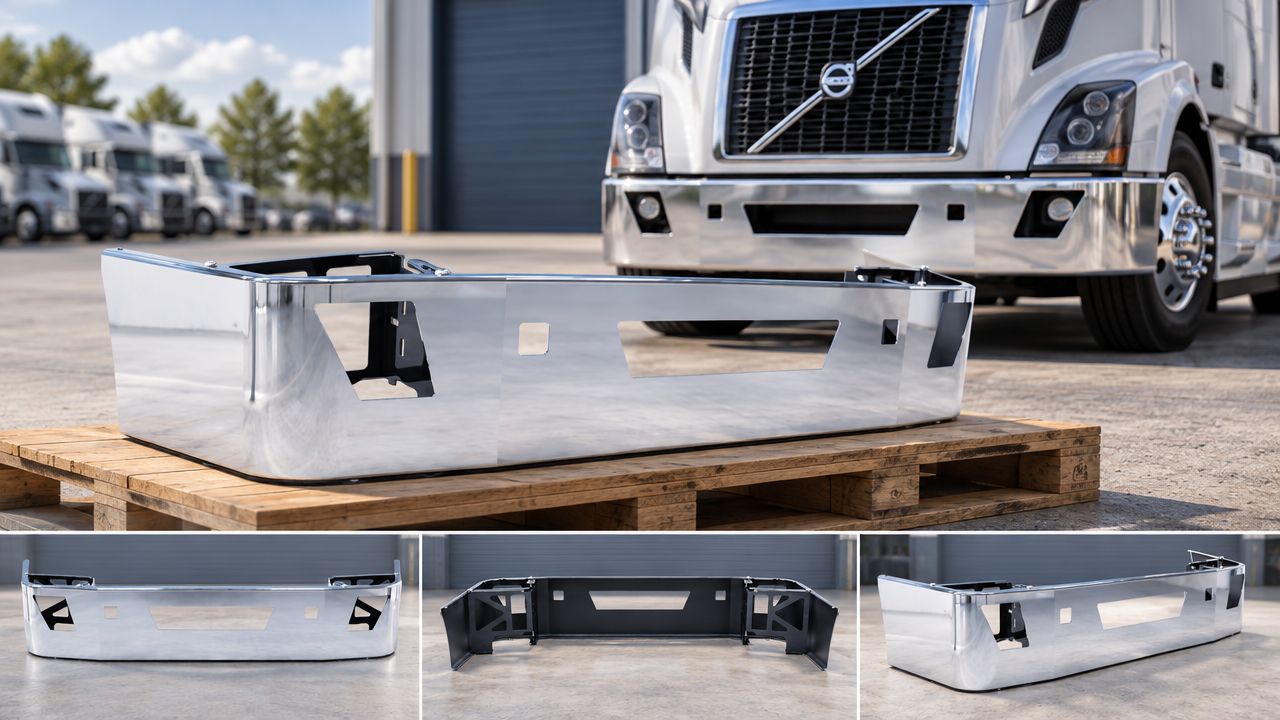
For a body replacement, Galhor's Chrome bumper for Volvo VNL (2004–2017) uses 10-gauge chrome-plated steel with a mirror-polished finish, with an 11-gauge 430 stainless steel option. It has a Gauge-7 mounting bracket, direct bolt-on installation, and cutouts for tow holes, fog holes, and light openings. The finish uses a triple-layer hexavalent chrome process with 35 microns of nickel. The bumper is sold individually with workmanship and materials warranty coverage. The catalog snapshot lists the price at $919.99.
| Volvo System | Common Replacement Parts |
|---|---|
| D11 and D13 engine | Injectors, water pumps, turbochargers, EGR coolers, belts, filters |
| I-Shift transmission | Clutch packs, sensors, gear shift actuators |
| Axles and wheel ends | King pins, U-joints, wheel bearings, seals, brake hardware |
| Air brake system | Chambers, valves, tubing, pads, rotors, trailer brake ECU |
| Chassis and suspension | Fifth wheels, air springs, shocks, steering linkages |
| Cab and body | Headlamps, mirrors, hoods, fenders, bumpers, HVAC blowers |
| Electrical and emissions | Harnesses, sensors, DEF components, DPF sensors |
OEM Versus Aftermarket Parts and When Each Makes Sense
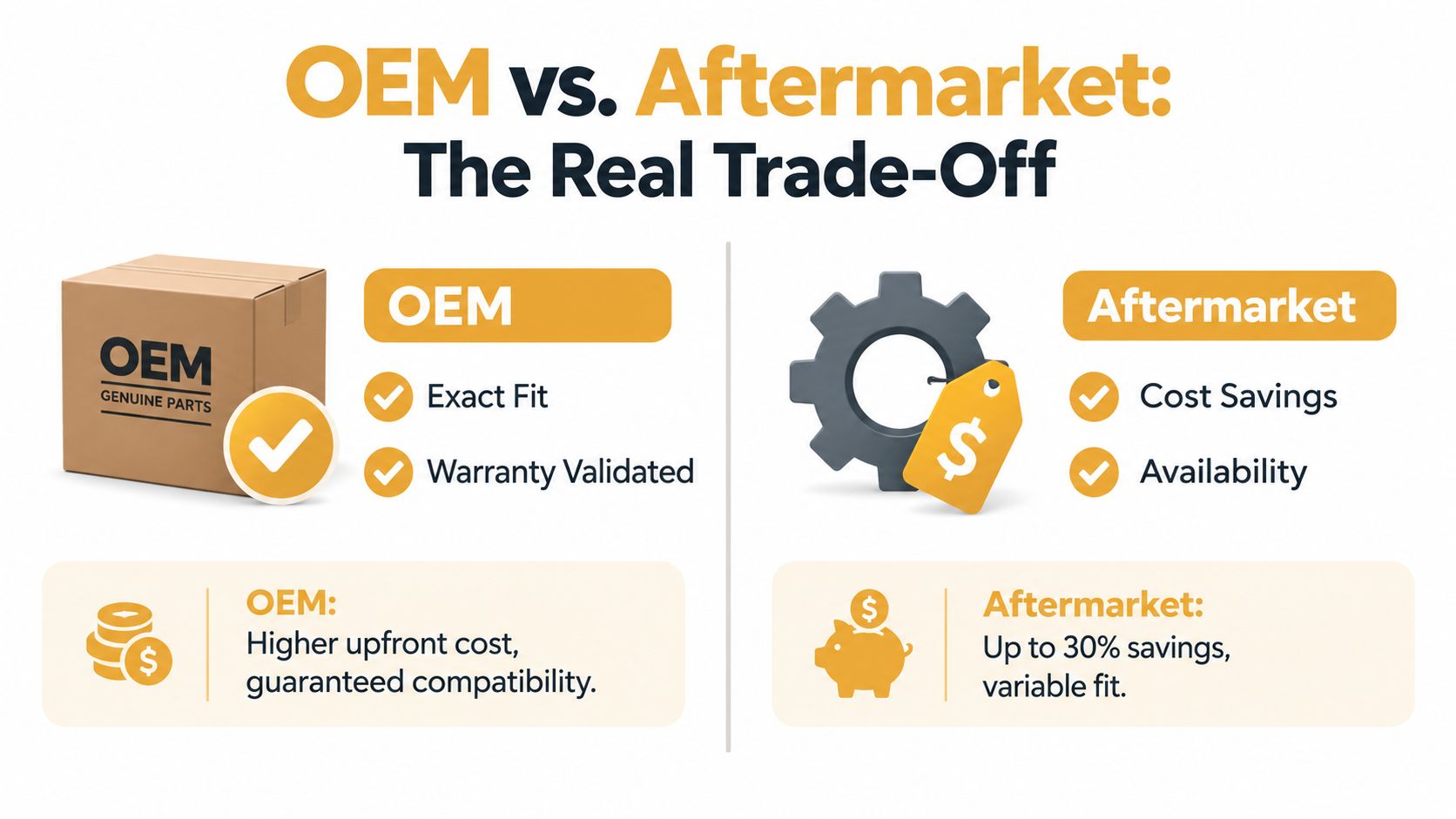
Buying genuine Volvo parts for every repair sounds safe, but it isn't always the most disciplined fleet decision. OEM parts offer exact fit, known specifications, and warranty support that may align with Volvo service requirements. Aftermarket parts can make more sense when the component is a routine wear item, the manufacturer is traceable, and the fitment has been verified against the truck.
Where OEM usually earns its place
Use genuine Volvo parts when the cost of a mismatch is high. That generally includes engine internal components, emissions-related DEF and SCR parts, advanced driver-assistance and safety sensors, and components tied directly to an emissions warranty.
A sensor may physically connect and still communicate incorrectly. An emissions component may fit but trigger faults or fail a required test. An engine or transmission component can also create secondary damage if its material, calibration, or tolerances don't match the truck's specification.
Where proven aftermarket can be practical
Reputable manufacturers such as Dorman, Bendix, Gates, and Fleetrite offer options across common heavy-duty categories. Brake chambers, air dryer cartridges, lighting, mirrors, hoses, batteries, wheel seals, and general hardware can often be sourced outside the dealer network when the part number, application, and quality controls are clear.
The price advantage matters most on vehicles that are out of warranty or run in a mixed-age fleet. Still, don't buy on price alone. Ask who made the component, where it was produced, whether the seller can provide traceability, and how the part is supported if it fails.
The OEM and aftermarket parts comparison guide is useful when you need to separate exact-fit requirements from routine replacement decisions.
Remanufactured parts add a third path
A remanufactured starter, alternator, turbocharger, or transmission component can sit between new OEM and unknown aftermarket inventory. The value depends on the remanufacturer's testing, core inspection, warranty, and return process. A cheap reman with a weak core policy can create more downtime than a new part installed correctly.
Buyer's test: If you can't verify the part number, manufacturer, warranty, and return terms, you haven't finished comparing the options.
Materials, Thickness, and Fitment for Volvo Parts
Material decisions matter most on parts exposed to road salt, moisture, gravel, heat, and repeated vibration. A polished bumper may look similar to another bumper in a product photo, but its steel grade, plating method, gauge, brackets, and cutouts determine how it behaves after months on the road.
304 stainless steel offers stronger resistance to pitting and chloride exposure than 430. Independent material data classifies 304 as an austenitic stainless steel with 170 MPa yield strength, 485 MPa tensile strength, and 25% elongation, as described in this aftermarket truck parts material reference. It suits exterior parts where long service life and exposure resistance matter.
430 stainless steel is a practical choice for truck parts exposed to atmospheric moisture, fresh water, steam, petroleum products, and organic materials. One 430 stainless steel datasheet also describes better resistance to chloride stress-corrosion cracking at high temperatures than austenitic 304 and 316 types in the stated conditions.
Chrome plating needs more than a bright surface. Chrome bumpers typically use a nickel underlayer, while the chrome topcoat mainly protects the nickel from tarnish. Industry guidance describes the chrome layer as measured in millionths of an inch, with nickel providing much of the smoothness, reflectivity, and corrosion resistance, according to chrome-plating guidance. Another heavy-duty bumper comparison describes typical chrome plating at about two to four thousandths of an inch and a stainless-clad outer layer at about 42 thousandths of an inch.
| Material | Typical Parts | Corrosion Resistance | Relative Cost | Best For |
|---|---|---|---|---|
| Chrome-plated carbon steel | Bumpers, trim | Depends on plating and damage control | Lower | Long-haul trucks where appearance and cost both matter |
| 430 stainless steel | Bumpers, trim, exterior hardware | Strong practical resistance in many common environments | Medium | Regional and long-haul use with regular moisture exposure |
| 304 stainless steel | Exterior trim, specialized durable parts | Stronger resistance to pitting and chloride exposure than 430 | Higher | Coastal routes, salted roads, and long service expectations |
| Aluminum | Selected cab and fuel-tank applications | Naturally resistant to many corrosion conditions | Varies | Weight-sensitive builds and suitable regional environments |
| Steel | Brackets, mounts, structural hardware | Strong when protected, vulnerable when coating fails | Lower to medium | High-load brackets and structural applications |
Verify the VIN, build year, mounting style, hole pattern, bracket design, and supersession number before ordering. A part can be listed for the right model and still miss the truck's revision level.
Maintenance Rhythm and Longevity Tips for Volvo Trucks
A maintenance schedule should reflect Volvo's published requirements, but it also needs to reflect how the truck works. Heavy loads, winter salt, coastal air, severe vibration, idling, short regional trips, and neglected washing all change how parts age.
The inspection rhythm
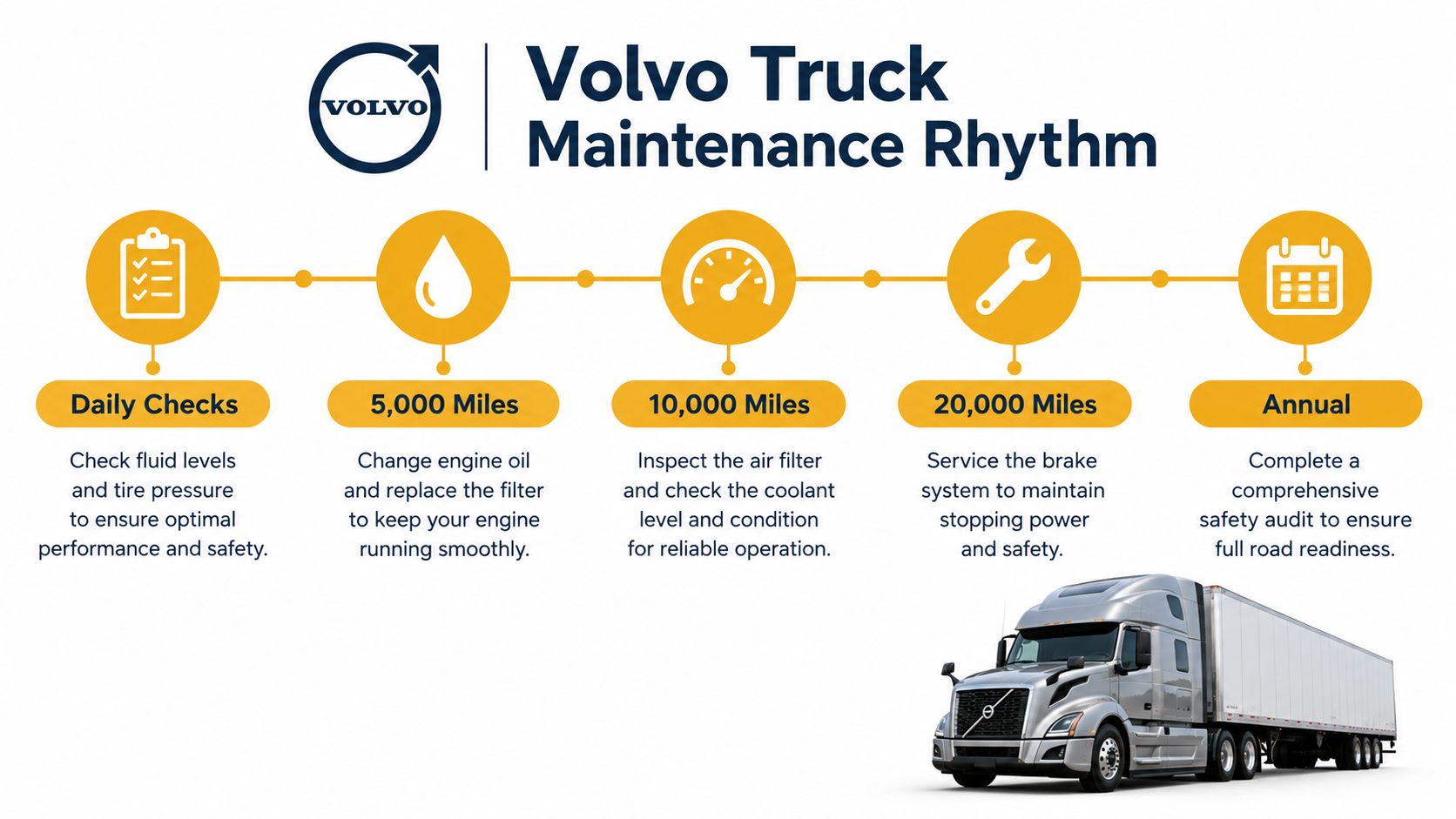
Use the truck's maintenance records and operating conditions to set the final interval. The practical checkpoints below give a starting structure for owner-operators and fleet shops:
- Daily walk-around: Check lights, fluid levels, visible leaks, tires, wheel areas, mirrors, and obvious air-system damage before the truck leaves.
- Routine PM service: Match engine oil, filters, brake checks, and lubrication to Volvo's maintenance schedule and the truck's duty cycle. Don't wait for a warning light to inspect air and brake components.
- Driveline and suspension review: At the applicable scheduled service, inspect U-joints, driveline angles, suspension bushings, air springs, shocks, steering components, and fifth-wheel movement.
- Major powertrain review: At higher-mileage service points, evaluate engine performance, aftertreatment condition, turbocharger operation, injectors, wiring, and sensor history instead of replacing isolated parts blindly.
- Annual safety audit: Review brakes, steering, suspension, tires, lights, wheel ends, frame areas, and repair records with the same care used for a formal compliance inspection.
The infographic below illustrates a service timeline, but always reconcile it with the maintenance schedule for the exact Volvo model and engine.
Parts that punish delayed service
Wheel seals can contaminate brakes. Worn U-joints can damage related driveline parts. Alternator bearing problems can become charging failures, and DPF sensors can turn a manageable service issue into a derate or no-start event. Fuel samples, DEF consumption trends, tire position records, and fault-code history help identify a pattern before the truck is disabled.
Record repairs in Volvo PTT or the fleet's maintenance software. Good records support warranty discussions, improve resale documentation, and show which supplier's parts are lasting in your operation.
Parts last longest when the surrounding system is monitored. Replacing a worn pad without checking chamber operation, air pressure, rotor condition, and adjustment only postpones the next failure.
A Fleet Manager's Playbook for Sourcing Volvo Truck Parts
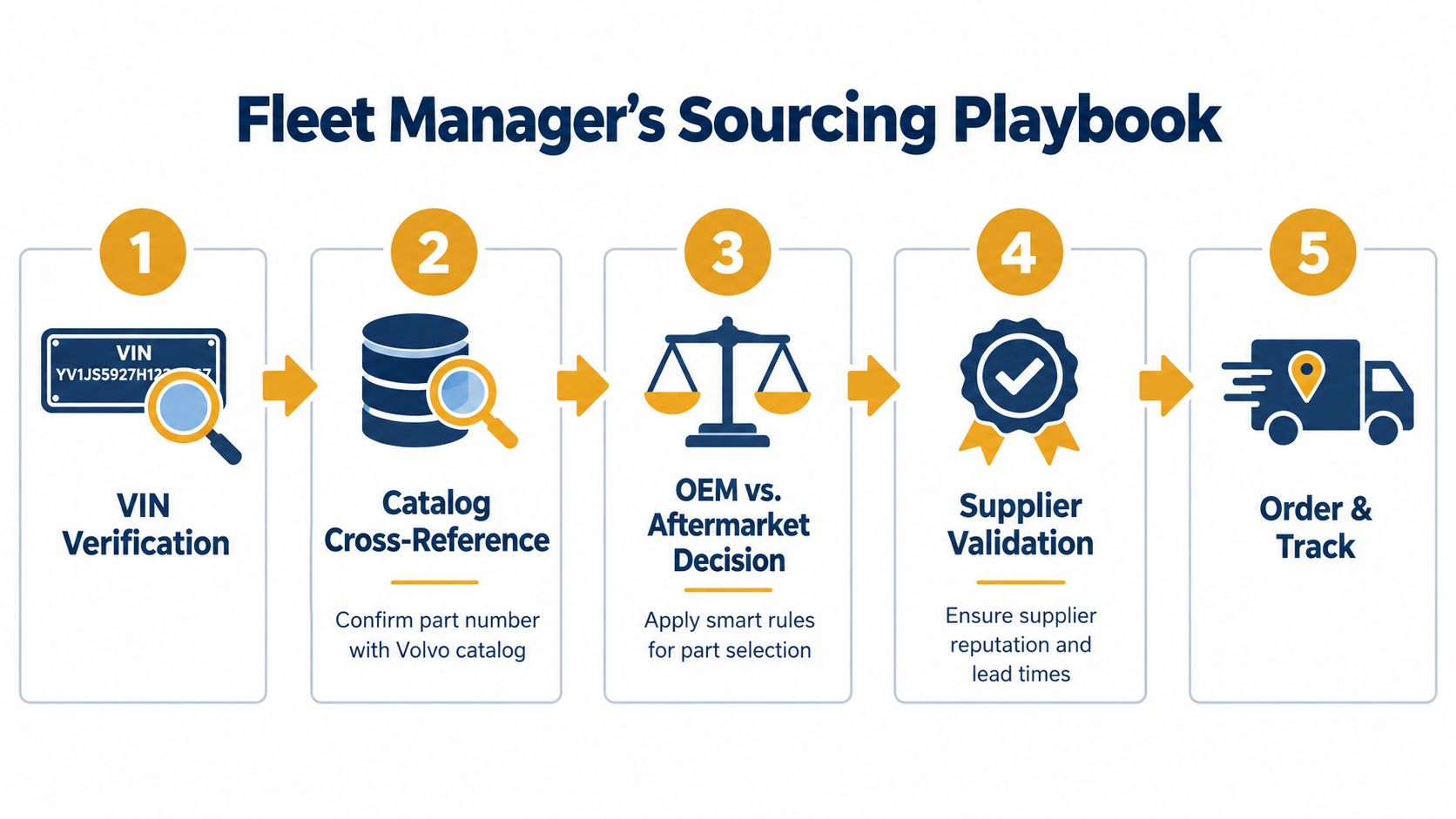
A parts buyer should be able to follow the same process whether the truck is a VNL, VNX, or VHD. Start with identification, then make the technical and commercial decision.
Five checks before the quote
- Verify the VIN: Confirm the model, engine, transmission, axle setup, build revision, and required configuration.
- Cross-reference the catalog: Compare the Volvo number with the current catalog, supersession history, and a trusted heavy-duty reference such as RigDig.
- Classify the part: Decide whether it affects safety, emissions, warranty, uptime, appearance, or routine wear.
- Validate the supplier: Check manufacturer identity, packaging, warranty terms, core handling, and return conditions.
- Order and track: Note the supplier, part number, promised lead time, installation date, and result after the truck returns to service.
Authorized Volvo dealers usually win when diagnostic support, warranty handling, or a specialized electronic component matters more than purchase price. Independent heavy-duty distributors can be strong choices for familiar wear items and common service components. Vetted online suppliers may offer broader availability, but the buyer must perform more of the verification work.
The hidden downtime traps are predictable. A wrong supersession number can delay installation. A backordered core can stop a remanufactured exchange. A low-cost air dryer that fails soon after installation can contaminate the brake and air system, forcing another repair.
Procurement habit: Set a reorder point before the truck reaches the end of a part's expected life. Waiting until the last service window leaves no room for shipping, inspection, or a wrong-part return.
Use a lead-time buffer based on failure risk and route exposure. Keep critical wear items in planned inventory when a shortage would stop a truck, and track failure rates by supplier every quarter. The fleet truck parts planning guide can support that broader purchasing workflow.
Before approving an order, confirm:
- Core terms: Know whether the old unit must be returned and how the exchange is handled.
- Return policy: Check restocking rules, time limits, and fitment-related exclusions.
- Traceability: Record the manufacturer, country of origin, lot information when available, and seller.
- Packaging condition: Photograph damaged boxes or missing protection before installation.
- Shipping plan: Confirm the carrier, delivery location, and what happens if the part arrives late.
Smart Rules for Choosing the Right Volvo Part Every Time
The reflex to buy OEM for everything can waste money. The opposite reflex, buying the cheapest aftermarket part, can create a roadside repair that costs far more than the original savings.
Use genuine Volvo parts for safety systems, emissions components, engine and transmission internals, and repairs tied to Volvo warranty coverage. Use proven aftermarket components for routine wear items such as brake pads, wheel seals, air dryers, lighting, mirrors, hoses, batteries, and cab hardware when the manufacturer and fitment are documented.
The decision rules
- Match the VIN first: VNL, VNX, VHD, and older Volvo platforms share some parts, but not every revision uses the same component.
- Protect safety systems: Never compromise on brake or steering components. Confirm pressure ratings, fitment, material, and testing.
- Protect emissions coverage: Keep DEF, SCR, DPF, and related engine controls within the requirements of the applicable warranty.
- Trace the manufacturer: Don't buy a part that can't be linked to a known manufacturer or authorized distributor.
- Compare downtime: A fair-priced part installed on time can cost less than a cheap part that strands the truck.
- Match material to climate: Select 304, 430, chrome-plated steel, aluminum, or protected steel based on corrosion exposure and duty cycle.
- Document the repair: Save the invoice, part number, supplier, warranty terms, and installation record.
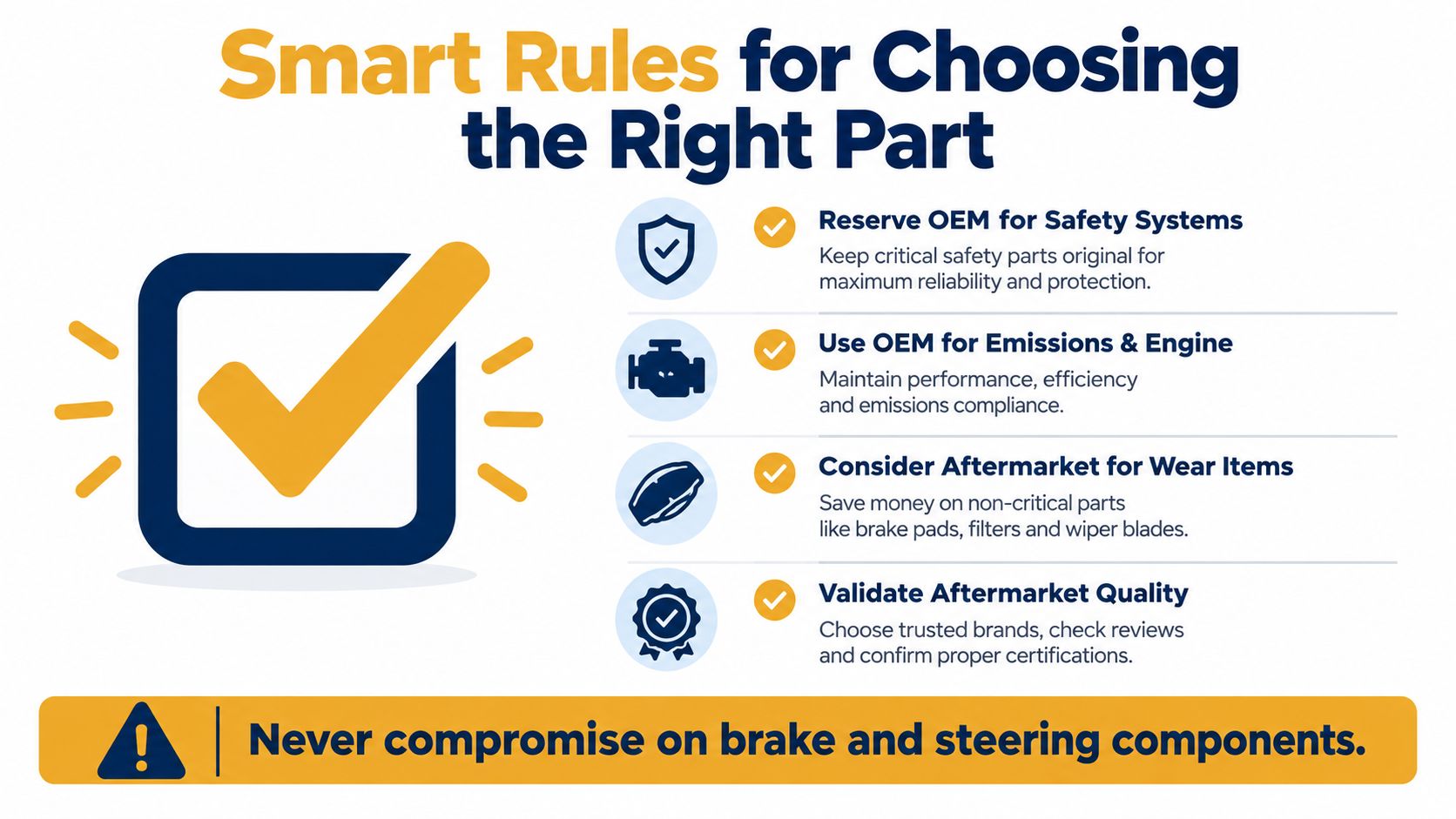
A smart parts buyer doesn't ask whether OEM or aftermarket is always better. The useful question is which option gives this truck the safest, most traceable, and lowest-risk repair.
Galhor Inc. manufactures configurable chrome and stainless steel bumpers for Volvo, Peterbilt, Kenworth, and Freightliner Class 8 trucks, with direct bolt-on fitment options and finishes built for working trucks. Visit Galhor Inc. to select the correct model, year, material, finish, and cutouts, then order the bumper your truck needs for its next haul.